The escape tower of the Long March-2F carrier rocket comprises six solid-fuel engines of three types, each serving specific functions to ensure the safety of astronauts on China's Shenzhou-19 space mission. Positioned at the top of the carrier rocket, the six solid-fuel engines are designed to immediately activate in case of an emergency, allowing the crew to safely escape from a malfunctioning rocket. "This is the main engine, which remains inactive under normal circumstances but activates during an emergency, allowing the escape tower to separate along with the spaceship. Here is the separation engine, which is responsible for detaching the escape tower from the carrier rocket after launch. This section includes control engines that only function in emergencies and inactive under normal circumstances," said Wang Wenbo from China Aerospace Science and Technology Corporation.
After a successful launch, the separation and control engines operate reliably to detach the escape tower from the rocket once it reaches a safe zone. The escape tower, designed specifically for astronaut rescue, was used only once during a test flight and has not been required in any subsequent missions, underscoring the high reliability and safety of the Long March-2F carrier rocket.
"Although the escape tower has never been used in an actual mission, it provides essential reassurance to our astronauts and remains a critical component of the overall mission," said Wan Nuo from China Aerospace Science and Technology Corporation.
Shenzhou-19 is the 33rd flight mission of China's manned space program, and the 4th manned mission during the application and development stage of China's space station.
The Shenzhou-19 spaceship, sitting atop a Long March-2F carrier rocket, has been transferred to the launching area, with pre-launch function checks and joint tests conducted to ensure the spaceship's readiness.
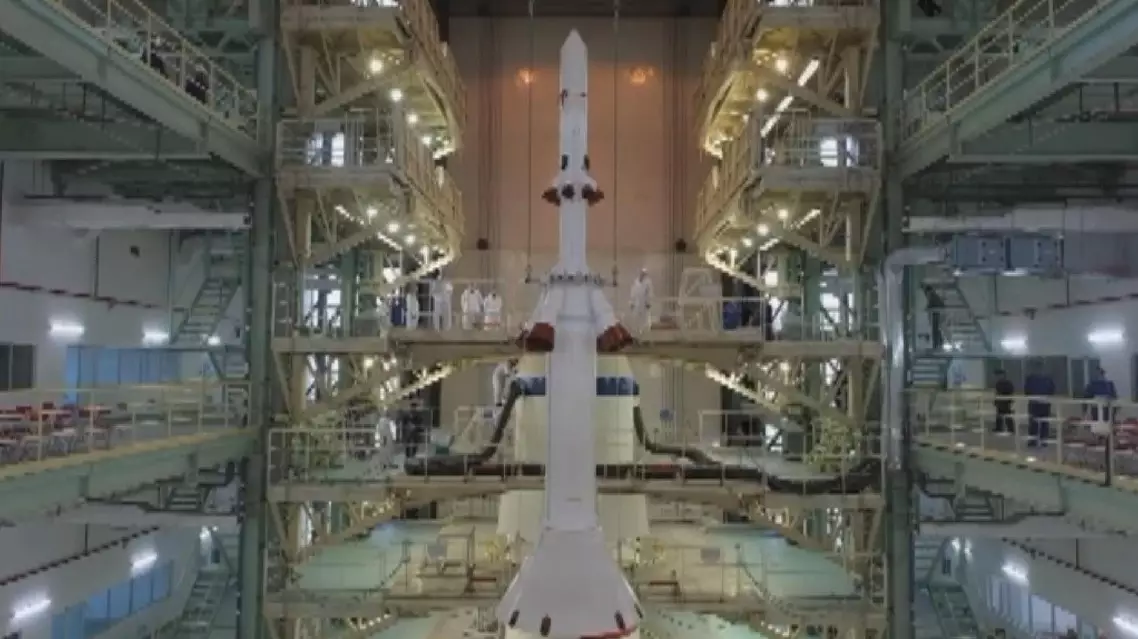
Long March-2F carrier rocket's escape tower enhances astronaut safety