Research on space environment simulation has helped to boost the progress in China's space expedition efforts.
In northeast China's Heilongjiang Province, a set of space environment simulation equipment has recently been put into use at a laboratory of the Harbin Institute of Technology.
Among the equipment set, the lunar dust cabin can simulate the vacuum, low temperature, electron irradiation, charged dust and other environmental factors on lunar surface, shedding light on the real challenges faced by lunar exploration devices and personnel.
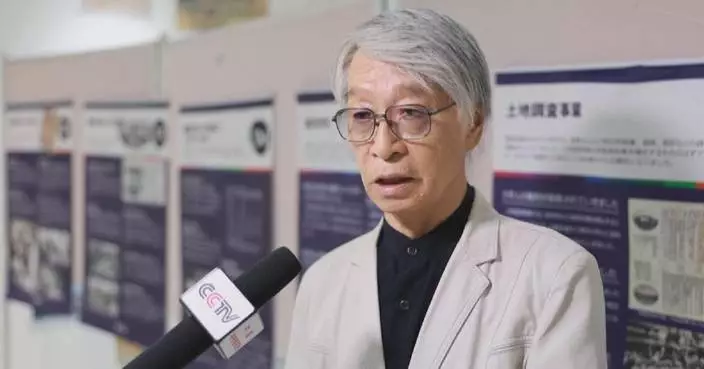
"We know that the lunar surface is a very extreme environment, of which the most distinctive feature is the charged lunar dust and its dynamic migration. The entire moon's sunny side is positively charged and the dark side is negatively charged. The charged dust would migrate under the action of this positive and negative electric field and thus would exert a great impact on our lunar exploration project. It can pollute key surfaces such as lenses, solar panel surfaces, and space suits. We first use the lunar dust cabin on the ground to establish a vacuum and low-temperature environment. At the same time, as the lunar dust is charged, we also carried out a dust sticking experiment on the space suit. That is, what effect does the adhesion of the charged lunar dust have on the wear of the space suit," said Li Lifang, director of the laboratory.
The laboratory can also simulate the Mars surface, featuring low pressure, large-span wind and dust, and even dust storm.
Comprehensive tests and experiments on a variety of complex space environments can also be conducted in the system-level integrated irradiation test chamber.
"This equipment is called a system-level integrated irradiation test chamber. We can also call it a small space station simulated on the ground. First of all, we have integrated environmental factors of six major categories. In addition, the size of the test chamber and the parameter range of the simulated environment are also relatively wide. In terms of particle radiation, we have two electron accelerators and one proton and heavy ion accelerator, which can simulate electron and proton irradiation with a wide energy spectrum. In this respect, our equipment is at the leading level internationally," said Chen Huazhi, a research associate at the Harbin Institute of Technology.

Space environment simulation empowers progress in China's space expedition
China's zero-tariff policy is widely seen as a major opportunity for African countries, supporting their efforts to improve livelihoods, advance trade upgrading and promote regional stability, African officials and economic stakeholders said.
On Friday, China officially expanded its zero-tariff policy to cover all 53 African nations with which it maintains diplomatic relations. The move aims to create new pathways for African exports and industrialization at a time when global trade faces mounting pressures from protectionism.
The policy builds upon earlier measures: since Dec 1, 2024, China has already eliminated tariffs on 100 percent of tariff lines for 33 least developed countries in Africa. The latest expansion now includes economies that are relatively more developed, such as Kenya, Egypt and Nigeria, opening doors for a broader range of African products to enter the Chinese market duty-free.
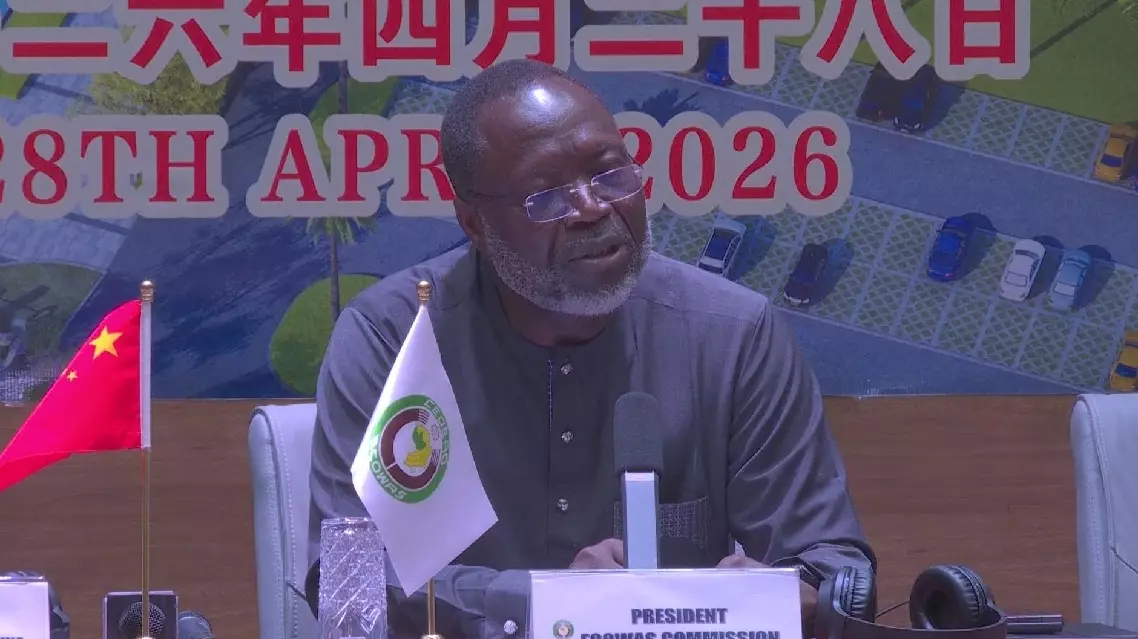
Omar Toure, president of the Economic Community of West African States (Ecowas) Commission, noted that economic growth and poverty reduction can contribute to greater stability and peace in the region.
"For us, this is a major opportunity for our countries because China is a massive market and having access to such a massive market for our produce and products is a major opportunity that we must all seize. It will have impact on overall development of our countries through enhanced productivity because as you know, poverty is a key driver of insecurity in our region. The zero tariff policy is likely to advance our development, to support our development, as well as help us entrench peace and security in our region and on the continent," he said.
Beyond expanding market access, the initiative is expected to strengthen Africa's industrialization and help upgrade regional industries, spurring ambitions to pursue global economic involvement.
"It will enhance trading relations between China and the rest of its partners. I think to a large extent, also within Africa itself, it's going to act as a great catalyst for improving trade, for enhancing the economic relations and also for industrialization," said Bianca Ojukwu, Minister of State for Foreign Affairs of Nigeria.
"China is a very big market, and if you supply to China, it means you will enhance the value of trade or the volume of your exports. And that in itself is monumental. In the sense that, apart from just the value of the export, you get more and more people getting higher incomes and also being able to upgrade their production facilities. So it's really going to benefit Africa in a way that Africa can also begin to participate in a global trade," said David Chewe, Fund Manager of Zambia Export Development Fund.
China‘s zero-tariff policy on Africa applauded as catalyst for boosting bilateral trade, peace