Most European automakers are very much against the European Union's decision to impose extra tariffs on Chinese-made electric vehicles (EVs), said several researchers and business leaders in Brussels, Belgium.
They hope for a solution acceptable to both sides based on negotiations, as this protectionist move of the EU will eventually harm their interests, said these experts.
The European Commission, the executive arm of the 27-nation EU, announced on Tuesday that it had concluded its anti-subsidy investigation and decided to impose a definitive countervailing duty on imports of new battery EVs from China for a period of five years.
What's noteworthy is that, despite current difficulties, the vast majority of European automakers are reluctant to gain advantages through additional tariffs on their overseas competitors, as it will cost the chances for them to acquire the latest technologies from the Chinese market, which has become a major incubator for electric vehicle innovations, according to Victor De Decker, a research fellow of the Royal Institute for International Relations, an independent think-tank based in Brussels.
"From the level of European car companies, most of them are very much against these tariffs. And they are against these tariffs out of a variety of reasons. But first of foremost, they are afraid of tariff retaliation from the Chinese market, so they might lose out on the Chinese consumers, which is the biggest car market in the entire world. That's one thing. Another thing is, on the production end, as I already mentioned, China has been a very innovative player when it comes to batteries and electric vehicles. So, a lot of innovation is taking place within the Chinese car market and the Chinese industry. So, they would fear about losing out of a portion not only of the Chinese consumers, but also out of all the Chinese innovations that are currently happening," he said.
The EU's announcement of additional tariffs on Chinese EVs has aroused concerns among European businesses beyond the auto industry, who are worried that this move would undermine China-EU economic and trade relations and hope the two sides can find a mutually acceptable solution through negotiations.
"I believe what is clear is the importance of the economic relations between China and the European Union. For instance, Italy, Spain, several countries are also promoting investments from China to Europe and specifically to the specific market, also to bring the technology related to the electric vehicle or related to the strategic development of Europe and of the national markets. That means new technology and sustainability. So, for European companies, small, medium enterprises or large companies, China is very relevant," said Lorenzo Riccardi, chairman of the China-Italy Chamber of Commerce.
"Both China and the EU had major trading partners, so I think too much friction on both sides will cause so much damage. I think for the best interest for both parties is to come to some kind of an agreement. Of course, negotiations are very, very important for both sides. I think it's very important to come together to explain what the major concerns are and of course then come closer by understanding each other, by putting everything on the table, and hopefully, come to an agreement," said Roland Brouwer, regional director (Europe) of BIPO, a Dutch company.
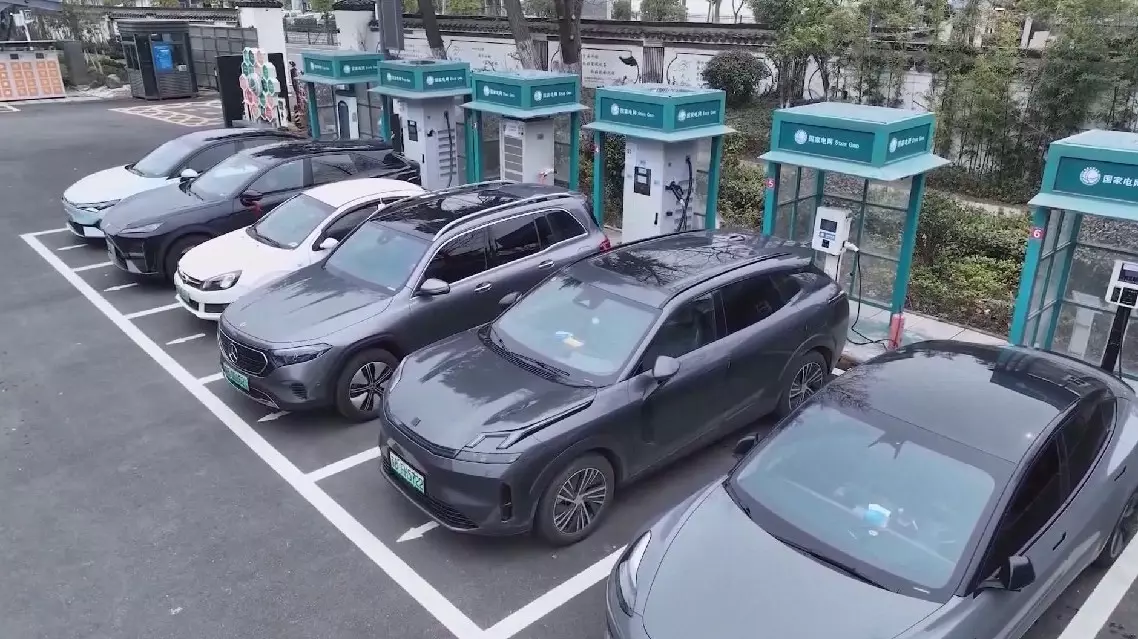
Most European automakers against additional tariffs on Chinese EVs: experts
Most European automakers against additional tariffs on Chinese EVs: experts
Most European automakers against additional tariffs on Chinese EVs: experts