Hong Kong's economy saw moderate growth in the third quarter of this year (Q3) as private consumption and external demand weakened, preliminary data showed Thursday.
Hong Kong's gross domestic product (GDP) increased by 1.8 percent in Q3, relatively lower than the 3.2 percent increase posted in the second quarter, the Census and Statistics Department of the Hong Kong Special Administrative Region (HKSAR) government said.
For the first three quarters of this year as a whole, Hong Kong's GDP increased by 2.6 percent in real terms year on year.
Private consumption expenditure decreased by 1.4 percent year on year, while total exports of goods saw a year-on-year growth of 3.9 percent. And, exports of services rose 2.4 percent compared to the same period last year.
The government says total exports of goods saw decelerated year-on-year growth alongside softening economic growth in some major markets, while exports of services continued to record a mild increase, supported by increasing cross-border economic activities.
Overall investment expenditure rose further in tandem with the overall economic growth, though private consumption expenditure continued to decline amid changes in consumption patterns of residents, a spokesperson for the HKSAR government noted.
The economy should continue to grow in the remainder of the year despite global economic uncertainties and trade conflicts. Hong Kong's exports of goods, monetary easing across major central banks and an improved outlook for the Mainland economy, following the recent stimulus measures, will help support sentiment and activities in the domestic market, according to the spokesperson.
It was highlighted that gradually easing financial conditions should bode well for fixed asset investment. The government mentioned a few factors that are conducive to spending by both residents and visitors in the domestic market, including a possible easing of the Hong Kong dollar alongside the U.S. dollar, as well as government initiatives to boost market sentiment and employment earnings.
Looking ahead, Hong Kong is seeking to build an international gold trading market to solidify its status as an international financial center. It will also establish a commodity trading ecosystem to drive maritime services and promote the development of related financial and professional services.
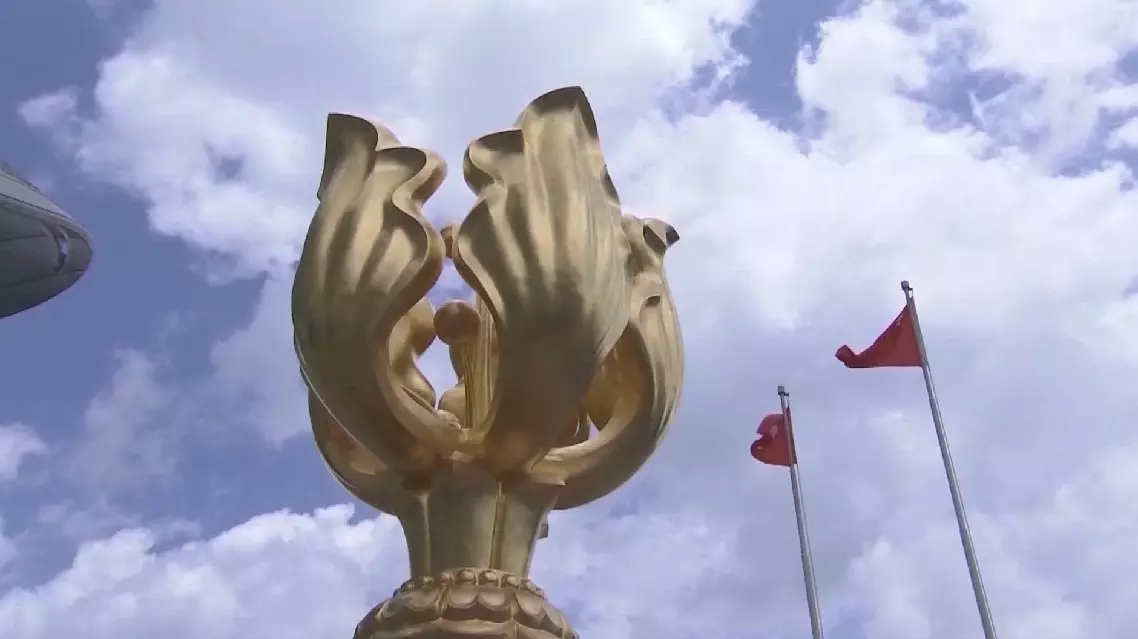
Hong Kong's economy grows 1.8 pct in Q3
Chinese speed skater Ning Zhongyan has made Asian history at the Milan-Cortina Olympic Winter Games after a long and solitary journey of rebirth following earlier setbacks.
Ning clocked an Olympic record of one minute 41.98 seconds to win the men's 1,500m speed skating event at the Milan-Cortina Olympic Winter Games on Thursday. This triumph follows two previous bronze medals he won in the men's 1,000m and team pursuit.
The men's 1,500 meters is often called the "King's Race" of long-track speed skating, demanding a rare blend of explosive speed and sustained endurance. The event has long been dominated by European and North American skaters. Since the first Winter Olympics in 1924, no Asian athlete had ever won gold in the event until now.
The journey to the throne was not plain sailing for Ning. The joyful tears shed on the Olympic ice at Milano Speed Skating Stadium carried the weight of four hard years.
At the Beijing 2022 Winter Olympics, Ning competed in three events - the 1,000m, 1,500m and mass start - but failed to reach the podium in any of them. In his most practiced discipline, the 1500-meter race, he ranked seventh.
Regrets lingered for a long time. But as a professional athlete, Ning had to adjust his mindset and accept the setback.
"After thinking over it, I was able to face it and realize that there's no need to burden myself with such pressure anymore. After all, it's already in the past. I can't change that reality, so I just chose to accept it," said Ning in an interview with China Media Group in Milan.
In 2023, Ning started to train with Dutch coach Johan De Wit. The move reshaped his career and his mindset.
"When it comes to training abroad, the first thing you face is loneliness. You need to confront this sense of isolation on your own, for only then can you discover a way of life that truly belongs to you. The changes have been indeed very significant, as some training philosophies were entirely new to me," said Ning.
The transformation soon became evident. During the 2023–2024 season, he not only clinched titles in both the men's 1,000m and 1,500m at the ISU World Cup, but also became the first Chinese male World Sprint Champion in speed skating history.
"[At the World Cup 1500m event,] my opponent was the Olympic champion [Kjeld] Nuis, and I defeated him at the 'Ice Ribbon' (China's National Speed Skating Oval), where he won the Olympic championship in 2022. This victory made me accept my past defeat, and also gave me firmer confidence in myself," said Ning.
Having fulfilled his long-held dream of raising the Chinese national flag on the Olympic podium, the newly crowned "King of Speed Skating" said he is grateful for the setbacks four years ago, which made him stronger, and that he never regretted his choices or the hardships he endured along the way.
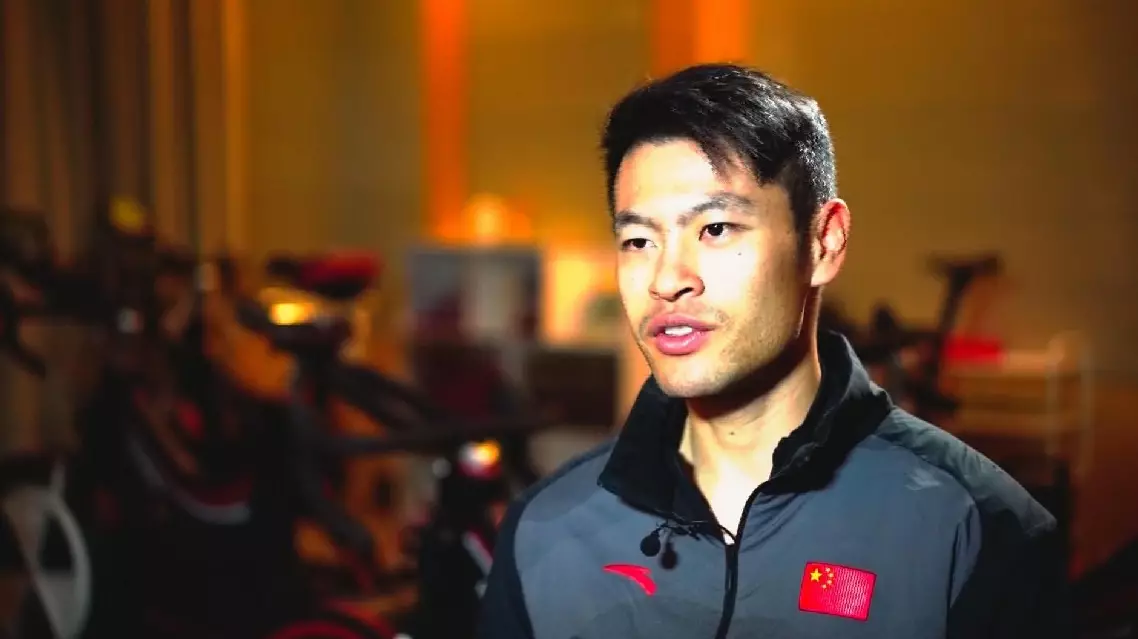
Reborn from setbacks, Chinese speed skater makes Asian history at Milan-Cortina Winter Olympics