Provinces in northeast China are experiencing a new round of cold wave and heavy snowfall starting from Sunday, with local authorities issuing alert against treacherous road conditions and blizzard weather.
In Suifenhe, a city situated on the China-Russia border in northeast China's Heilongjiang Province, meteorological officials issued yellow alerts for both road icing and blizzards, with the heaviest snow reported in Suifenhe Town and Funing Town.
This snowfall has impacted local agriculture and transportation, with forecasts indicating that the snow will continue into Tuesday.
Meanwhile, Xunke County, also in Heilongjiang, saw varying degrees of snow accumulation and icy conditions on local roads. While some temporary traffic restrictions were put in place, the overall impact on transportation has been manageable, thanks to proactive measures from local authorities. Police have increased patrols to ensure driver safety, and snow removal operations are in full swing.
"The snow came down heavily and was quite wet, making the roads slippery. We've dispatched 13 snowplows and four bulldozers, and all our sanitation workers are on duty to continuously clean up snow from the streets and sidewalks in Xunke," said Bing Jun, head of the environmental hygiene maintenance center in the county.
In the neighboring Jilin Province, the Changbai Mountain area also experienced snowfall and strong winds. Early Monday, the scenic area announced its closure for the entire day due to hazardous road conditions. The timing of its reopening will depend on the weather.
China has a four-tier, color-coded weather warning system, with red representing the most severe weather, followed by orange, yellow and blue.
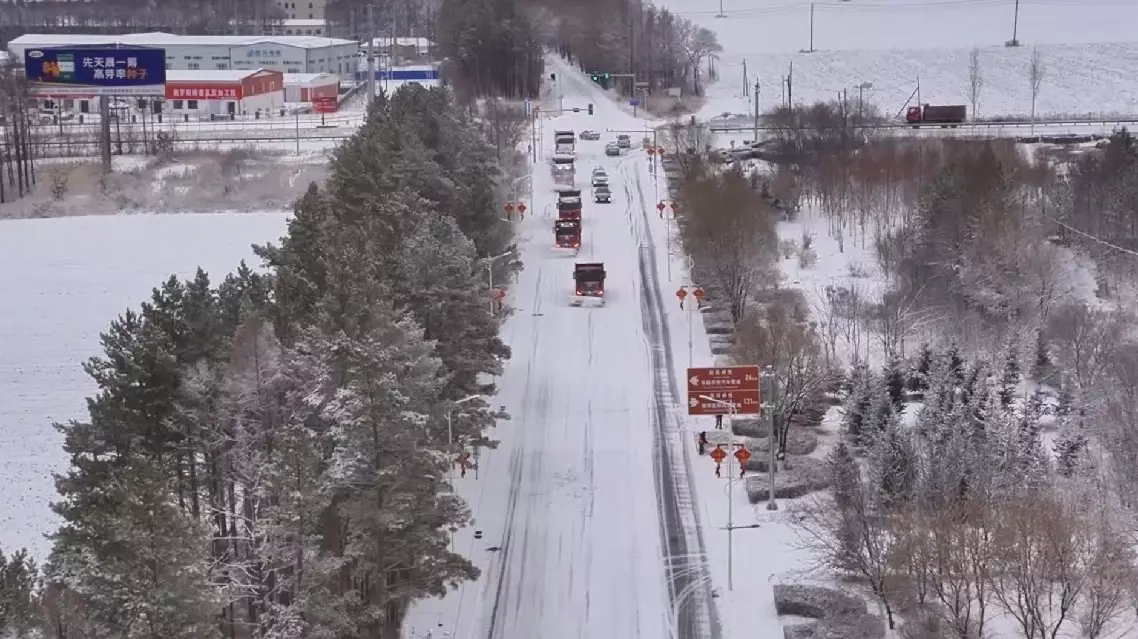
Snowfall hits northeast China amid cold wave
U.S. consumer sentiment fell 6 percent in March to its lowest level in three months, as rising gas prices and volatile financial markets, driven by the Iran conflict, weighed on households, according to a University of Michigan survey released Friday.
The index dropped to 53.3 in March from 56.6 in February, below last March's reading of 57.0. The decline continues a slide since January and raises concerns about household spending, a key driver of U.S. growth.
The Current Economic Conditions Index slipped to 55.8, down from 56.6 in February and well below 63.8 a year earlier. The Index of Consumer Expectations fell to 51.7, compared with 56.6 in February and 52.6 last March.
The survey found that year-ahead gas price expectations surged about fivefold from February, reaching their highest level since June 2022. Expectations for personal finances fell 10 percent, with 47 percent of respondents saying rising prices are placing a heavy burden on their household budgets.
Short-term economic outlook expectations plunged 14 percent, and 61 percent of consumers now expect unemployment to rise in the year ahead, up from 58 percent last month. Year-ahead inflation expectations climbed from 3.4 percent in February to 3.8 percent in March, the largest one-month increase since April 2025.
Although long-term expectations saw only modest declines, survey director Joanne Hsu cautioned that "these views could shift if the Iran conflict becomes protracted or if higher energy prices feed broader inflation."
On Feb. 28, Israel and the United States launched joint attacks on Tehran and several other Iranian cities, prompting Iranian retaliatory strikes in the days that followed. The conflict has rattled global energy markets, fueling concerns about supply disruptions and higher oil prices.
Economists said sustained energy shocks could deepen inflationary pressures and further erode consumer confidence.
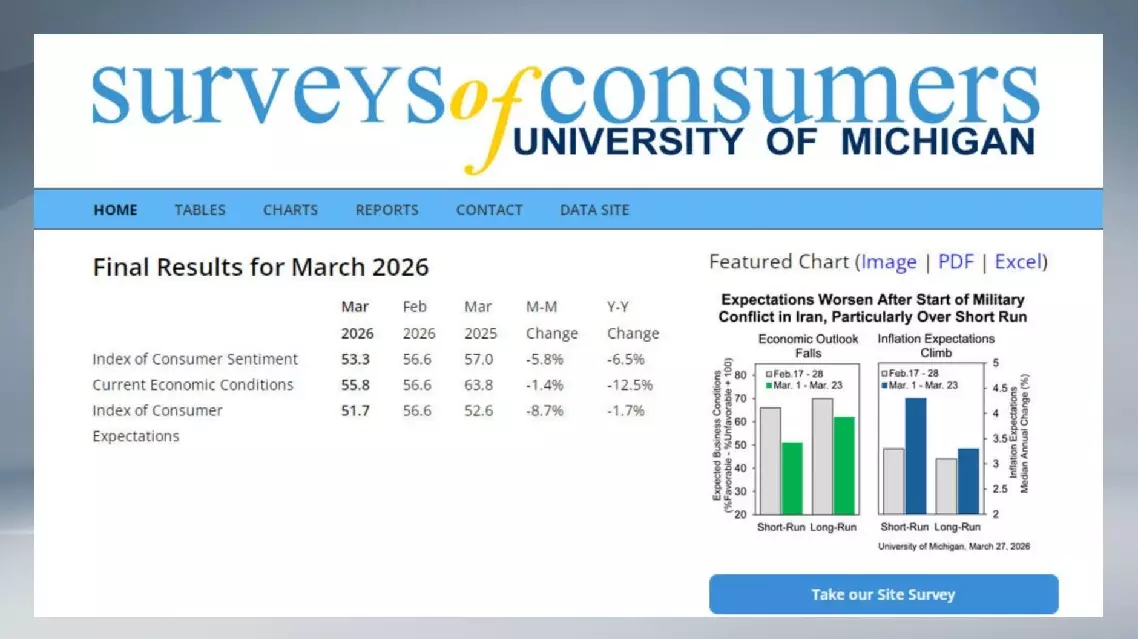
US consumer sentiment falls to three-month low amid gas price surge, market volatility