HarmonyOS NEXT, the first fully homegrown operating system developed by Chinese tech giant Huawei, has broken through the limitations of Linux and Android, opening the door to a much wider application space, said a leading member of its development team.
Released on Oct 22, the operating system abandons the traditional Linux kernel and the Android open source code project AOSP and only supports applications under its own kernel and system. As of now, more than 15,000 HarmonyOS native applications and meta-services have been launched.
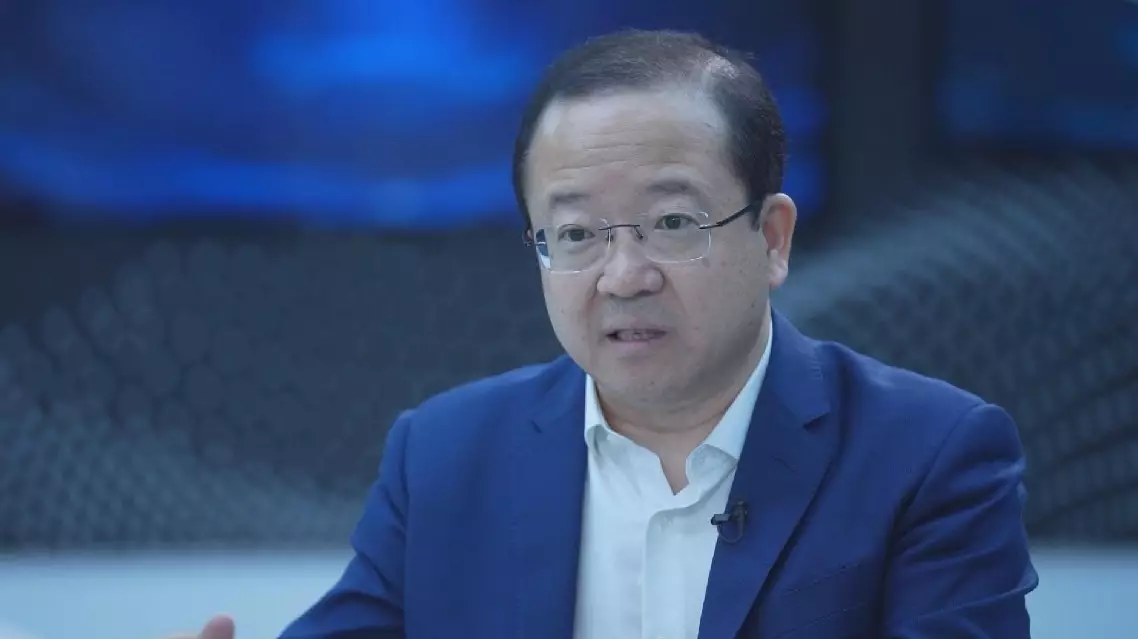
Wang Chenglu was formerly the president of Huawei's consumer business software department and led the research and development of HarmonyOS. He is now CEO of the Shenzhen-based Kaihong Digital Industry Development Co., an Internet of Things system developer committed to exploring more possibilities for the system.
In an interview with China Central Television, Wang highlighted that the system can facilitate connections between different devices and stressed that it will have a wider range of applications in the future.
"HarmonyOS provides a channel for all devices to use a common language. As long as the system is installed, all devices work in the same language. Replacing Android is less than five percent of its value, and 95 percent of its value lies in a wider application space," said Wang. In 2015, Wang became the president of Huawei's consumer business software department, responsible for the strategic planning and development of Huawei's terminal software. Since then, he made up his mind to truly make a homegrown operating system.
"Today, except for Windows, almost all operating systems in the industry, whether used on mobile phones or computers, use kernels that are derived from Linux. What Huawei has done today is to change almost all of the underlying kernel layer and make it work in our own way," Wang said.
Wang said that breaking through the underlying limitations of the kernel can better achieve the coordination between the system and hardware, thereby better unleashing better hardware performance.
"[We highlight] the full stack coordination between our entire system and hardware. The full stack is not a certain point, it is a systemic question. If we do not have the ability to change all systems, it will be a black box, and we will have no way to improve the performance. If we want to fully release the hardware capabilities, the best way is to rewrite it completely," said the developer.
He added that the most important qualities in the development process are long-term vision and an indomitable spirit, which gave the team the determination to make an operating system of their own.
"The first is the ability to think systematically. The second is to never admit defeat. If we want to compete with others globally, I think this spirit is particularly important, that is, we must never admit defeat," Wang said.
"I hope that our unique perspective lets us see where the future of software is headed. How can we apply our vision of the future to make software? I think we should make software according to product it's used for, and the best way to do that is with the operating system, because the operating system is the epitome of software, so I wondered if we could make our own operating system," he said.
Huawei's HarmonyOS opens new opportunities for software applications: developer