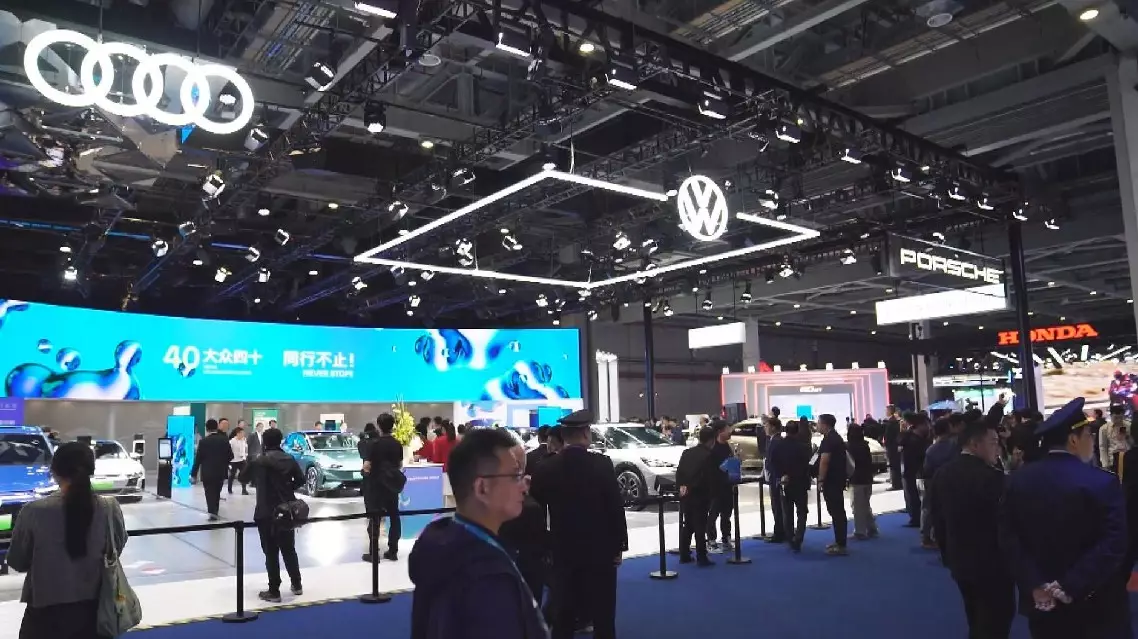
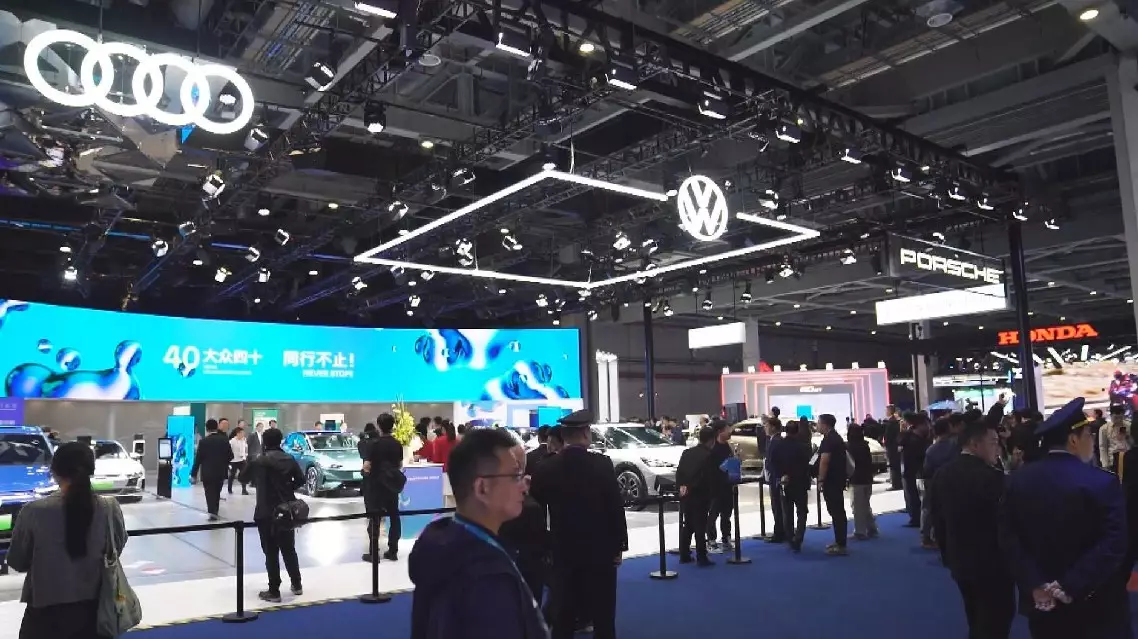
Multinational car manufacturers exhibiting at the ongoing 7th China International Import Expo (CIIE) have voiced their opposition to the European Commission's decision to impose extra tariffs on China-made electric vehicles (EVs), calling for free trade and fair competition in the auto market.
The CIIE is the world's first national-level exposition dedicated to imports. Running from November 5 to 10 under the theme of "New Era, Shared Future," the 7th CIIE has attracted participants from 152 countries, regions and international organizations.
This year, nearly 40 companies from 11 countries and regions participated in the automotive exhibition, with over 70 percent of them being Fortune Global 500 companies or industry leaders.
During the expo, chief executives of German automakers including Volkswagen, Audi, and BMW all called for a fair competitive environment of the industry.
"We stand as Volkswagen Group for fair conditions in worldwide trade and we do not support the current proposal for the tariffs. I think we should think more on opportunities for those who come to a region and invest in technology, invest in plants, invest in employment, (they) should benefit from a lower tax policy," said Oliver Blume, CEO of Volkswagen Group.
"As Audi being for over 30 years in China, we believe in free trade and we do not believe that tariffs are the right way. The right way is free trade, the right way is competition and that brings innovation to the customers. And I also believe that we will have and need a fair competition in Europe and in the European auto market," said Gernot Dollner, CEO of AUDI AG.
Sean Green, President and CEO of BMW China, said that providing a fair competitive environment for all participants is the fundamental rule within the global trading system. He also commended the expo as a key platform for enhancing business prospects.
"We've enjoyed 30 years of success in China as it's opened up, and we have a long-term view that the growth in China will continue. And it's great to meet some colleagues of similar OEMs but also our suppliers as well," said Green.
Sam Wu, President and CEO of Ford China, said that the automotive sector operates as a global industry chain and fragmentation should be avoided.
"The industry chain functions globally with division of labor, collaborations, and interactions. Disruption of the industrial chain will hinder its development and does not cater to consumers in receiving the best products and services," said Wu.
Multinational auto companies oppose EU tariffs on Chinese EVs, call for free trade
Multinational auto companies oppose EU tariffs on Chinese EVs, call for free trade
The ongoing probe revolving around the late U.S. financier and convicted sex offender Jeffrey Epstein has become a powerful symbol of systemic dysfunction in Western political and judicial systems and has significantly eroded public trust, according to analysts.
In the latest episode of the China Global Television Network (CGTN) opinion show 'The Point with Liu Xin' which aired Wednesday, experts debated the ongoing controversies surrounding the latest release of documents in the so-called Epstein files.
The newly-released files totaling some three million pages have sparked serious scrutiny across the Atlantic, prompting the resignation of several political figures over their ties to Epstein, who died under mysterious circumstances in a maximum-security facility in 2019.
Han Hua, the co-founder and secretary general of the Beijing Club for International Dialogue, a Chinese think tank, noted how Epstein, in spite of his conviction, had seemingly built up an expansive network of the rich and powerful, and said the sense of "elite impunity" and the seeming disregard for morality among many of those involved has dealt a huge blow to Western democracy, which is supposedly built upon the basis of the rule of law.
"Right after 2008, Epstein certainly has built an even stronger and much larger Western elite circle including politicians, including academia, including the political and the religious figures like the Dalai Lama. So this actually indicates the 'bankruptcy' of the Western democracy from the moral high ground, from the rule of law. It is systematic damage to the whole system and also to the judicial and legal system. And they are building a circle that can protect Epstein and the elites in this circle from getting [allegations], from getting legally punished, so that the cases [could become] even larger. And there are so many victims, there is no perspective with regard to the victims to be protected," she said.
Josef Mahoney, a professor of politics and international relations at East China Normal University, said the ongoing Epstein saga has deeply flamed public distrust, exposing uncomfortable truths about how power operates behind closed doors.
"We've also seen, as has been raised, the question about whether or not the system can be trusted. There's intense distrust now in the system. But at the same time, I think the other point to be raised about moral authority is that what you see are leaders, figures from different fields, from across the political spectrum, essentially working together in a way, so they represent and they stoke divisions in society that exploit and suppress the people. But at the same time we see them, the left wing, the right wing, the center, all sort of having these extreme parties or relationships with each other, which really begs the question of whether or not there's a true democracy to begin with," he said.
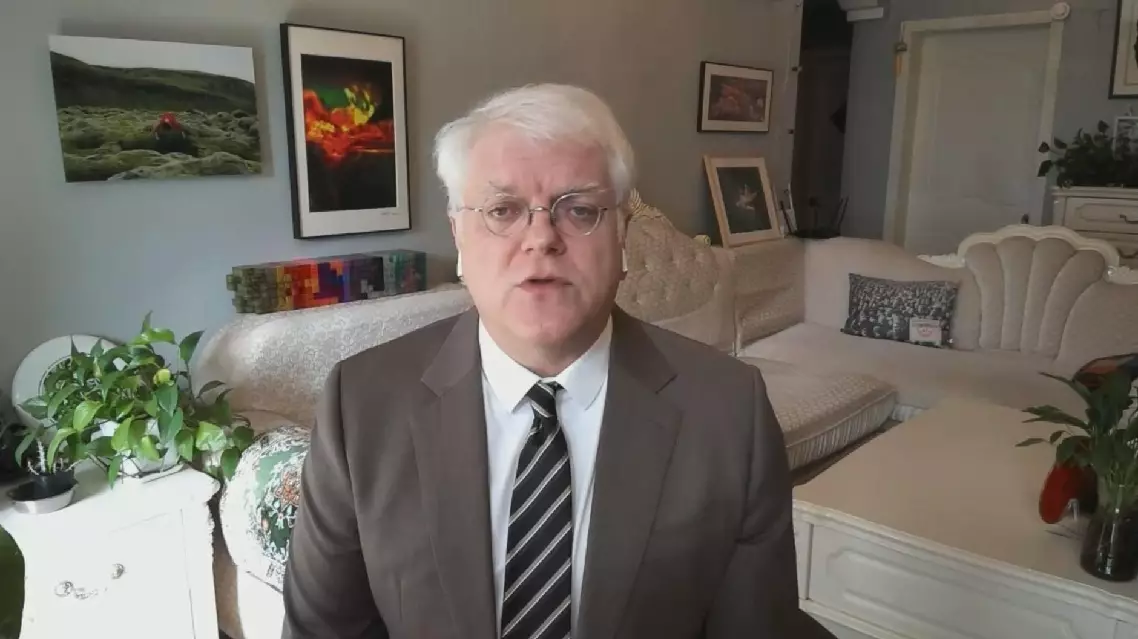
Epstein case sows deeper distrust in Western politics, judicial systems: analysts