The president of Chile's main cherry exporter Garces Fruit has attributed the development of the country's cherry business to the fast-growing demand in China, expressing willingness to further expand cooperation with Chinese partners.
This year's Asia-Pacific Economic Cooperation (APEC) Economic Leaders' Meeting will be held in Peru. As APEC members, China and Chile have a long history of friendly exchanges. In recent years, economic and trade relations between the two countries have strengthened, particularly with Chilean cherries gaining popularity in the Chinese market.
Speaking with China Global Television Network (CGTN) ahead of APEC, Hernan Garces, the president of Garces Fruit, shared the remarkable journey of Chilean cherry in the Chinese market.
He said the company began exporting cherries to China in 1997. Following the signing of the China-Chile Free Trade Agreement in 2005, bilateral trade between the two countries saw explosive growth, which played a key role in helping the fruit establish a strong presence in the Chinese market.
"Chinese consumer demand for Chilean cherries has let our business continue to develop. We have been growing and focusing on nurturing better varieties and products with better quality. The Chilean cherry business benefits from the development of China," said the cherry exporter.
Garces' company has approximately 70,000 hectares of cherry orchards. Boasting a majestic mountain range, abundant water resources, and a favorable climate environment, the area is ideal for cherry production, allowing the fruit to develop rich colors and exceptional flavor.
Ignacio Pizarro is a staff member at the production department of Garces Fruit. His job is to ensure the products of the cherry orchards meet the standards for export.
"Here we make sure that the cherries meet harvest parameters, practically in terms of color and size. The cherry is an amazing fruit. Its color, size, and the shape of different varieties, as well as its taste, are all reasons for us to be proud. I feel proud to be able to get involved in the whole process of producing this beautiful and delicious fruit from the beginning to the end," said Pizarro.
According to Garces, Cherries are not only a source of pride for Chilean agriculture but also symbolize good fortune in Chinese culture. He said the company is keen to continue the trade relations with Chinese partners to bring higher-quality fruit to Chinese consumers.
"This large, crunchy and red fruit means a lot to Chinese people. It represents purity, eternity, and good luck. The development of the Chilean cherry industry in recent years makes us eternally grateful for our Chinese consumers. We are lucky to have a business partner like China and be able to develop this cherry business in Chile to meet the demands of the Chinese markets. This is a long-term cooperative relationship that we have built over 27 years of trade. In the case of cherries, China is by far our best business partner," the company president said.
Chilean cherries are increasingly favored by Chinese consumers over the years. Over the past seven years, Chilean cherry exports to China have grown at an approximate annual average rate of 29 percent.
Growing demand in the Chinese market has spurred the expansion of Chile's cherry planting area and benefited local farmers. From 2000 to 2022, the total cherry planting area in Chile grew from 3,241 hectares to 61,559 hectares, according to data from Chile's Office of Agricultural Studies and Policies.
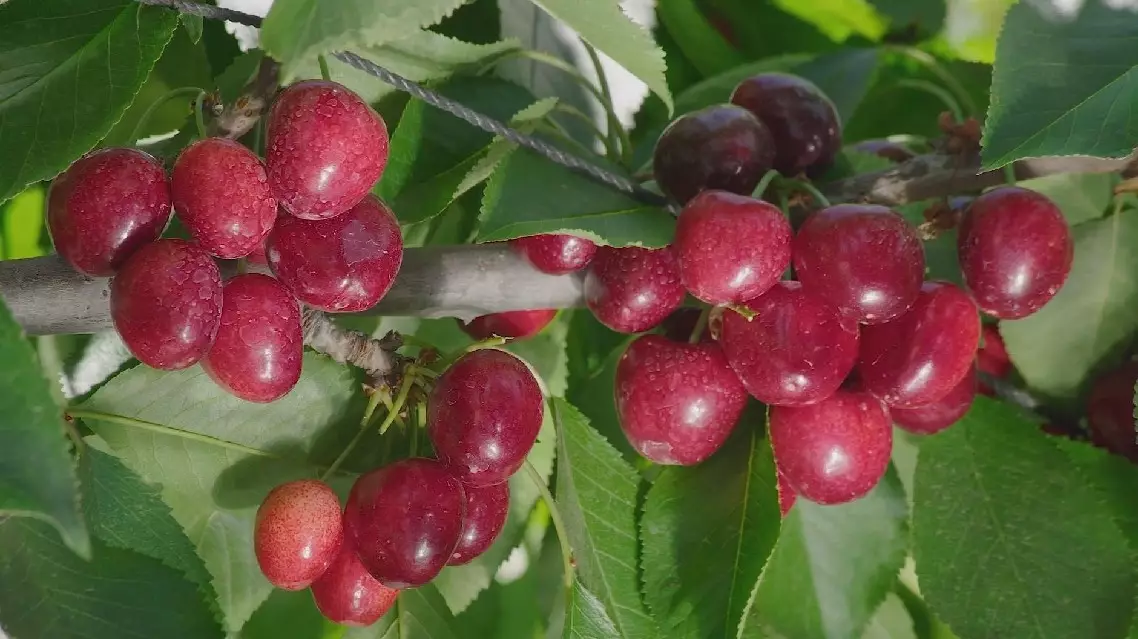
Chile's main cherry exporter credits fast-growing business to Chinese market