A scaled-down model of China's reusable Haolong space cargo shuttle will be on display at the upcoming Airshow China which will take place in Zhuhai, south China's Guangdong Province from November 12 to 17.
The space cargo shuttle, developed by the Chengdu Aircraft Design and Research Institute under the Aviation Industry Corporation of China (AVIC), is a winged, reusable spacecraft. It incorporates a large wingspan, high lift-to-drag ratio, and a reusable technology plan.
Leveraging cutting-edge aviation technologies, it is capable of being launched by a carrier rocket, docking with the space station, and upon separation, executing de-orbit braking and re-entry maneuvers, culminating in a horizontal landing on an airport runway. It also possesses excellent flight performance in both atmospheric and space environments.
The cargo space shuttle is 10 meters long and 8 meters wide, weighing less than half of China's in-service cargo spacecraft Tianzhou.
"The Haolong space cargo shuttle is a winged aircraft with an aerodynamic design featuring a large wingspan and a high lift-to-drag ratio. With blunt-nosed fuselage and large, swept-back delta wings, it combines the characteristics of both spacecraft and aircraft, allowing it to be launched into orbit by a carrier rocket and land on airport runway like a plane," said Fang Yuanpeng, chief designer of Haolong.
"The Haolong space cargo shuttle is designed as a low-cost, reusable spacecraft for transporting cargo to space station. After completing the cargo transport mission, it can perform a horizontal landing on airport runways, enabling it to meet cargo transport needs both to and from the space station. Furthermore, its reusability helps reduce costs in spacecraft development and cargo transportation," said Fang.
Haolong has recently been selected as one of the winners of the China Manned Space Agency's solicitation for a low-cost cargo transportation system and has secured contract for the flight verification phase.
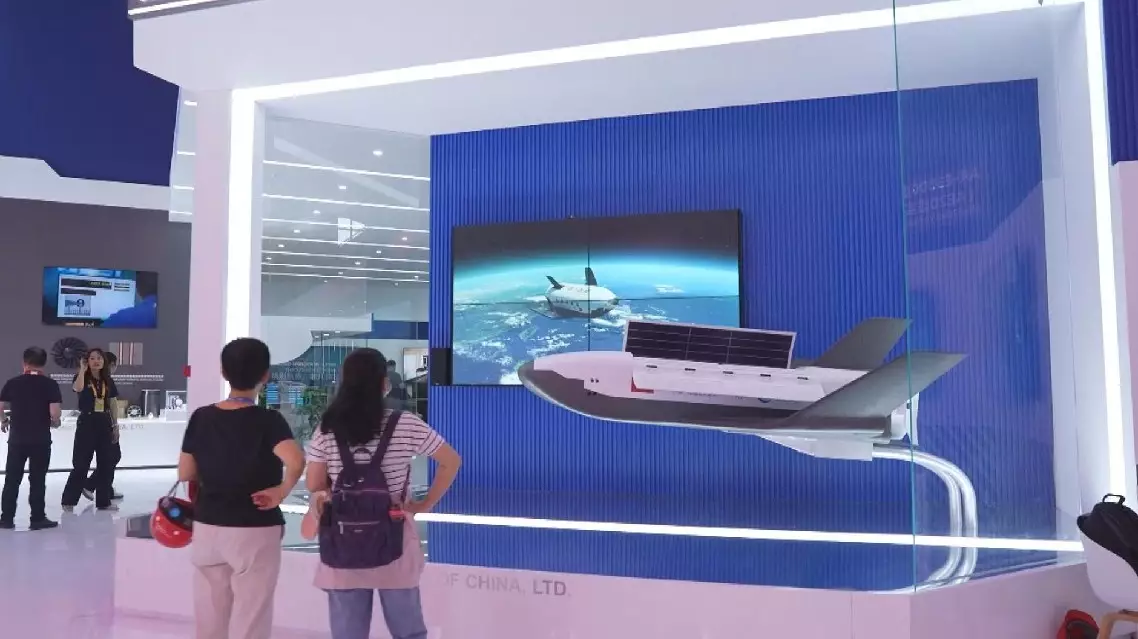
Scaled model of China's reusable space cargo shuttle to be display at Zhuhai airshow
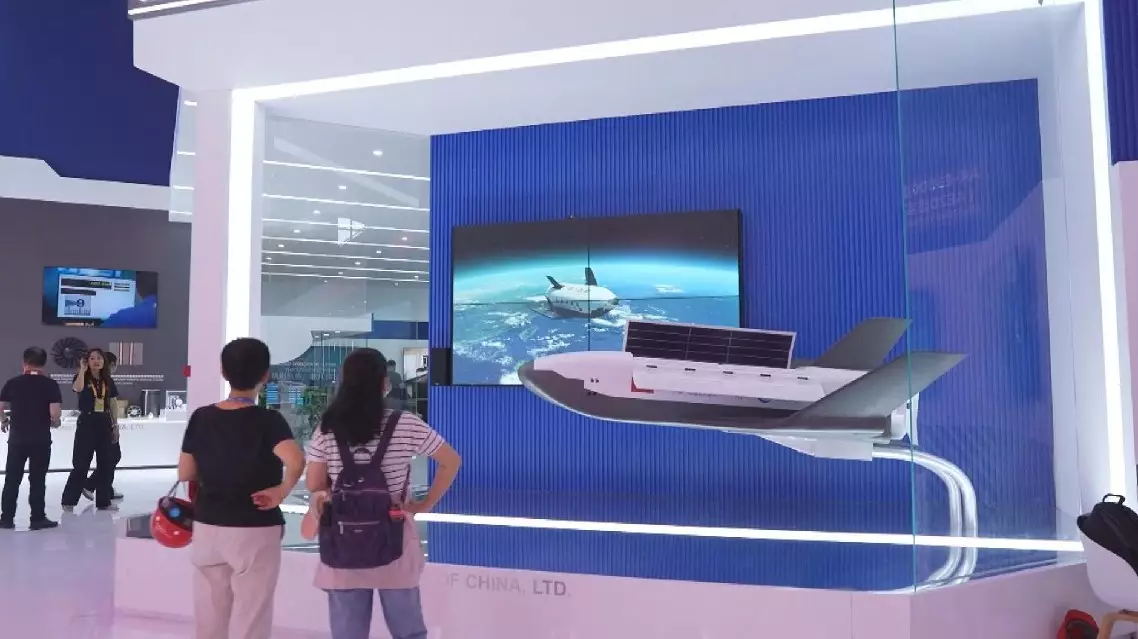
Scaled model of China's reusable space cargo shuttle to be display at Zhuhai airshow
China's zero-tariff policy is widely seen as a major opportunity for African countries, supporting their efforts to improve livelihoods, advance trade upgrading and promote regional stability, African officials and economic stakeholders said.
On Friday, China officially expanded its zero-tariff policy to cover all 53 African nations with which it maintains diplomatic relations. The move aims to create new pathways for African exports and industrialization at a time when global trade faces mounting pressures from protectionism.
The policy builds upon earlier measures: since Dec 1, 2024, China has already eliminated tariffs on 100 percent of tariff lines for 33 least developed countries in Africa. The latest expansion now includes economies that are relatively more developed, such as Kenya, Egypt and Nigeria, opening doors for a broader range of African products to enter the Chinese market duty-free.
Omar Toure, president of the Economic Community of West African States (Ecowas) Commission, noted that economic growth and poverty reduction can contribute to greater stability and peace in the region.
"For us, this is a major opportunity for our countries because China is a massive market and having access to such a massive market for our produce and products is a major opportunity that we must all seize. It will have impact on overall development of our countries through enhanced productivity because as you know, poverty is a key driver of insecurity in our region. The zero tariff policy is likely to advance our development, to support our development, as well as help us entrench peace and security in our region and on the continent," he said.
Beyond expanding market access, the initiative is expected to strengthen Africa's industrialization and help upgrade regional industries, spurring ambitions to pursue global economic involvement.
"It will enhance trading relations between China and the rest of its partners. I think to a large extent, also within Africa itself, it's going to act as a great catalyst for improving trade, for enhancing the economic relations and also for industrialization," said Bianca Ojukwu, Minister of State for Foreign Affairs of Nigeria.
"China is a very big market, and if you supply to China, it means you will enhance the value of trade or the volume of your exports. And that in itself is monumental. In the sense that, apart from just the value of the export, you get more and more people getting higher incomes and also being able to upgrade their production facilities. So it's really going to benefit Africa in a way that Africa can also begin to participate in a global trade," said David Chewe, Fund Manager of Zambia Export Development Fund.
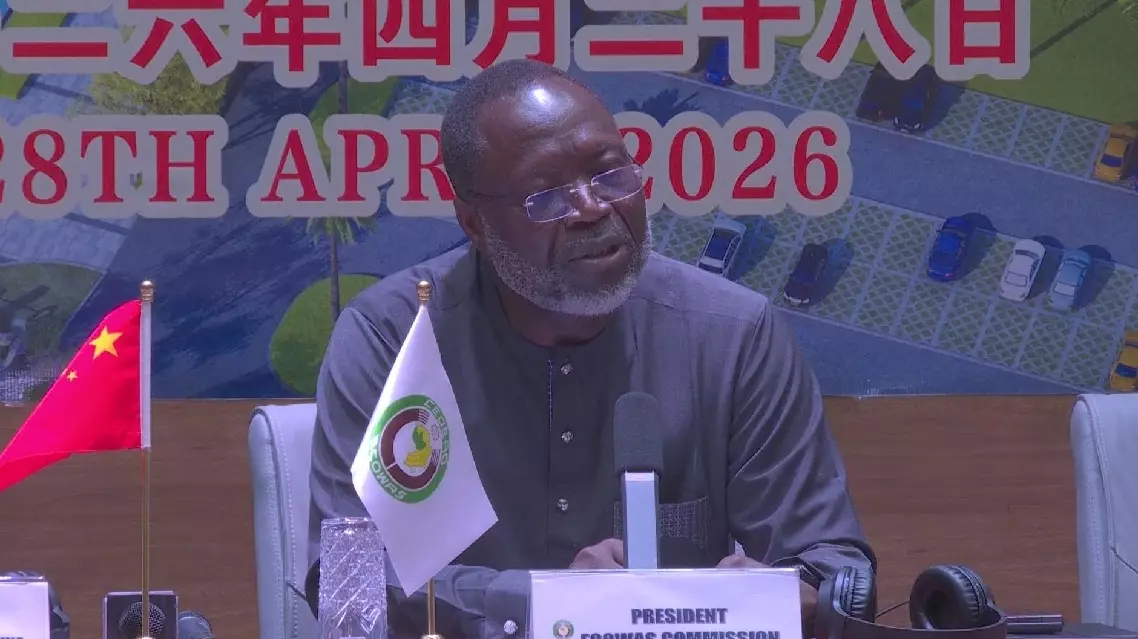
China‘s zero-tariff policy on Africa applauded as catalyst for boosting bilateral trade, peace