China's Haolong space cargo shuttle, which will be unveiled at the upcoming 15th China Air Show, highlights outstanding reusability, which will significantly reduce the cost of cargo transport mission in space.
The space shuttle, developed by the Chengdu Aircraft Design and Research Institute under the state-owned Aviation Industry Corporation of China (AVIC), was among the winning projects of China's development plans for low-cost cargo spacecraft and manned lunar rover.
It has been awarded a contract for the engineering flight verification phase, and will be officially unveiled at the 15th China International Aviation and Aerospace Exhibition, which will be held in south China's Zhuhai City from Nov. 12 to 17.
The developers said that Haolong can re-enter the atmosphere and land horizontally, realizing reuse in a flight-like manner, which will greatly reduce the cost of cargo transport mission in space.
The Haolong space cargo shuttle is a large-winged spacecraft. It will be sent into the space station's orbit by a carrier rocket. After entering orbit, it will unfold its wings immediately, approach the space station, and conduct rendezvous and docking through orbital maneuvering strategies such as long-range autonomous guidance and short-range autonomous control.
"During the docking period, the cargo hold of Haolong will be opened and connected to the space station cabin, and astronauts can enter and exit the cargo hold freely to fetch the cargo brought to the space station or place the materials to be sent to earth according to their needs. After completing the cargo transport mission, Haolong will separate from the space station, autonomously deorbit and brake, re-enter the atmosphere, and land horizontally on the designated airport runway without power with due energy management. After inspection, maintenance and repair, it will be able to perform cargo transport missions again," said Fang Yuanpeng, chief designer of Haolong space cargo shuttle.
At present, the design scheme of the space shuttle has been completed, and the project has entered the stage of full-scale engineering research and development.
"We applied the latest technological achievements to Haolong, giving new vitality to the space shuttle. Haolong has strong maneuverability, giving it more chances and a wider window for returning safely. At the same time, we have better flight mechanics environment today, and landing on the airport runway facilitates the rapid intervention of ground support resources, making the space shuttle safer, more reliable and more convenient for the mission," Fang said.
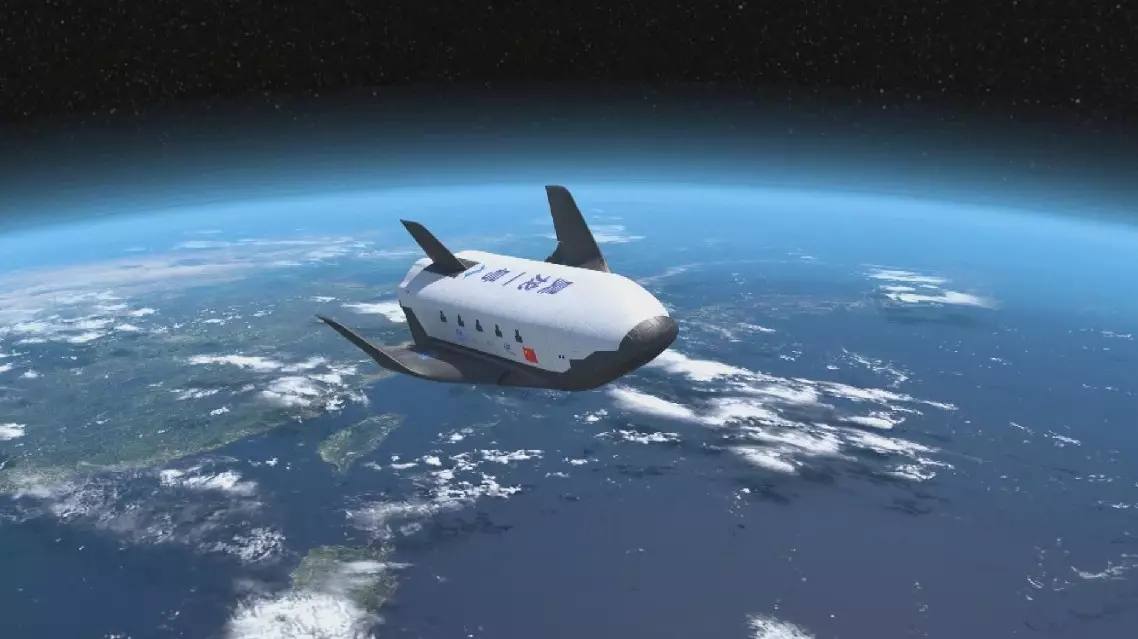
China's space cargo shuttle highlights reusablity, cost-saving
After the devastating fire at the housing complex Wang Fuk Court in Hong Kong Special Administrative Region (HKSAR), the central government, Hong Kong authorities, and people from across China have joined forces in a massive outpouring of relief and support.
The blaze, the deadliest Hong Kong had witnessed for decades, broke out at around 14:50 on Nov 26 at the eight-towered residential estate Wang Fuk Court, which was under renovation, in Tai Po district. The fire quickly engulfed seven of the towers, leaving at least 159 dead, 79 injured and thousands of families homeless.
According to the latest official update, the Support Fund for Wang Fuk Court in Tai Po, established by the HKSAR government, has received 3 billion Hong Kong dollars in external donations. Together with the HKSAR government's start-up capital of 300 million Hong Kong dollars, the fund stands at around 3.3 billion Hong Kong dollars in total. It will be used to help residents rebuild their homes and provide long-term support.
Following the fire, the HKSAR government has made comprehensive, multi-tiered rescue and resettlement efforts.
On the night of the blaze, the government promptly established temporary shelters at multiple locations across Tai Po district, coordinating accommodations in youth hostels, hotels, and transitional housing for affected residents. Emergency subsidies and living allowances were distributed to those impacted, while support was also provided through a "one household, one social worker" mechanism.
People from across Hong Kong have joined volunteer efforts, hoping to bring warmth to the wounded community, with donated supplies such as clothing, food, drinking water continuously arriving at temporary shelters.
Many taxi drivers have also volunteered to provide free rides.
"We work here from 08:00 in the morning to past 22:00 at night. We only leave when there are no passengers. That's how it is. It does affect earnings a bit. It definitely has an impact. But that's not important. The most important thing is to help others first," said Wong Chi-chuen, a taxi driver .
At the request of the HKSAR government, the Hong Kong and Macao Affairs Office of the State Council has coordinated the Ministry of Emergency Management to provide batches of supplies for the Tai Po fire relief effort, including portable outdoor charging stations, heavy-duty conveyors, blowers, respirators, goggles, protective suits, headlamps, and waterproof boots.
Mainland companies and residents, and various sectors in Macao also provided support following the devastating fire in Hong Kong, donating funds and supplies for emergency relief and post-disaster recovery.
"A large amount of supplies was collected and delivered to our disaster-stricken areas in a very short time. It made me realize what it means to be bound by blood. Because this kind of bond runs deep. I want to express my heartfelt thanks to everyone," said Peter Lam, chairman of Tai Po Rural Committee.
Support from across China pours in after devastating fire in Hong Kong