A Chilean father-son duo, united by a common dream, are studying traditional Chinese medicine (TCM) side by side in Shanghai.
Rodrigo Merino El Hayeck, from Chile, is currently studying acupuncture at the Shanghai University of Traditional Chinese Medicine.
Inspired by his father, a well-known acupuncturist in Chile, Rodrigo developed an early interest in traditional Chinese medicine.
In 2018, Rodrigo traveled over 20,000 kilometers to start his studies in east China's Anhui Province. He found it challenging initially, mainly due to the language barrier.
After years of hard work, he gained both professional knowledge and a deeper understanding of traditional techniques.
"The key to mastering traditional therapy would be to understand that it's not as some esoteric magic that you are trying to practice, but instead, a series of teachings by ancient Chinese people applied through trial and error that would let them understand how the human body works," said Rodrigo.
In 2023, the young man transferred to Shanghai to continue his studies. A year later, his father, who has helped many cancer patients relieve pain with acupuncture, joined him.
"Why did I choose to start over? Because I have questions, questions I want to resolve. I want to know more," said Hector Merino Montt, Rodrigo's father.
Rodrigo wasn't surprised by his father's decision.
"When I got into the university at first, I thought, I'm living my dad's dream right now. And I thought maybe he can also live that dream. I don't need to be living someone else's dream. We can have that dream together," said Rodrigo.
The pair now support each other in their studies. Rodrigo, more proficient in Chinese, helps his father with the language, while Hector continues to offer practical support from his years of experience, but they share a common vision for the future.
"My plan is to go back to my country and restart my teaching after finishing the course here. By that time, I won't be that old," said Hector.
"I hope to be a disseminator of TCM knowledge. I hope to get what I grab, what I learned here and spread it to us many other places in the world that I can take it. I think it's very important that we get more research done with TCM and we get more people learning about it so that hopefully we can grow the field and develop it as a practice," said Rodrigo.
As their journey continues, they believe their paths will not only enrich their lives, but more importantly, will help more people in need.

Chilean father, son embark on TCM journey in Shanghai
South China's Guangdong is seeing a surge in winter tourism, as visitors from around the world flock to the province, drawn by its mild climate, supportive travel policies, and increasingly diverse tourism experiences.
One of Guangdong's most popular winter attractions is its hot springs. Just an hour's drive from Guangzhou city proper, Conghua District is home to what are known as the "rare hot springs", naturally rich in radon, which is believed to offer health benefits. For many visitors, these natural, mineral-rich waters provide a welcome escape from colder temperatures.
Guangdong is home to many hot spring resorts. And the business model is clearly evolving. They are not just selling the views, they are selling the whole experience.
Dusit Devarana Hot Springs and Spa is China's first hot spring joint venture, backed by state-owned investors and run by a premium resort group from Thailand.
"It's peaceful, the air is clear, the water is nice — it feels like Southeast Asia," said Mrs. Ye, a tourist in the resort.
That Southeast Asian influence is evident in both the service and the Northern Thai-style architecture, with custom-made decorations imported straight from the Land of Smiles.
For travel agencies, a warm winter is reshaping demand — with families and group travel leading the way.
Tourists now prefer hotels with shared spaces for gatherings, said Che Qianhui, marketing director of local travel agency Day Day Holiday. Government consumption vouchers are also driving demand, Che said. The top voucher offers 300 yuan off a 1,500-yuan purchase, including some hotels — and they're usually snapped up within five minutes, she added.
The resort is expected to receive large crowds during the upcoming Spring Festival, which falls on February 17, 2026.
"During the Spring Festival, we expect occupancy between 90 and 100 percent. Over the New Year holiday, our rooms were fully booked, with more than 700 visitors to the hot springs every day. We've added family activities and cultural experience offerings, moving beyond a simple health retreat. About 70 percent of new revenue now comes from regions north of the Yangtze River in China, and there are also international visitors from Europe, the Middle East, and Africa," said Shao Yingda, general manager of Dusit Devarana Hot Springs and Spa in Conghua.
To attract more tourists, Guangdong has issued 20 million yuan (2.9 million U.S. dollars) in vouchers. The wider ripple effect could generate around 200 million yuan in total economic activity.
However, vouchers and promotions can only go so far. Across China — and around the world — traditional tourism destinations face the same challenge: how to stay fresh, stand out from similar offerings, and remain competitive over time. That puts the focus on policy design, sustainability, and how to attract international visitors.
"Globally, when per capita GDP surpasses 10,000 U.S. dollars, it enters a leisure stage. Yet many tourism products still focus on traditional sightseeing. International tourists cannot simply be seen as an extension of domestic travelers. Domestic and international travelers have different needs, and destinations must offer customized, in-depth experiences to compete globally," said Li Yaoqi, professor and director of the Cultural and Tourism Consumption Research Center of Sun Yat-sen University.
With growing policy support for both domestic and international travel, this winter is shaping up to be more than just a seasonal getaway. It's also a test of how tourism adapts to changing demand.
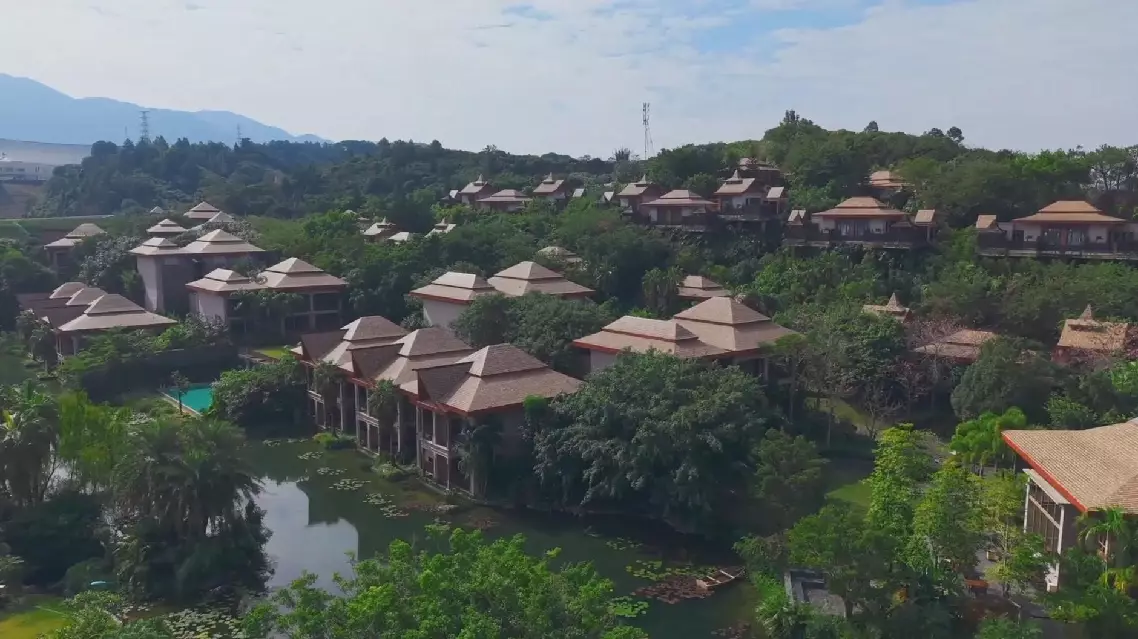
Mild climate, policy support, new experiences attract more tourists worldwide to Guangdong