The National and Local Co-built Embodied Artificial Intelligence Robotics Innovation Center on Monday launched the open-source initiative for "Tiangong", the world's first full-size purely electric-driven humanoid robot.
This decision is anticipated to promote the secondary development of humanoid robots and expedite their integration into everyday human life.
As a key platform driving breakthroughs in intelligent technology and industrial collaboration, the innovation center is currently accelerating advancements in the "Tiangong" humanoid robot, a domestically-developed platform. Additionally, it is focusing on the development of the whole-body collaborative intelligent cerebellum platform and the multifunctional intelligent body platform, "Kaiwu."
"Tiangong" boasts an average speed of 10 kilometers per hour and can reach a top speed of 12 kilometers per hour, setting a benchmark in its class. It is capable of navigating various terrains with ease, including slopes, stairs, grass, gravel, and sand.
Following the official launch of the open-source initiative for Tiangong, the innovation center will collaborate with universities, research institutes, integrators, and other organizations worldwide that possess secondary development capabilities in humanoid robotics. Together, they aim to create the most influential intelligent open-source community.
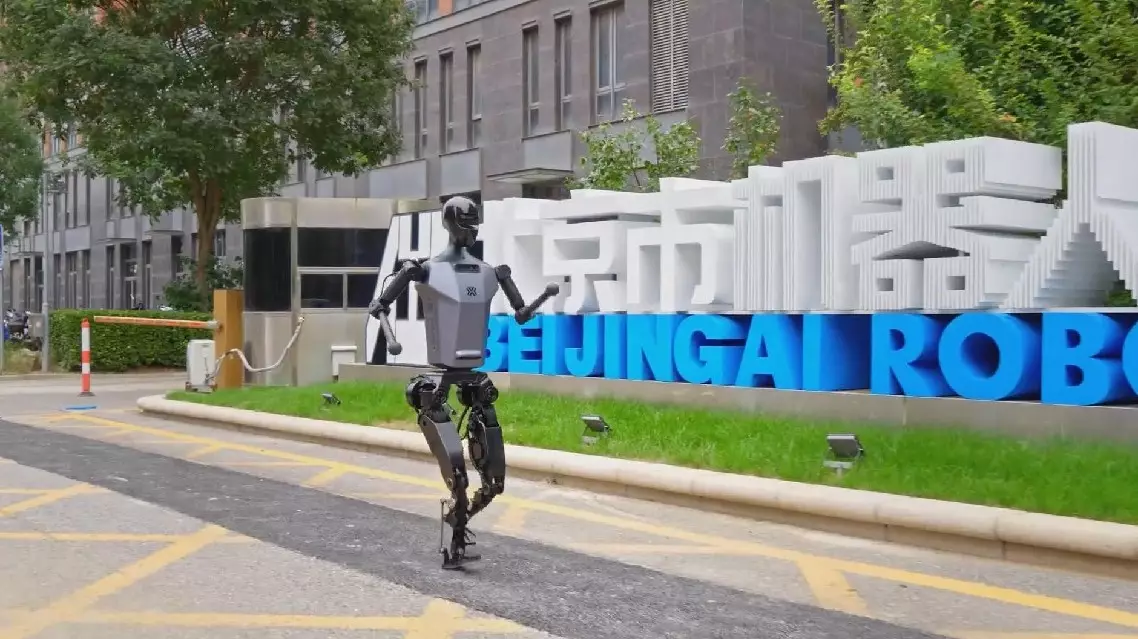
China launches open-source initiative for "Tiangong" humanoid robot
Chinese and American attendees from various walks of life at an event commemorating the 55th anniversary of China-U.S. Ping-Pong Diplomacy said President Xi Jinping's remarks in a congratulatory letter had inspired them to contribute in their own ways to enhancing bilateral friendship.
Fifty-five years ago, the older generation of leaders of China and the United States, with their extraordinary political wisdom and strategic vision, reopened the door to friendly exchanges between the two peoples, creating the much-told stories of "the little ball being able to move the big ball," Xi said in the letter sent on Friday. He noted that it is of great significance to advancing China-U.S. friendship for young people from both sides to renew the affinity fostered by Ping-Pong Diplomacy and take part in a series of sports exchange activities.
Zheng Minzhi, a three-time World Table Tennis Championships gold medalist, was part of the 1971 China team that competed in Nagoya, Japan where she witnessed a surprising turn in diplomatic history.
Zheng attended the commemoration of the 55th anniversary of China-U.S. Ping-Pong Diplomacy and the launching ceremony of a China-U.S. youth sports exchange series held in Beijing on Friday.
"President Xi encouraged us to continue the friendship between the Chinese and American people and pass the baton of friendship to more young people. We must keep contributing to the friendship between China and the United States," Zheng said after the event.
In April 1971, a U.S. Table Tennis team delegation took a historic trip to China, becoming the first delegation of Americans to visit China in decades. The trip was the beginning of what became known as Ping-Pong Diplomacy, and helped lay the groundwork for the establishment of official diplomatic relations between China and the United States.
Judy Hoarfrost, a member of that U.S. team, was invited to participate in the event commemorating the 55th anniversary of China-U.S. Ping-Pong Diplomacy and visited China once again.
"President Xi's speech today, and we heard many important words about friendship between USA and China today. It's so important for our relations to understand each other, to have a dialogue and to move forward in our relations. And it's important today more than ever that we all take the time to talk to each other and have warm feelings and exchanges and understandings," said Hoarfrost.
"In his congratulatory letter, President Xi emphasized the practical and historical significance of 'Ping-Pong Diplomacy' and especially encouraged the younger generation of the two countries to enhance mutual understanding and advance hand in hand, which greatly promoted the non-governmental exchanges between China and the United States and injected warm energy," said Shen Xin, vice president of the Chinese People's Association for Friendship with Foreign Countries.
Xi emphasized that the foundation of China-U.S. relations is laid by the people, and the future of bilateral relations will be shaped by the youth. He expressed the hope that people from all walks of life in both countries, especially the younger generation, will draw wisdom and strength from history.
Some said President Xi's remarks offered guidance on the strategic choices facing China and the U.S., as well as on the evolving global landscape.
"Hopefully, we two countries will be able to do the same in keeping that spirit of cooperation, friendship, sharing of information and, of course, competing, just like ping pong players do. As the new worldwide challenge, we two countries will together provide an incredible leadership," said Kent Watkins, chairman of the American Academy of Housing and Communities.
Among those inspired, professionals from different fields said they would contribute to strengthening China-U.S. friendship through their work.
"As sports reporters of China Media Group, we will bear in mind President Xi's expectations, give full play to the strengths of sports coverage through our work, tell the story of sports exchanges between China and the United States in a more vivid way, promote the continued inheritance of the 'Ping-Pong Diplomacy' spirit in the new era, ensure it flourishes with renewed vigor, and contribute to the stable, healthy, and sustainable development of China-U.S. relations," said Bi Ran, a sports reporter at CMG.
"President Xi called on the younger generation to draw wisdom and strength from history and advance hand in hand in mutual assistance and learning. We will practice the spirit of President Xi's important instructions, promote academic exchanges and knowledge sharing between China and other countries in the fields of sports and technology, and make new contributions to enhancing China's friendship with the world," said Zhang Shanghang, a tenure-track assistant professor at the School of Computer Science of Peking University.
Xi's letter on 'Ping-Pong Diplomacy' inspires Chinese, Americans to boost bilateral friendship