The Orthodox Easter ceasefire with Ukraine announced by Russian President Vladimir Putin began on Saturday afternoon and will continue until Sunday midnight.
On Thursday, Putin announced a ceasefire to mark the Orthodox Easter holiday from 16:00 Moscow time (13:00 GMT) on April 11 until the end of April 12.
The Russian Orthodox Church welcomed the move.
Russia's Defense Minister Andrei Belousov and Chief of the General Staff of the Russian Armed Forces Valery Gerasimov were instructed to halt all combat operations along every front during this period.
Troops must be prepared to thwart any possible provocations by the enemy, as well as any of its aggressive actions, the Kremlin said in a previous statement.
Russian Human Rights Commissioner Tatyana Moskalkova said that the truce would enable stepped-up efforts to evacuate the wounded and search for missing people.
Ukrainian President Volodymyr Zelensky said that Kiev would honor the ceasefire as well.
Ukraine will adhere to the ceasefire and respond in a strictly reciprocal manner, Zelensky wrote on X.
Last year, an Orthodox Easter ceasefire also announced by Putin was in place from 18:00 local time (15:00 GMT) on April 19 until the end of April 20. According to the Russian Defense Ministry, 4,900 violations of the ceasefire by the Ukrainian side were recorded during that time.
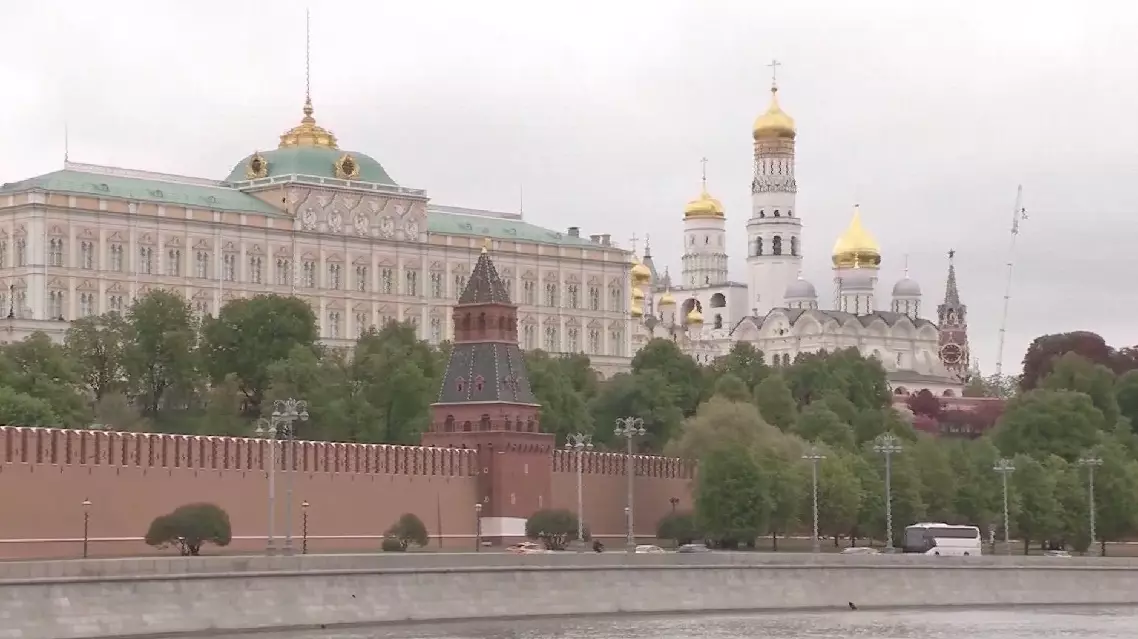
Orthodox Easter ceasefire announced by Putin takes effect, to last through Sunday
The newly established China (Inner Mongolia) Pilot Free Trade Zone (FTZ) in north China will help improve the country's opening-up landscape and support high-quality development, while injecting more certainty into a volatile world, says a China Media Group commentary published on Saturday.
An edited English version of the commentary is as follows:
In China's opening-up drive, a new chapter has started. With the release of a plan for the establishment of the China (Inner Mongolia) Pilot Free Trade Zone, the total number of China's pilot FTZs has risen to 23. International observers believe that in the first year of the 15th Five-Year Plan period (2026-2030), the addition of a new pilot FTZ will further improve China's opening-up framework featuring coordination between land and sea, and mutual reinforcement between eastern and western regions, which will not only help drive high-quality development, but also inject more certainty into a world marked by turbulence and change.
Why is the Inner Mongolia Autonomous Region selected for the new pilot FTZ? The first reason lies in its unique geographic advantages. Historically, Inner Mongolia served as a key hub along the "Grassland Silk Road" and the "Tea Road". Today, it is a key node in Belt and Road cooperation and the China-Mongolia-Russia Economic Corridor. With a border stretching over 4,200 kilometers and 20 ports, the autonomous region links eight provinces at home and serves as a gateway to Eurasia, giving it natural advantages for opening up to the north.
What's more, the Inner Mongolia Autonomous Region also has a solid foundation for opening up. It currently maintains trade ties with 201 countries and regions globally, with trade with Belt and Road Initiative partner countries accounting for 78.6 percent of its total foreign trade.
Data showed that in 2025, the region's total imports and exports reached 220.67 billion yuan, hitting a record high, with growth 2.6 percentage points higher than the national average.
The plan proposes to build the Inner Mongolia Pilot Free Trade Zone into a center for information exchanges, transport and logistics, allocation of factors and resources, sci-tech innovation and industrial cooperation in key fields, linking domestic and international markets and radiating to surrounding regions.
Specifically, the Inner Mongolia pilot FTZ comprises three subzones in Hohhot, Manzhouli and Erenhot — each tasked with differentiated functions based on their respective strengths.
The subzone in Hohhot, capital of the autonomous region, will serve as a central hub, focusing on developing distinctive industries and strategic emerging industries.
The subzone in Manzhouli, a northern border city, will develop distinctive industries such as cross-border tourism and port services, building itself into an important window to Northeast Asia and Europe.
The subzone in Erenhot, a land port on the China-Mongolia border, will focus on developing industries such as international trade and act as a key node of the China-Mongolia-Russia Economic Corridor.
The establishment of the Inner Mongolia pilot FTZ is the latest move in China's sustained push for reform and opening-up. Since the launch of the Shanghai pilot FTZ in September 2013, after more than a decade of exploration and development, China's pilot FTZ network has formed a new opening-up landscape covering the east, west, south, north and central regions, as well as coordinating coastal, inland and border areas.
The new pilot FTZ boasts abundant energy, agricultural, and livestock resources, as well as emerging growth drivers such as green computing power and the digital economy. These will provide more diversified investment options for global capital and offer broader market opportunities and a better business environment for companies worldwide.
Meanwhile, amid intensifying geopolitical tensions and rising global logistics risks, the Inner Mongolia Autonomous Region, as the only provincial-level region in China hosting both the eastern and central corridors of the China-Europe freight train network, is seeing its role as a "golden corridor" become increasingly prominent.
The region handled a total of 9,557 China-Europe freight train trips in 2025, up 16.9 percent year on year and accounting for nearly half of the national total.
Following its establishment, the Inner Mongolia pilot FTZ will deepen economic and trade cooperation with neighboring regions through institutional opening-up, to further facilitate the "golden corridor" connecting China, Mongolia, Russia and Europe, and provide a more resilient trade route for the world.
More importantly, as certain countries pursue unilateralism and protectionism, China continues to refine the layout of its pilot FTZs and deepen institutional opening-up, setting a strong example for others.
This also demonstrates that despite rising undercurrents of de-globalization, advancing trade and investment liberalization and facilitation remains the shared aspiration of people worldwide and a necessity for the world.
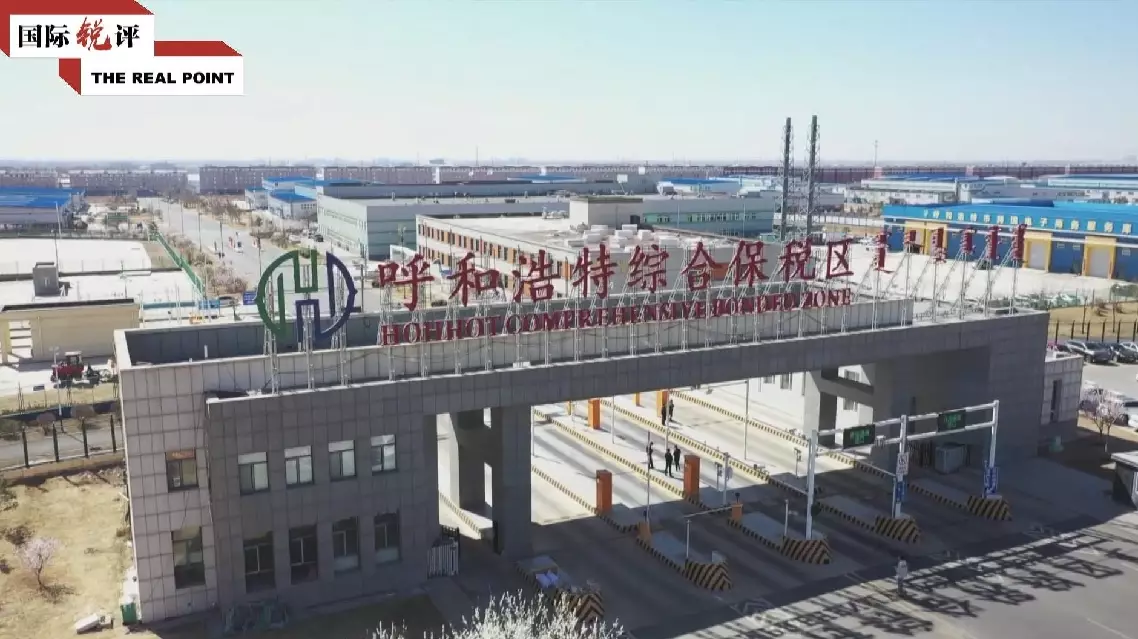
China's new Inner Mongolia pilot FTZ boosts opening-up, adds certainty: commentary