Eyewitnesses to Wednesday's Israeli strikes on Lebanon described to China Global Television Network (CGTN) the following day the moments when buildings in Beirut were blitzed, calling the attacks "criminal, barbaric and savage."
The strikes killed at least 300 people and injured more than 1,000, with densely populated neighborhoods in the capital, Beirut, among the hardest hit, according to the latest data from the Lebanese Civil Defense.
The death toll is expected to rise as more bodies are found under the rubble.
Lebanese Prime Minister Nawaf Salam on Thursday declared a national day of mourning, accusing Israel of killing unarmed civilians.
"I was coming down from here with a friend. We were almost at the mosque when the strike hit. We felt like we were going to be blown clean off the ground. After the first strike, we came back here to see what had happened. Then a second strike hit. Three strikes were carried out here. We rushed over to see. We found people carrying the wounded and there were dead too. Several people were either killed or wounded. Nowhere is safe anymore. This area used to feel safe, but now shells fly over your head. This is hatred toward Lebanese people, it is truly unbelievable. This is a war we have nothing to do with. And suddenly you find yourself a victim in it. Let us live in peace. There is no place like Lebanon and no alternative to it. Lebanon is precious. And we will not leave it even if we become martyrs. What Israel is doing is revenge against the Lebanese people. And it wants to commit atrocities and crimes. But Lebanon is hard to defeat," said Fayz Albawab, one of the survivors.
Another survivor in Beirut described the repeated strikes and their aftermath, recounting the fear, destruction and uncertainty faced by his family.
"I was here, this is our home. And this is my father's. The first strike hit maybe this spot -- the first two strikes. Then they carried out three more strikes here. We went down to look for everyone, my father, mother, and siblings. There is nothing here that deserves to be bombed. This is criminal. This place provides food and drinks. This is barbaric -- brutal, savage strikes. What can I say? No normal person would bomb with such brutality. This is truly a crime. Physically, thank Allah, my family and I are still fine. But psychologically and in terms of our future, we are devastated. Every time you try to build a future, they come and destroy it. Under these circumstances, what can you do? Nothing. Where can I go? Tell me, where can I go? We went to Mount Lebanon, they bombed it. We went to the edge of Barbour (neighborhood), they bombed Barbour. We returned home, they bombed it too. Half of the house was destroyed. I don't know what we're supposed to do. No place is safe," he said.
Another witness said everything was gone, as people screamed and cried while everything burned around them.
"We heard the first strike and said it was far away. The second strike was a bit closer, the third strike shook everything. We went out and were shrouded in smoke, couldn't see anything. Over here, this whole area was on fire. And here as well, everything was gone, we saw people screaming and crying, everything was burning. There were many cars in the parking lot, and all of them obliterated. The building at the back was residential and got destroyed. If we had been in the living room, we would have been killed. Neighbors we knew and saw every day are now gone. The smoke we breathe in from the bombardment is making us sick. It has affected the lives of innocent civilians. If the enemy continues its strikes like this, honestly, there is no safe place anymore. And Israel will continue the bombardment; that much is clear. There is nothing that would make it stop. But where can we go? People in this street are poor, we are not wealthy to move somewhere else," he said.
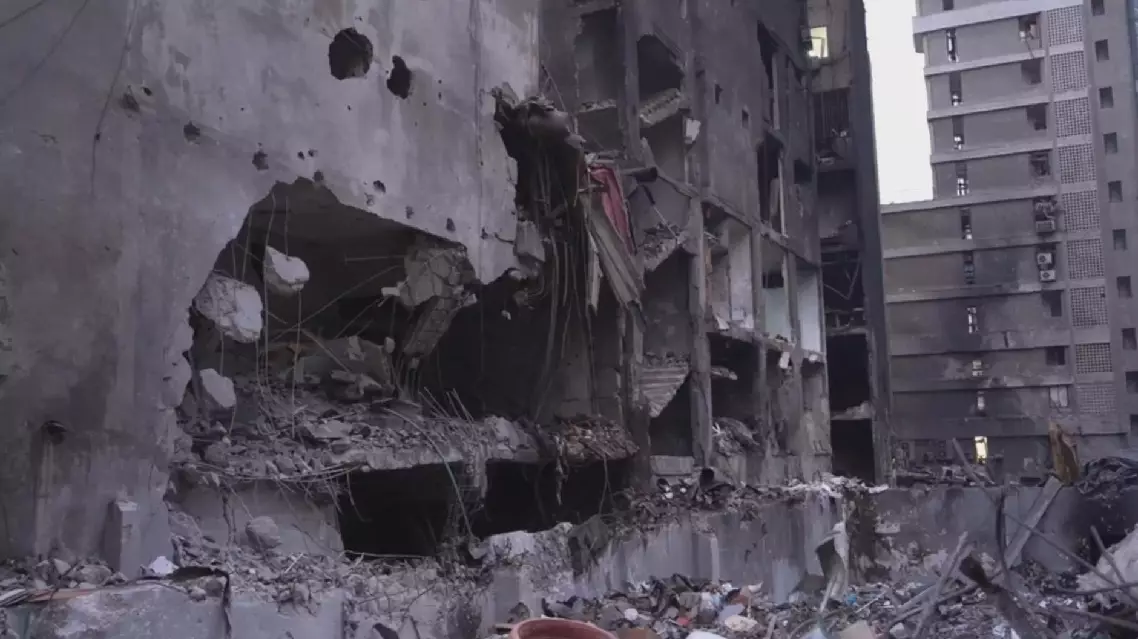
Eyewitnesses recount moments Israeli strikes hit Beirut