 |
- U.S. factories cut back purchases sharply, signaling heightened risks of manufacturing weakness spilling over into the broader economy in 2025
- In contrast, Chinese factories report growth following three months of shrinking input purchasing
- Europe's industrial recession shows no sign of abating, with German, French and Austrian producers at the heart of the downturn
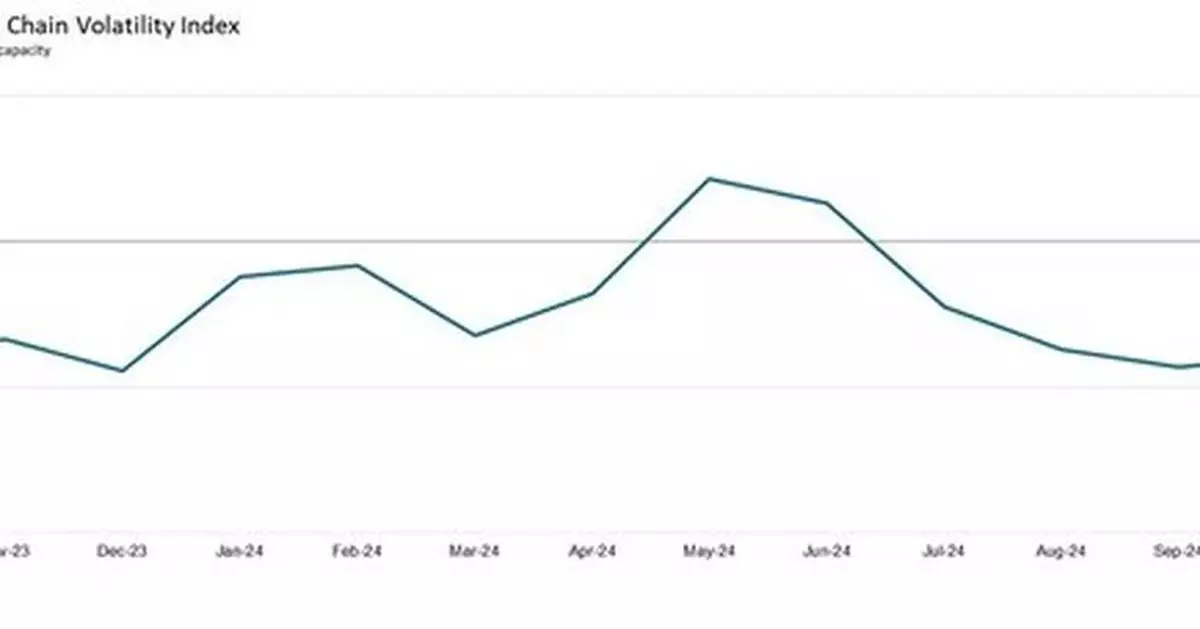
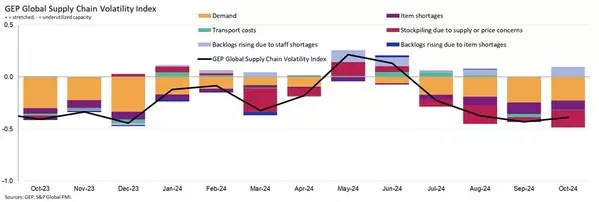
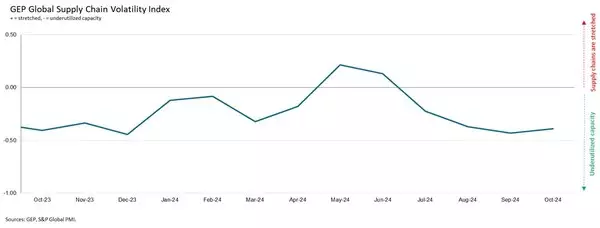
CLARK, N.J., Nov. 12, 2024 /PRNewswire/ -- The GEP Global Supply Chain Volatility Index — a leading indicator tracking demand conditions, shortages, transportation costs, inventories and backlogs based on a monthly survey of 27,000 businesses — posted -0.39, which was little change from -0.43 in September. Therefore, the index remained in territory that indicated one of the highest levels of spare capacity at global suppliers in over a year during October, with no imminent turnaround in Western manufacturing in sight.
Suppliers feeding the world's largest markets reported contractions in October. Most notable was another steep rise in slack across North American supply chains due to declining factory activity in the U.S. In fact, purchasing managers at U.S. manufacturers made their strongest cutbacks to buying volumes in nearly a year and a half, indicating that factories in the world's largest economy are preparing for lower production volumes.
Suppliers feeding Asia also reported spare capacity in October, albeit to a lesser degree than we're seeing in Western markets. This is due to the sustained strong expansion of certain manufacturing industries, such as India's. Notably, in October, China's factory production growth rebounded, and procurement activity rose after three months of contraction, although Japanese and South Korean producers made fewer purchases — an adverse leading indicator for manufacturing in these economies.
Europe's industrial plight remained a key feature of the data in October. Vendor capacity was significantly underutilized, reflecting a continuation of subdued demand in key manufacturing hubs across the continent. Germany's retrenching automotive manufacturing sector is a major headwind to factory output in Europe.
Additionally, October is the 14th consecutive month that the items in short supply indicator has been negative. This shows an excess supply of commodities and intermediate goods relative to current manufacturing demand globally.
"We're in a buyers' market. October is the fourth straight month that suppliers worldwide reported spare capacity, with notable contractions in factory demand across North America and Europe, underscoring the challenging outlook for Western manufacturers," explained Todd Bremer, vice president, GEP. "President-elect Trump inherits U.S. manufacturers with plenty of spare capacity while in contrast, China's modest rebound and strong expansion in India demonstrate greater resilience in Asia."
OCTOBER 2024 KEY FINDINGS
- DEMAND: Procurement activity remains weak across the globe. Demand for commodities, components and raw materials continues to contract, and at one of the steepest rates seen in 2024 so far. By region, North America saw the weakest purchasing activity in October, followed by Europe. Input demand was more resilient in Asia, but still subdued overall.
- INVENTORIES: Inventory drawdowns intensified across factories worldwide in October. Reports of safety stockpiling remained low by historical standards as companies look to make their warehouses leaner to preserve cash flow and tightly manage stocks in line with the weak order situation.
- MATERIAL SHORTAGES: The items in short supply indicator, an aggregate measure which tracks the availability of critical components and raw materials, remains low, pointing to robust supply levels.
- LABOR SHORTAGES: Reports of manufacturers' backlogs rising due to labor shortages ticked higher in October and were above the long-term average. However, factory employment levels have fallen in recent months, suggesting throughput has decreased as a result of lower workforce capacity and companies aren't clearing backlogs as quickly.
- TRANSPORTATION: Global transportation costs were in line with their long-run average during October.
REGIONAL SUPPLY CHAIN VOLATILITY
- NORTH AMERICA: Index at -0.72, versus -0.78 previously. The latest figure is consistent with a substantial level of spare capacity at North America's suppliers.
- EUROPE: Index at -0.52, from -0.74. Albeit an improvement from September, the latest data indicate a continuation of Europe's industrial recession.
- U.K.: Index fell notably to -0.40, from -0.12, its lowest level in six months, signaling a deterioration in the U.K. manufacturing sector.
- ASIA: Index at -0.20, from -0.36. While indicative of spare capacity, the level of slack is much lower than seen in Western markets. India continues to have a strongly positive influence on the region.
For more information, visit www.gep.com/volatility.
Note: Full historical data dating back to January 2005 is available for subscription. Please contact economics@spglobal.com.
The next release of the GEP Global Supply Chain Volatility Index will be 8 a.m. ET, Dec. 11, 2024.
About the GEP Global Supply Chain Volatility Index
The GEP Global Supply Chain Volatility Index is produced by S&P Global and GEP. It is derived from S&P Global's PMI® surveys, sent to companies in over 40 countries, totaling around 27,000 companies. The headline figure is a weighted sum of six sub-indices derived from PMI data, PMI Comments Trackers and PMI Commodity Price & Supply Indicators compiled by S&P Global.
- A value above 0 indicates that supply chain capacity is being stretched and supply chain volatility is increasing. The further above 0, the greater the extent to which capacity is being stretched.
- A value below 0 indicates that supply chain capacity is being underutilized, reducing supply chain volatility. The further below 0, the greater the extent to which capacity is being underutilized.
A Supply Chain Volatility Index is also published at a regional level for Europe, Asia, North America and the U.K. For more information about the methodology, click here.
About GEP
GEP® delivers AI-powered procurement and supply chain solutions that help global enterprises become more agile and resilient, operate more efficiently and effectively, gain competitive advantage, boost profitability and increase shareholder value. Fresh thinking, innovative products, unrivaled domain expertise, smart, passionate people — this is how GEP SOFTWAREâ„¢, GEP STRATEGYâ„¢ and GEP MANAGED SERVICESâ„¢ together deliver procurement and supply chain solutions of unprecedented scale, power and effectiveness. Our customers are the world's best companies, including more than 1,000 Fortune 500 and Global 2000 industry leaders who rely on GEP to meet ambitious strategic, financial and operational goals. A leader in multiple Gartner Magic Quadrants, GEP's cloud-native software and digital business platforms consistently win awards and recognition from industry analysts, research firms and media outlets, including Gartner, Forrester, IDC, ISG, and Spend Matters. GEP is also regularly ranked a top procurement and supply chain consulting and strategy firm, and a leading managed services provider by ALM, Everest Group, NelsonHall, IDC, ISG and HFS, among others. Headquartered in Clark, New Jersey, GEP has offices and operations centers across Europe, Asia, Africa and the Americas. To learn more, visit www.gep.com.
About S&P Global
S&P Global (NYSE: SPGI) S&P Global provides essential intelligence. We enable governments, businesses and individuals with the right data, expertise and connected technology so that they can make decisions with conviction. From helping our customers assess new investments to guiding them through ESG and energy transition across supply chains, we unlock new opportunities, solve challenges and accelerate progress for the world. We are widely sought after by many of the world's leading organizations to provide credit ratings, benchmarks, analytics and workflow solutions in the global capital, commodity and automotive markets. With every one of our offerings, we help the world's leading organizations plan for tomorrow, today.
Media Contacts
- U.S. factories cut back purchases sharply, signaling heightened risks of manufacturing weakness spilling over into the broader economy in 2025
- In contrast, Chinese factories report growth following three months of shrinking input purchasing
- Europe's industrial recession shows no sign of abating, with German, French and Austrian producers at the heart of the downturn
CLARK, N.J., Nov. 12, 2024 /PRNewswire/ -- The GEP Global Supply Chain Volatility Index — a leading indicator tracking demand conditions, shortages, transportation costs, inventories and backlogs based on a monthly survey of 27,000 businesses — posted -0.39, which was little change from -0.43 in September. Therefore, the index remained in territory that indicated one of the highest levels of spare capacity at global suppliers in over a year during October, with no imminent turnaround in Western manufacturing in sight.
Suppliers feeding the world's largest markets reported contractions in October. Most notable was another steep rise in slack across North American supply chains due to declining factory activity in the U.S. In fact, purchasing managers at U.S. manufacturers made their strongest cutbacks to buying volumes in nearly a year and a half, indicating that factories in the world's largest economy are preparing for lower production volumes.
Suppliers feeding Asia also reported spare capacity in October, albeit to a lesser degree than we're seeing in Western markets. This is due to the sustained strong expansion of certain manufacturing industries, such as India's. Notably, in October, China's factory production growth rebounded, and procurement activity rose after three months of contraction, although Japanese and South Korean producers made fewer purchases — an adverse leading indicator for manufacturing in these economies.
Europe's industrial plight remained a key feature of the data in October. Vendor capacity was significantly underutilized, reflecting a continuation of subdued demand in key manufacturing hubs across the continent. Germany's retrenching automotive manufacturing sector is a major headwind to factory output in Europe.
Additionally, October is the 14th consecutive month that the items in short supply indicator has been negative. This shows an excess supply of commodities and intermediate goods relative to current manufacturing demand globally.
"We're in a buyers' market. October is the fourth straight month that suppliers worldwide reported spare capacity, with notable contractions in factory demand across North America and Europe, underscoring the challenging outlook for Western manufacturers," explained Todd Bremer, vice president, GEP. "President-elect Trump inherits U.S. manufacturers with plenty of spare capacity while in contrast, China's modest rebound and strong expansion in India demonstrate greater resilience in Asia."
OCTOBER 2024 KEY FINDINGS
- DEMAND: Procurement activity remains weak across the globe. Demand for commodities, components and raw materials continues to contract, and at one of the steepest rates seen in 2024 so far. By region, North America saw the weakest purchasing activity in October, followed by Europe. Input demand was more resilient in Asia, but still subdued overall.
- INVENTORIES: Inventory drawdowns intensified across factories worldwide in October. Reports of safety stockpiling remained low by historical standards as companies look to make their warehouses leaner to preserve cash flow and tightly manage stocks in line with the weak order situation.
- MATERIAL SHORTAGES: The items in short supply indicator, an aggregate measure which tracks the availability of critical components and raw materials, remains low, pointing to robust supply levels.
- LABOR SHORTAGES: Reports of manufacturers' backlogs rising due to labor shortages ticked higher in October and were above the long-term average. However, factory employment levels have fallen in recent months, suggesting throughput has decreased as a result of lower workforce capacity and companies aren't clearing backlogs as quickly.
- TRANSPORTATION: Global transportation costs were in line with their long-run average during October.
REGIONAL SUPPLY CHAIN VOLATILITY
- NORTH AMERICA: Index at -0.72, versus -0.78 previously. The latest figure is consistent with a substantial level of spare capacity at North America's suppliers.
- EUROPE: Index at -0.52, from -0.74. Albeit an improvement from September, the latest data indicate a continuation of Europe's industrial recession.
- U.K.: Index fell notably to -0.40, from -0.12, its lowest level in six months, signaling a deterioration in the U.K. manufacturing sector.
- ASIA: Index at -0.20, from -0.36. While indicative of spare capacity, the level of slack is much lower than seen in Western markets. India continues to have a strongly positive influence on the region.
For more information, visit www.gep.com/volatility.
Note: Full historical data dating back to January 2005 is available for subscription. Please contact economics@spglobal.com.
The next release of the GEP Global Supply Chain Volatility Index will be 8 a.m. ET, Dec. 11, 2024.
About the GEP Global Supply Chain Volatility Index
The GEP Global Supply Chain Volatility Index is produced by S&P Global and GEP. It is derived from S&P Global's PMI® surveys, sent to companies in over 40 countries, totaling around 27,000 companies. The headline figure is a weighted sum of six sub-indices derived from PMI data, PMI Comments Trackers and PMI Commodity Price & Supply Indicators compiled by S&P Global.
- A value above 0 indicates that supply chain capacity is being stretched and supply chain volatility is increasing. The further above 0, the greater the extent to which capacity is being stretched.
- A value below 0 indicates that supply chain capacity is being underutilized, reducing supply chain volatility. The further below 0, the greater the extent to which capacity is being underutilized.
A Supply Chain Volatility Index is also published at a regional level for Europe, Asia, North America and the U.K. For more information about the methodology, click here.
About GEP
GEP® delivers AI-powered procurement and supply chain solutions that help global enterprises become more agile and resilient, operate more efficiently and effectively, gain competitive advantage, boost profitability and increase shareholder value. Fresh thinking, innovative products, unrivaled domain expertise, smart, passionate people — this is how GEP SOFTWAREâ„¢, GEP STRATEGYâ„¢ and GEP MANAGED SERVICESâ„¢ together deliver procurement and supply chain solutions of unprecedented scale, power and effectiveness. Our customers are the world's best companies, including more than 1,000 Fortune 500 and Global 2000 industry leaders who rely on GEP to meet ambitious strategic, financial and operational goals. A leader in multiple Gartner Magic Quadrants, GEP's cloud-native software and digital business platforms consistently win awards and recognition from industry analysts, research firms and media outlets, including Gartner, Forrester, IDC, ISG, and Spend Matters. GEP is also regularly ranked a top procurement and supply chain consulting and strategy firm, and a leading managed services provider by ALM, Everest Group, NelsonHall, IDC, ISG and HFS, among others. Headquartered in Clark, New Jersey, GEP has offices and operations centers across Europe, Asia, Africa and the Americas. To learn more, visit www.gep.com.
About S&P Global
S&P Global (NYSE: SPGI) S&P Global provides essential intelligence. We enable governments, businesses and individuals with the right data, expertise and connected technology so that they can make decisions with conviction. From helping our customers assess new investments to guiding them through ESG and energy transition across supply chains, we unlock new opportunities, solve challenges and accelerate progress for the world. We are widely sought after by many of the world's leading organizations to provide credit ratings, benchmarks, analytics and workflow solutions in the global capital, commodity and automotive markets. With every one of our offerings, we help the world's leading organizations plan for tomorrow, today.
Media Contacts
Derek Creevey
Joe Hayes
S&P Global Market Intelligence
GEP
Principal Economist
Email: Press.mi@spglobal.com
Phone: +1 646-276-4579
S&P Global Market Intelligence
Email:
derek.creevey@gep.com
Phone: +44-1344-328-099
Email: joe.hayes@spglobal.com
** The press release content is from PR Newswire. Bastille Post is not involved in its creation. **
FACTORY DEMAND WEAKENS ACROSS MAJOR ECONOMIES IN OCTOBER: GEP GLOBAL SUPPLY CHAIN VOLATILITY INDEX
FACTORY DEMAND WEAKENS ACROSS MAJOR ECONOMIES IN OCTOBER: GEP GLOBAL SUPPLY CHAIN VOLATILITY INDEX
|
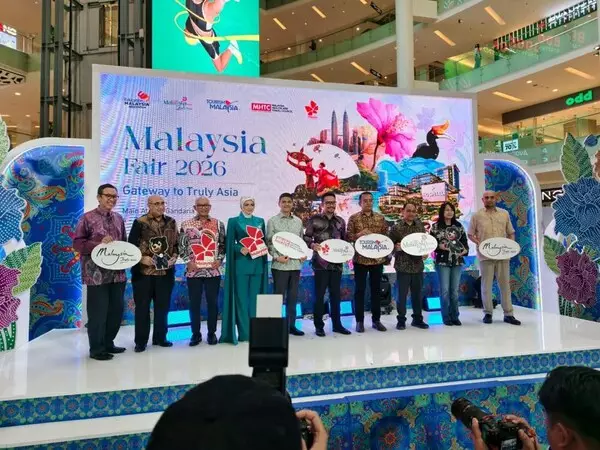
JAKARTA, Indonesia, June 9, 2026 /PRNewswire/ -- Malaysia Healthcare Travel Council (MHTC), together with Tourism Malaysia, recorded strong visitor engagement at Malaysia Fair Jakarta 2026, held from 4 to 7 June 2026 at Gandaria City, underscoring sustained interest among Indonesian consumers in Malaysia's healthcare, wellness and travel offerings. Organised in conjunction with Malaysia Year of Medical Tourism 2026 (MYMT 2026), themed "Healing Meets Hospitality", the initiative brings together healthcare providers, tourism stakeholders and educational institutions under one roof, offering Indonesian visitors exclusive access to world-class healthcare services, travel experiences and study opportunities.
A key highlight of the fair was the participation of 20 Malaysian healthcare providers including MHTC's Flagship Medical Tourism Hospitals namely Island Hospital Penang, Institut Jantung Negara, Mahkota Medical Centre, and Subang Jaya Medical Centre, alongside its member hospitals such as Alpha IVF & Women's Specialists, Ampang Puteri Specialist Hospital, Cengild G.I Medical Centre, Damansara Specialist Hospital, Damansara Specialist Hospital 2, GenPrime Everlink Fertility Centre, Hospital Picaso, MSU Medical Centre, Northern Heart Hospital Penang, OasisEye Specialists, Optimax Eye Specialist Centre, Penang Adventist Hospital, Puteri Specialist Hospital, Regency Specialist Hospital, Sunway Medical Centre, and Sunway Medical Centre Penang.
For those looking to book vacations, seven top travel agencies, including Dwidaya Tour, TX Travel, Habibi Tours, Baltic Golf & Travel Specialist, A&L Holidays, AWB Cruise, and Golden Rama Tours & Travel, are on-site, offering curated leisure packages alongside the official airline partner, Malaysia Airlines. Beyond health and travel, renowned higher education institutions such as Taylor's University, UCSI University, INTI International University, Todak Academy, and MILA University are on hand to consult with prospective students and parents. Visitors are given a range of travel and medical offerings to choose from, spanning specialist healthcare services, wellness experiences, tourism packages and destination showcases, as well as direct engagements with Malaysian healthcare providers.
"Malaysia Fair 2026 reflects our continued commitment to strengthening Malaysia Healthcare's presence in Indonesia, particularly in Jakarta, as one of our most important and high-potential markets. Through this platform, we aim to bring trusted Malaysian healthcare closer to Indonesian communities while reinforcing Malaysia's position as a preferred destination for quality healthcare, compassionate care, and seamless patient experience," said Mr Suriaghandi Suppiah, Chief Executive Officer of MHTC.
The fair was officially launched in the presence of MHTC's brand ambassador, Dato' Sri Siti Nurhaliza, whose participation underscored Malaysia's broader efforts to promote the country's medical tourism industry through a combination of medical excellence, hospitality, and cultural familiarity. As one of Malaysia's most recognised public figures with a strong following in Indonesia, Dato' Sri Siti Nurhaliza highlighted the importance of leveraging people-to-people connections to strengthen confidence in Malaysia's healthcare among regional audiences. "My TTC journey took almost 10 years, and I understand how important it is for patients to receive not only quality treatment but also reassurance, understanding, and hope throughout the process. As a Malaysian, I am proud to help share the strengths of Malaysia Healthcare with our friends in Indonesia and the wider region," she said.
The initiative comes at a time when Indonesia remains Malaysia Healthcare's largest and most important source market. In 2025 alone, Indonesia contributed approximately RM2.2 billion in healthcare travel revenue to Malaysia, representing a 23% year-on-year increase in revenue and a 16% increase in healthcare traveller arrivals compared to 2024. Meanwhile, over 970,000 Indonesian healthcare travelers visited Malaysia, indicating ongoing trust in Malaysia's healthcare system. Major treatment areas for Indonesian patients include health screening, gastroenterology, cancer treatment, endocrinology, cardiology, and orthopaedic surgery, highlighting Malaysia's capability to provide wide-ranging and specialized care for regional patients.
The event is also supported by strategic partners including Econolab, JavaMifi, Sheraton Grand Jakarta Gandaria City Hotel and Batik Air, whose participation further enhances the overall visitor experience and strengthens cross-industry collaboration in support of Malaysia Healthcare's outreach efforts in Indonesia.
ENDS
For media inquiries and further information, please contact:
Siti Hamidah Mohd Najib
Senior Executive, PR and Media Unit
Communications
+603 8776 6168
hamidah.m@mhtc.org.my
Mohamad Shahizam Fauzi
Head, Communications
+603 8776 6168
shahizam.f@mhtc.org.my
About Malaysia Healthcare Travel Council
Malaysia Healthcare Travel Council (MHTC), established in 2009 under the purview of the Ministry of Health (MOH) Malaysia, is entrusted with developing and nurturing the "Malaysia Healthcare" brand. MHTC enhances, coordinates, and promotes Malaysia's healthcare travel industry by fostering industry collaborations and building valuable public-private partnerships both domestically and internationally. With 82 member hospitals nationwide, MHTC continues to elevate the healthcare travel ecosystem through strong branding, seamless patient experiences, and strategic market initiatives. In line with these efforts, MHTC is spearheading the Malaysia Year of Medical Tourism (MYMT) 2026, the nation's first dedicated year to celebrate and advance healthcare travel. MYMT 2026 serves as a milestone initiative to showcase Malaysia's world-class healthcare offerings, strengthen its position as the premier global healthcare destination, and highlight the industry's significant contribution to the national economy. MHTC's website: https://www.malaysiahealthcare.org.
JAKARTA, Indonesia, June 9, 2026 /PRNewswire/ -- Malaysia Healthcare Travel Council (MHTC), together with Tourism Malaysia, recorded strong visitor engagement at Malaysia Fair Jakarta 2026, held from 4 to 7 June 2026 at Gandaria City, underscoring sustained interest among Indonesian consumers in Malaysia's healthcare, wellness and travel offerings. Organised in conjunction with Malaysia Year of Medical Tourism 2026 (MYMT 2026), themed "Healing Meets Hospitality", the initiative brings together healthcare providers, tourism stakeholders and educational institutions under one roof, offering Indonesian visitors exclusive access to world-class healthcare services, travel experiences and study opportunities.
A key highlight of the fair was the participation of 20 Malaysian healthcare providers including MHTC's Flagship Medical Tourism Hospitals namely Island Hospital Penang, Institut Jantung Negara, Mahkota Medical Centre, and Subang Jaya Medical Centre, alongside its member hospitals such as Alpha IVF & Women's Specialists, Ampang Puteri Specialist Hospital, Cengild G.I Medical Centre, Damansara Specialist Hospital, Damansara Specialist Hospital 2, GenPrime Everlink Fertility Centre, Hospital Picaso, MSU Medical Centre, Northern Heart Hospital Penang, OasisEye Specialists, Optimax Eye Specialist Centre, Penang Adventist Hospital, Puteri Specialist Hospital, Regency Specialist Hospital, Sunway Medical Centre, and Sunway Medical Centre Penang.
For those looking to book vacations, seven top travel agencies, including Dwidaya Tour, TX Travel, Habibi Tours, Baltic Golf & Travel Specialist, A&L Holidays, AWB Cruise, and Golden Rama Tours & Travel, are on-site, offering curated leisure packages alongside the official airline partner, Malaysia Airlines. Beyond health and travel, renowned higher education institutions such as Taylor's University, UCSI University, INTI International University, Todak Academy, and MILA University are on hand to consult with prospective students and parents. Visitors are given a range of travel and medical offerings to choose from, spanning specialist healthcare services, wellness experiences, tourism packages and destination showcases, as well as direct engagements with Malaysian healthcare providers.
"Malaysia Fair 2026 reflects our continued commitment to strengthening Malaysia Healthcare's presence in Indonesia, particularly in Jakarta, as one of our most important and high-potential markets. Through this platform, we aim to bring trusted Malaysian healthcare closer to Indonesian communities while reinforcing Malaysia's position as a preferred destination for quality healthcare, compassionate care, and seamless patient experience," said Mr Suriaghandi Suppiah, Chief Executive Officer of MHTC.
The fair was officially launched in the presence of MHTC's brand ambassador, Dato' Sri Siti Nurhaliza, whose participation underscored Malaysia's broader efforts to promote the country's medical tourism industry through a combination of medical excellence, hospitality, and cultural familiarity. As one of Malaysia's most recognised public figures with a strong following in Indonesia, Dato' Sri Siti Nurhaliza highlighted the importance of leveraging people-to-people connections to strengthen confidence in Malaysia's healthcare among regional audiences. "My TTC journey took almost 10 years, and I understand how important it is for patients to receive not only quality treatment but also reassurance, understanding, and hope throughout the process. As a Malaysian, I am proud to help share the strengths of Malaysia Healthcare with our friends in Indonesia and the wider region," she said.
The initiative comes at a time when Indonesia remains Malaysia Healthcare's largest and most important source market. In 2025 alone, Indonesia contributed approximately RM2.2 billion in healthcare travel revenue to Malaysia, representing a 23% year-on-year increase in revenue and a 16% increase in healthcare traveller arrivals compared to 2024. Meanwhile, over 970,000 Indonesian healthcare travelers visited Malaysia, indicating ongoing trust in Malaysia's healthcare system. Major treatment areas for Indonesian patients include health screening, gastroenterology, cancer treatment, endocrinology, cardiology, and orthopaedic surgery, highlighting Malaysia's capability to provide wide-ranging and specialized care for regional patients.
The event is also supported by strategic partners including Econolab, JavaMifi, Sheraton Grand Jakarta Gandaria City Hotel and Batik Air, whose participation further enhances the overall visitor experience and strengthens cross-industry collaboration in support of Malaysia Healthcare's outreach efforts in Indonesia.
ENDS
For media inquiries and further information, please contact:
Siti Hamidah Mohd Najib
Senior Executive, PR and Media Unit
Communications
+603 8776 6168
hamidah.m@mhtc.org.my
Mohamad Shahizam Fauzi
Head, Communications
+603 8776 6168
shahizam.f@mhtc.org.my
About Malaysia Healthcare Travel Council
Malaysia Healthcare Travel Council (MHTC), established in 2009 under the purview of the Ministry of Health (MOH) Malaysia, is entrusted with developing and nurturing the "Malaysia Healthcare" brand. MHTC enhances, coordinates, and promotes Malaysia's healthcare travel industry by fostering industry collaborations and building valuable public-private partnerships both domestically and internationally. With 82 member hospitals nationwide, MHTC continues to elevate the healthcare travel ecosystem through strong branding, seamless patient experiences, and strategic market initiatives. In line with these efforts, MHTC is spearheading the Malaysia Year of Medical Tourism (MYMT) 2026, the nation's first dedicated year to celebrate and advance healthcare travel. MYMT 2026 serves as a milestone initiative to showcase Malaysia's world-class healthcare offerings, strengthen its position as the premier global healthcare destination, and highlight the industry's significant contribution to the national economy. MHTC's website: https://www.malaysiahealthcare.org.
** This press release is distributed by PR Newswire through automated distribution system, for which the client assumes full responsibility. **
Strong Indonesian Demand Reinforces Malaysia Healthcare's Growth at Malaysia Fair 2026