Chinese President Xi Jinping arrived in Brazil's Rio de Janeiro on Sunday to attend the 19th G20 Summit and pay a state visit at the invitation of Brazilian President Luiz Inacio Lula da Silva.
Xi was greeted by senior Brazilian officials at the airport upon his arrival, while trumpets sounded in his honor as a guard of honor lined up on both sides of the red carpet to welcome the Chinese president.
Click to Gallery
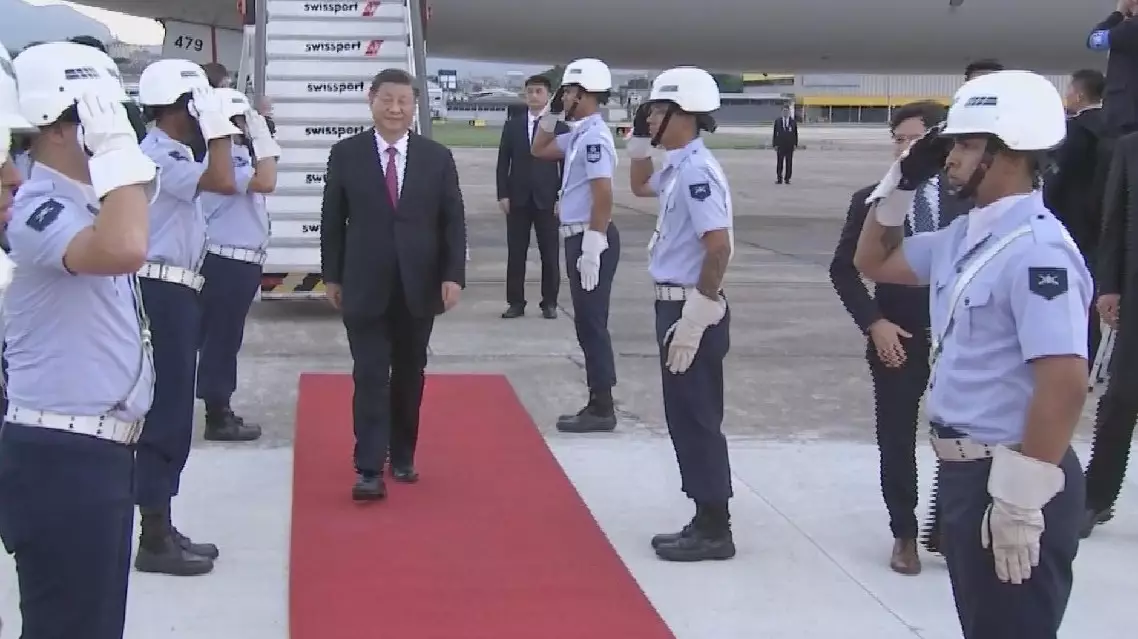
Xi arrives in Rio for G20 Summit, state visit to Brazil
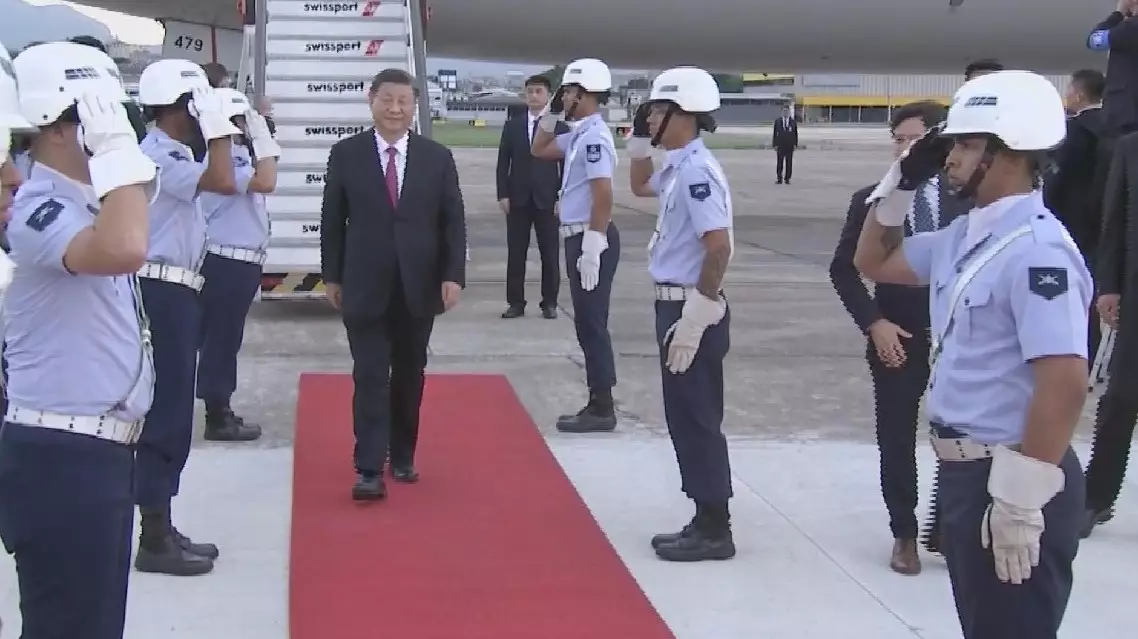
Xi arrives in Rio for G20 Summit, state visit to Brazil
Xi arrives in Rio for G20 Summit, state visit to Brazil
Xi arrives in Rio for G20 Summit, state visit to Brazil
Xi arrives in Rio for G20 Summit, state visit to Brazil
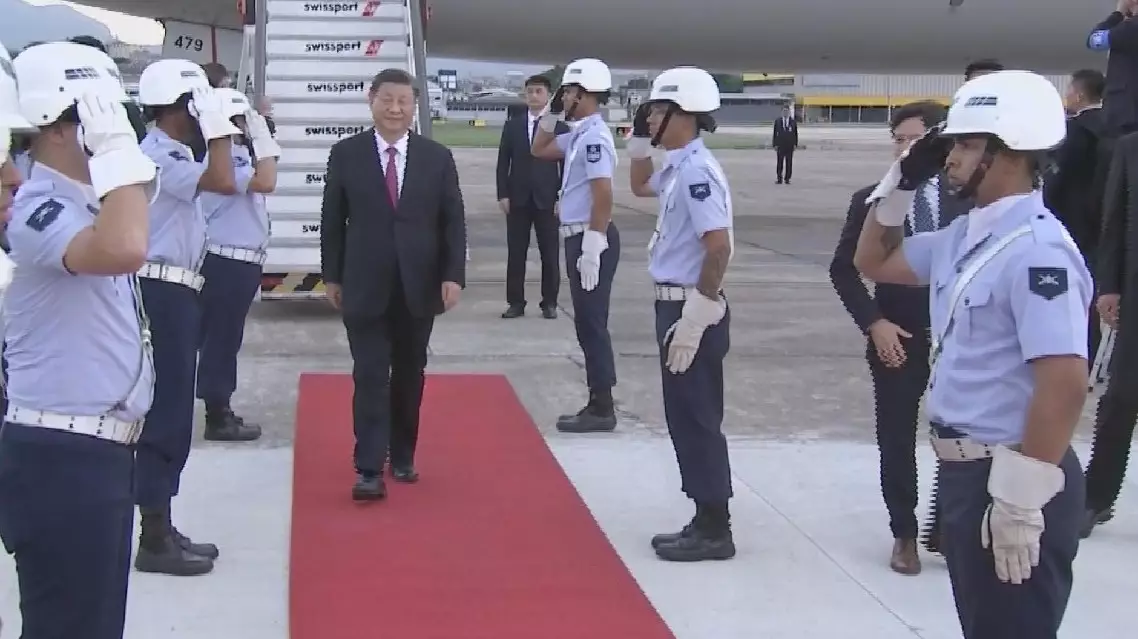
Xi arrives in Rio for G20 Summit, state visit to Brazil
In a written statement, Xi extended sincere greetings and best wishes to the Brazilian government and people on behalf of the Chinese government and people.
Xi said he has paid four visits to Brazil and has witnessed the country's development over the past 30 years, adding that he felt a deep sense of closeness as he stepped once again onto this welcoming land.
China and Brazil are like-minded friends and strong partners moving forward hand in hand, Xi said. As two major developing countries from the Eastern and Western hemispheres, although separated by oceans, the two countries are drawn to each other and resonate with one another, he said.
Xi said in recent years the two countries have continued to deepen mutual political trust, achieve fruitful practical cooperation, and foster interpersonal exchanges, breathing new life into their traditional friendship in this new era. Together, China and Brazil have raised the just voice of the "Global South" on the international stage and made significant contributions to promoting world peace and development, he said.
Noting that China and Brazil are celebrating the 50th anniversary of the establishment of diplomatic ties this year, Xi said relations between the two countries stand at an important historical juncture of building on past achievements and forging ahead. Xi said he believes this visit will further enhance the strategic mutual trust between the two countries, deepen exchanges and cooperation in various fields, and lead China-Brazil relations into the next "golden 50 years."
The Chinese president said he also looks forward to attending the 19th G20 Summit, where he will work with all parties to discuss key initiatives, seek common development, jointly advocate for a more equitable and orderly multipolar world, support inclusive economic globalization, and promote the G20 to continue playing an even greater role as an important platform for international economic cooperation.
Cai Qi, a member of the Standing Committee of the Political Bureau of the Communist Party of China (CPC) Central Committee and director of the General Office of the CPC Central Committee, and Wang Yi, a member of the Political Bureau of the CPC Central Committee and Chinese foreign minister, traveled on the same plane as Xi.
Chinese Ambassador to Brazil, Zhu Qingqiao, was also at the airport to welcome Xi's arrival.
Xi's trip to Brazil immediately follows his state visit to Peru, where the Chinese president also attended the 31st APEC Economic Leaders' Meeting.
Upon his departure from Lima, crowds gathered on both sides of the road on the way to the airport, waving the national flags of China and Peru, and cheering the success of Xi's state visit.
Gustavo Adrianzen, president of Council of Ministers of Peru, Minister of Defense Walter Astudillo and other officials from the Peruvian government saw off the Chinese president at the airport.
Xi arrives in Rio for G20 Summit, state visit to Brazil
Xi arrives in Rio for G20 Summit, state visit to Brazil
Xi arrives in Rio for G20 Summit, state visit to Brazil
Xi arrives in Rio for G20 Summit, state visit to Brazil
Xi arrives in Rio for G20 Summit, state visit to Brazil
Xi arrives in Rio for G20 Summit, state visit to Brazil