CHICAGO--(BUSINESS WIRE)--Nov 19, 2024--
Snowflake (NYSE: SNOW), the AI Data Cloud company, today announced at Microsoft Ignite an expanded partnership with Microsoft to establish a new Snowflake Power Platform connector for Microsoft Power Platform, enabling bidirectional access between Dataverse, the enterprise data platform for agents, and Snowflake’s AI Data Cloud. The connector simplifies data interoperability between Microsoft Power Platform, Microsoft’s low-code/no-code services suite, Dynamics 365, and the Snowflake AI Data Cloud, giving developers and business users the power to build and leverage custom enterprise AI applications using their enterprise data in Snowflake. With this latest integration, Snowflake and Microsoft will help customers simplify data collaboration, enhance enterprise insights, and harness the power of AI for their unique business needs.
This press release features multimedia. View the full release here: https://www.businesswire.com/news/home/20241119810988/en/
By establishing a connector between Dataverse and the Snowflake AI Data Cloud, Microsoft Power Apps developers no longer need to create custom workflows and can now quickly build business applications on the Microsoft Power Platform with data from Snowflake with minimal coding effort. For IT and analytics leaders, this will dramatically reduce time spent on resource and infrastructure management, and allow them to focus on broader enterprise data needs, including high-volume transactions and near real-time analytics. All Power Apps developers will be able to create applications leveraging their data directly from Snowflake. Developers and business users now have the peace of mind that their data never leaves the built-in governance and security of Snowflake’s platform as they build, launch, and leverage new applications on the Microsoft Power Platform to drive business insights. Organizations using Dynamics 365 applications will be able to integrate their data with Snowflake for holistic business insights.
“Snowflake and Microsoft have a shared vision, rooted in collaboration, to help customers gain deeper data-driven insights and break down data silos as effectively as possible,” said Christian Kleinerman, EVP of Product, Snowflake. “In the age of AI, this shared vision has taken on even greater meaning, and through our bidirectional data access integration, we’re giving developers and business users the tools they need to build powerful AI applications without the need to move or copy data - improving both collaboration and productivity. Today’s announcement deepens our partnership with Microsoft, and we look forward to continuing to innovate together in service of our customers.”
“This integration allows developers to leverage the capabilities of both Snowflake and Microsoft to develop powerful AI-first applications in the Power Platform and Copilot Studio,” said Charles Lamanna, Corporate Vice President, Business and Industry Copilot at Microsoft. “Removing barriers for developers enhances productivity, ensures IT security and governance, and provides more value for business users.”
In addition to the launch of the Snowflake Power Platform connector, earlier this year, Snowflake and Microsoft announced bidirectional data access between Snowflake AI Data Cloud and Microsoft Fabric through Apache Iceberg™. Data access from the Snowflake AI Data Cloud to Dataverse and the Microsoft Power Platform is currently in public preview. Data access from Dataverse to Snowflake is expected in early 2025.
Learn More:
About Snowflake
Snowflake makes enterprise AI easy, efficient and trusted. Thousands of companies around the globe, including hundreds of the world’s largest, use Snowflake’s AI Data Cloud to share data, build applications, and power their business with AI. The era of enterprise AI is here. Learn more at snowflake.com (NYSE: SNOW).
Forward Looking Statements
This press release contains express and implied forward-looking statements, including statements regarding (i) Snowflake’s business strategy, (ii) Snowflake’s products, services, and technology offerings, including those that are under development or not generally available, (iii) market growth, trends, and competitive considerations, and (iv) the integration, interoperability, and availability of Snowflake’s products with and on third-party platforms. These forward-looking statements are subject to a number of risks, uncertainties and assumptions, including those described under the heading “Risk Factors” and elsewhere in the Quarterly Reports on Form 10-Q and the Annual Reports on Form 10-K that Snowflake files with the Securities and Exchange Commission. In light of these risks, uncertainties, and assumptions, actual results could differ materially and adversely from those anticipated or implied in the forward-looking statements. As a result, you should not rely on any forward-looking statements as predictions of future events.
© 2024 Snowflake Inc. All rights reserved. Snowflake, the Snowflake logo, and all other Snowflake product, feature and service names mentioned herein are registered trademarks or trademarks of Snowflake Inc. in the United States and other countries. All other brand names or logos mentioned or used herein are for identification purposes only and may be the trademarks of their respective holder(s). Snowflake may not be associated with, or be sponsored or endorsed by, any such holder(s).

Snowflake and Microsoft Simplify AI App Development and Data Collaboration with Connector for Microsoft Power Platform and Microsoft Dynamics 365 (Graphic: Business Wire)
BUDAPEST, Hungary (AP) — A blacksmith, a stable boy, a soldier, a slave: The faces and stories of these and other residents of an ancient Roman city in modern Hungary have been brought to life in remarkable fidelity for a new exhibition in Budapest.
The display, which runs until Oct. 31, showcases highly detailed facial reconstructions from over a dozen skulls found in the ancient city of Aquincum, once a bustling Roman settlement on the empire's Danube frontier.
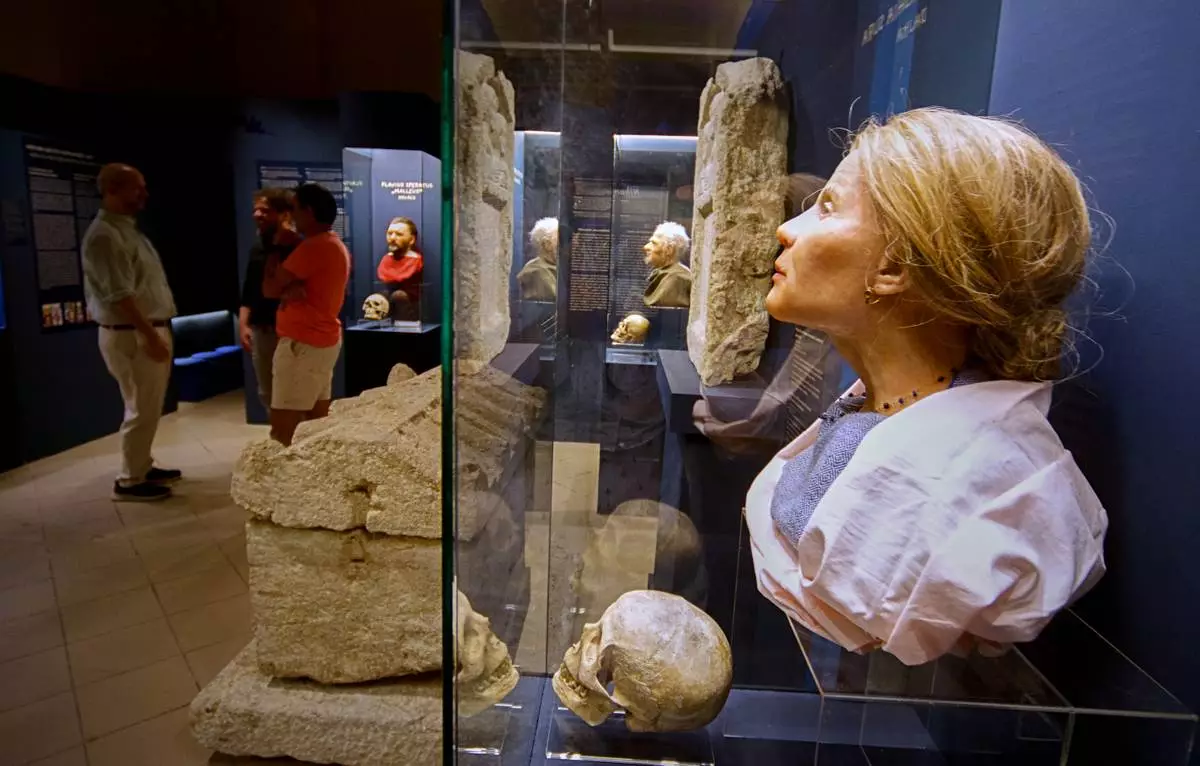
Visitors to the Aquincum Museum come face-to-face with hyperrealistic models of Roman-era individuals, each crafted using DNA analysis and other techniques from fields such as archaeology and anthropology to determine how the people may have looked in life nearly 2,000 years ago.
“Our main goal was to bring a few of these individuals closer to the people of today,” said Loránt Vass, an archaeologist and the exhibition's co-curator.
The title of the exhibition, “Once we were like you,” attempts to answer questions about ordinary people in ancient societies: What did they look like? What were their names? What was their fate?
Experts with the Aquincum Museum used DNA analysis of unearthed bones to reveal skin, hair and eye color and whether the person may have had freckles.
The shape, density and other characteristics of the skull revealed details of the structure of the face as well as the person's age and whether they had sustained any injuries or suffered from disease.
Based on the findings, curators came up with names, trades and biographical stories to each of the reconstructed faces, giving them new life.
Péter Vámos, another of the exhibit’s co-curators, said the invented details were “based on authentic historical foundations” as well as information gathered from analysis of the skulls, which are displayed under the reconstructions.
“We don’t even know their names, unfortunately, but we tried to incorporate everything that anthropology and genetic studies could tell us about their life history,” he said.
One character, a construction worker they named Respectus, is described as having made his living in Aquincum plastering walls and splitting stone blocks. The exhibit says the work took its toll on his bones, and in a wine-fueled skirmish in a local tavern, his nose was broken and one of his teeth knocked out.
The story and social status of Respectus is typical of many Aquincum residents depicted. Vass said their studies showed that the bones of almost all individuals show a “fairly high degree” of inflammation.
“They were subjected to regular physical labor, and in many cases they were exposed to starvation for a certain period of time,” he said. “Based on this, it can be concluded that most of them belonged to the lower middle class, which is the least remembered segment of Roman society.”
Of the 16 reconstructions, six are silicon moldings that have been painted and meticulously adorned with true-to-life hair, clothing and jewelry.
Emese Gábor, who handcrafted the silicon reconstructions, said that while artificial intelligence also can be used to model ancient faces, “they just appear on a screen.”
“The advantage of this kind of reconstruction is that it can be displayed in a museum, it can be viewed from all angles and is totally life-size,” she said. “I stick to scientific methods and combine classical and modern scientific methods in this work.”
Another valuable piece of information that DNA can reveal is the ethnic origin of the person — quite illuminating in Aquincum's diverse settlement.
Analyses showed the presence of not only Roman citizens with origins in the heart of the empire in modern-day Italy, but also people from as far away as today's Scotland and Syria, as well as members of the nomadic Sarmatian tribes of the Eurasian steppes.
Also among Aquincum’s residents were Celts, who inhabited the region in the Iron Age before Roman settlement.
Vass said that during typical excavations of Roman-era skeletons, artifacts are examined, documented and stored, meaning “the bodies have no weight, no life, no soul.”
But by confronting visitors with their ancient predecessors, the museum hopes to forge a connection.
The exhibition's title “suggests that they were like we are today. They had the same occupations, the same problems,” Vass said.
“They may have had different life conditions, different social status, but people are people,” he said. “I don’t think that has changed much across history.”
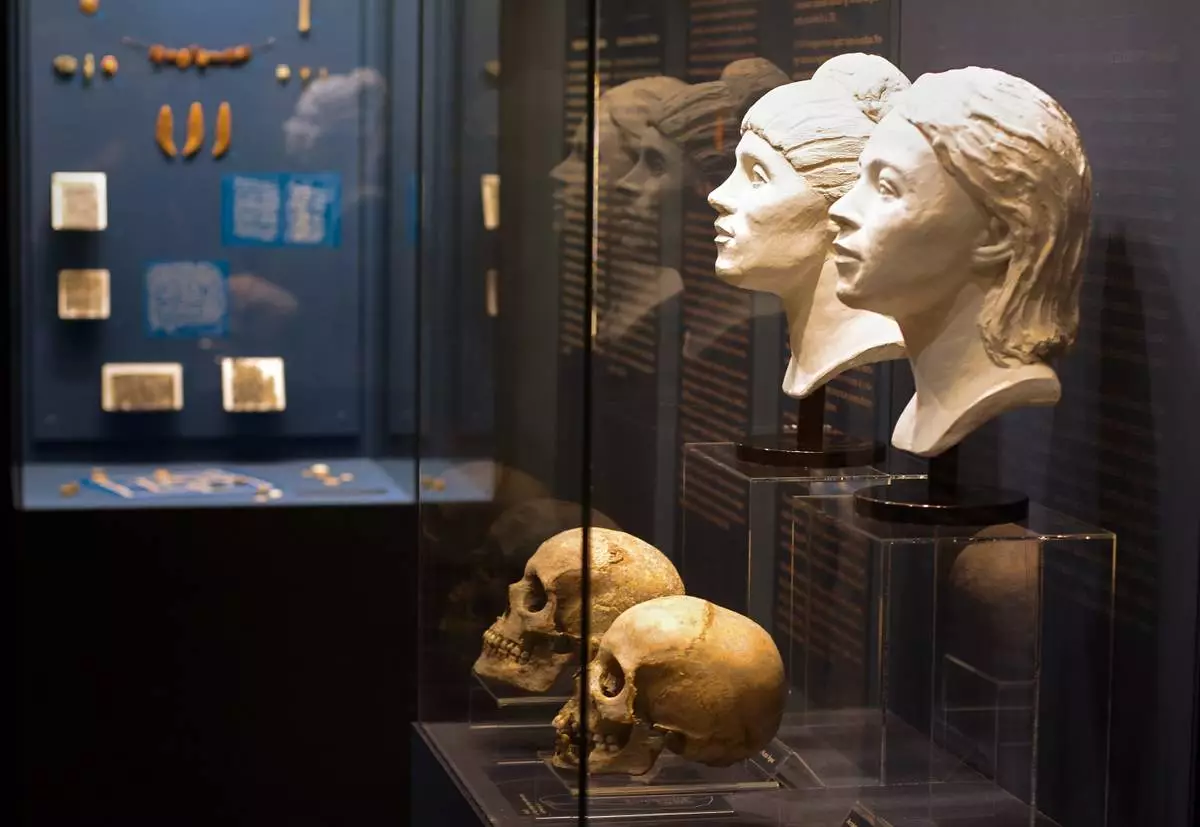
Roman-era skulls and their facial reconstructions are on display at the Aquincum Museum's exhibition titled "Once we were like you" which showcases characters and the fictional life stories of those who once lived in the bustling Roman settlement of Aquincum, in Budapest, Hungary, Tuesday, July 7, 2026. (AP Photo/Bela Szandelszky)
Roman-era skulls and their facial reconstructions are on display at the Aquincum Museum's exhibition titled "Once we were like you" which showcases characters and the fictional life stories of those who once lived in the bustling Roman settlement of Aquincum, in Budapest, Hungary, Tuesday, July 7, 2026. (AP Photo/Bela Szandelszky)
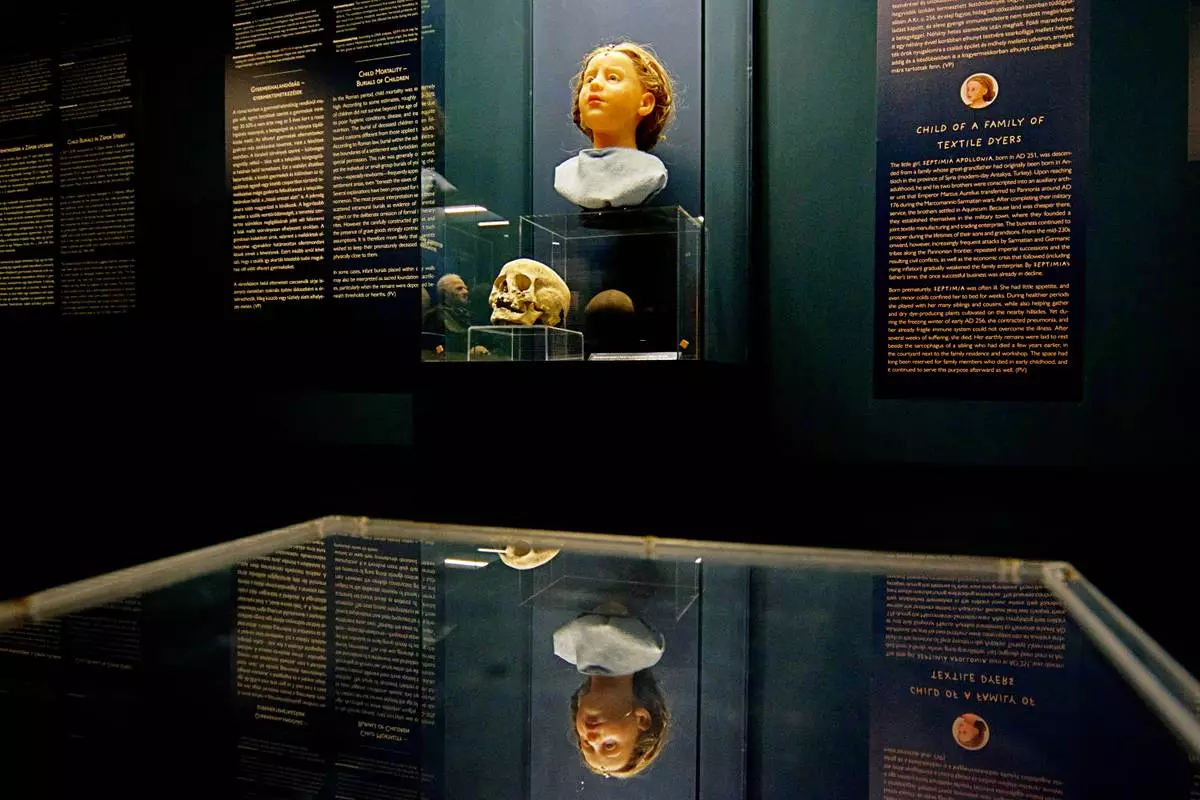
A Roman-era skulls and its facial reconstructions is on display at the Aquincum Museum's exhibition titled "Once we were like you" which showcases characters and the fictional life stories of those who once lived in the bustling Roman settlement of Aquincum, in Budapest, Hungary, Tuesday, July 7, 2026. (AP Photo/Bela Szandelszky)
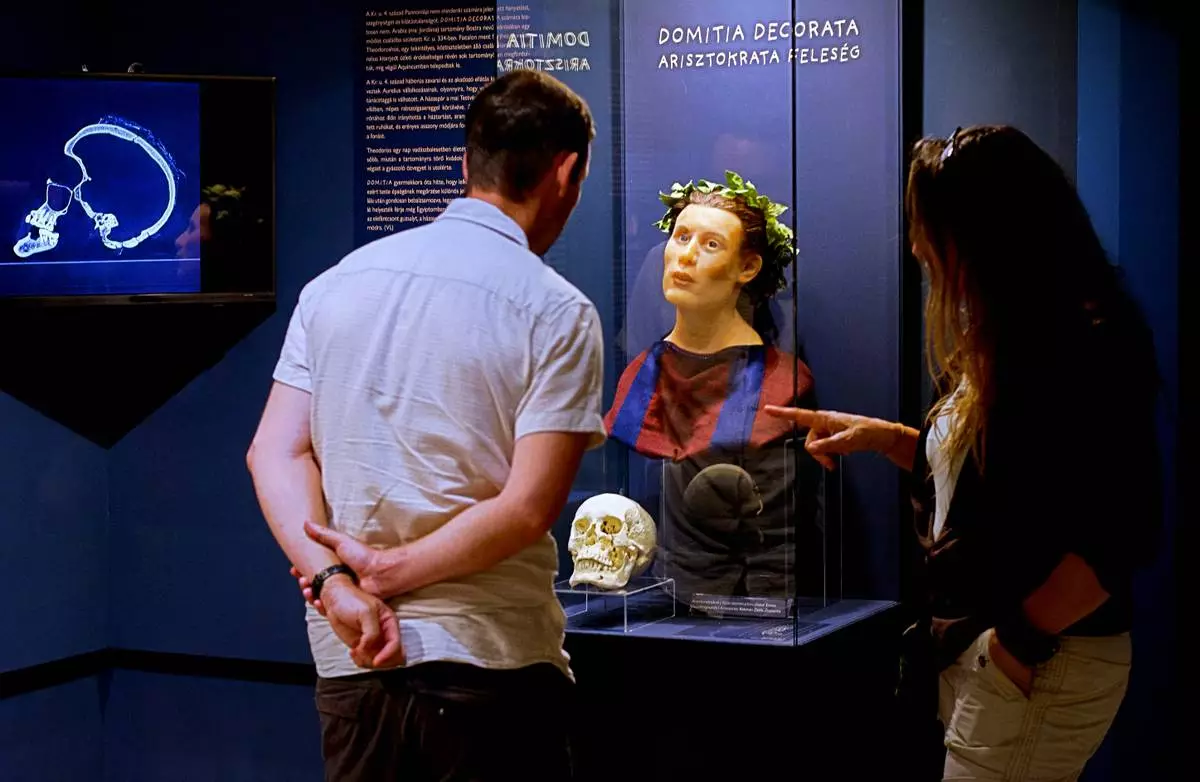
Visitors look at Roman-era skulls and their facial reconstructions in the Aquincum Museum's exhibition titled "Once we were like you" which showcases characters and the fictional life stories of those who once lived in the bustling Roman settlement of Aquincum, in Budapest, Hungary, Tuesday, July 7, 2026. (AP Photo/Bela Szandelszky)
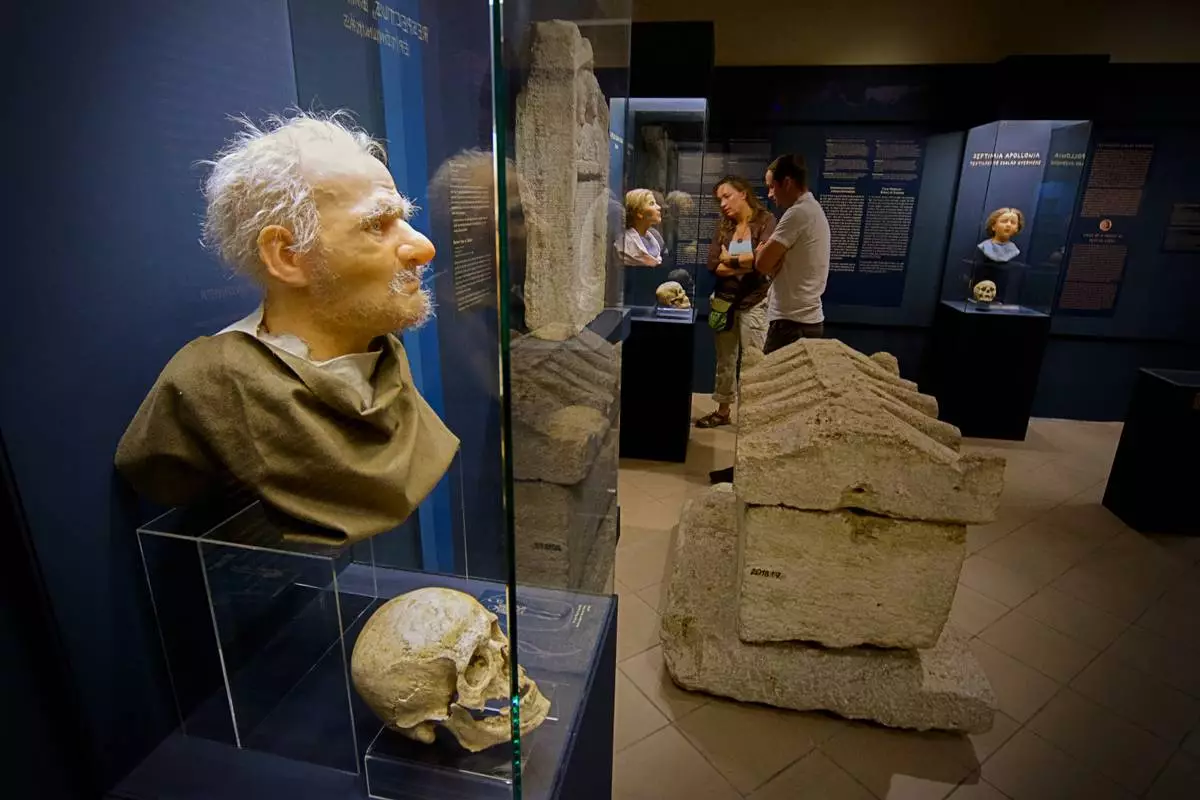
Visitors look at Roman-era skulls and their facial reconstructions in the Aquincum Museum's exhibition titled "Once we were like you" which showcases characters and the fictional life stories of those who once lived in the bustling Roman settlement of Aquincum, in Budapest, Hungary, Tuesday, July 7, 2026. (AP Photo/Bela Szandelszky)