Athletes from various ethnic groups across China competed in both traditional sports, such as crossbow shooting and dragon boat racing, and new additions like the debut of coconut tree climbing race on the first official competition day of China's 12th National Traditional Games of Ethnic Minorities.
Opening in Sanya, a coastal city of Hainan Province, on Friday, the grand event gathers nearly 7,000 athletes representing 35 delegations across China who will compete in 18 sports and three demonstration sports. The nine-day event will conclude on November 30.
Competitors at the event are expected to not only showcase their skills and traditional culture, but also enjoy the fun of sports.
Inspired by local people's physical labor of climbing trees to harvest coconuts in Hainan, the coconut tree climbing race made its first appearance this year.
Twelve teams from provinces including Hainan and north China's Hebei participated.
"I feel so excited. I like the sport item very much. It gives us a chance to see the unique customs of different ethnic groups. It's a wonderful chance for us to have such exchanges. I'm so happy to be here," said a spectator from northeast China's Heilongjiang Province.
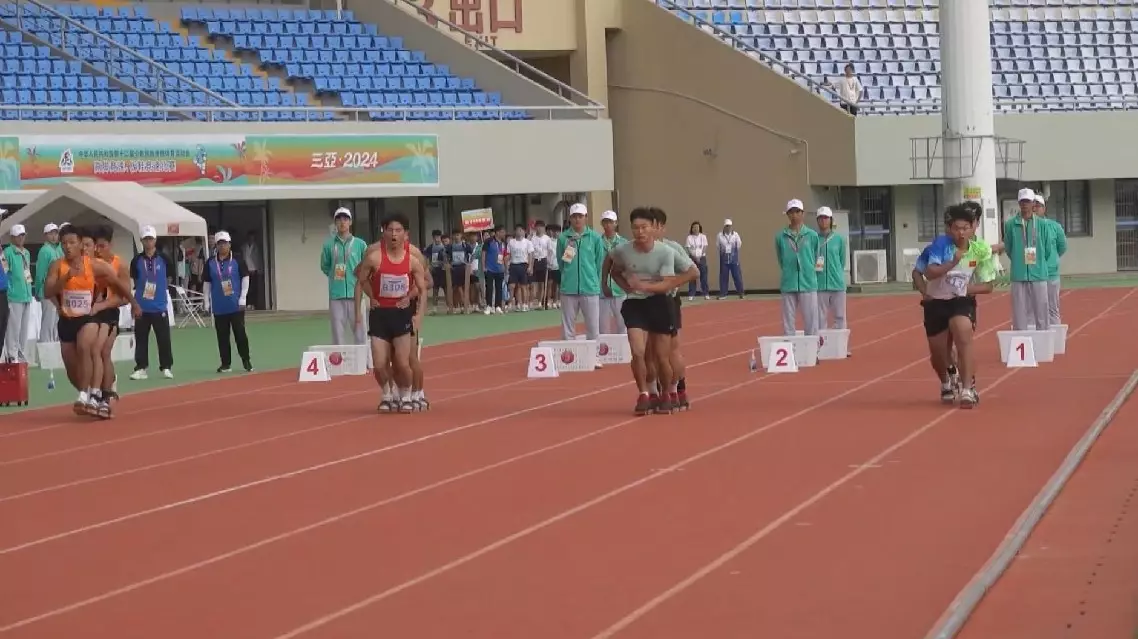
The board-shoe racing, a popular traditional sport, pits teams of three athletes wearing a single pair of wooden board shoes against each other. Originating from southwestern regions including China's Guangxi Zhuang Autonomous Region, the event has grown in popularity, attracting participants from northern provinces as well.
"The board-shoe racing exemplifies the sports wisdom and collaborative spirit of ethnic minorities. There are 30 teams participating in the event. The registration shows that it is increasingly popular among people of all ethnic groups. Provinces in the northern part are also actively participating in this event. It witnesses the multicultural integration and exchange among Chinese ethnic groups," said Lu Guang, leader of board-shoe racing team from Shandong.
From land-based sports like crossbow shooting and wrestling to water events such as dragon boat racing, the first day of the games featured 15 competitions. Players can not only learn from each other by competing in the field, but also forge new friendship.
"We will show our best and show Yunnan's colorful national sports culture and hard-working and simple spirit," said Li Jixin, coach of dragon boat racing team from Yunnan.
"They are rivals on the field and friends off the field. Athletes' mutual communication and discussion are also conducive to strengthening exchanges between cultures of different ethnic groups," said Guan Yuanhong, leader of the crossbow shooting team from Jiangxi.
Brilliant traditional, new sports on competition day 1 of China's national minority games