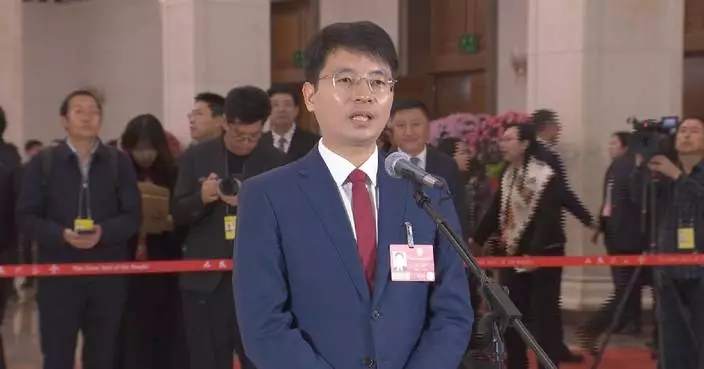
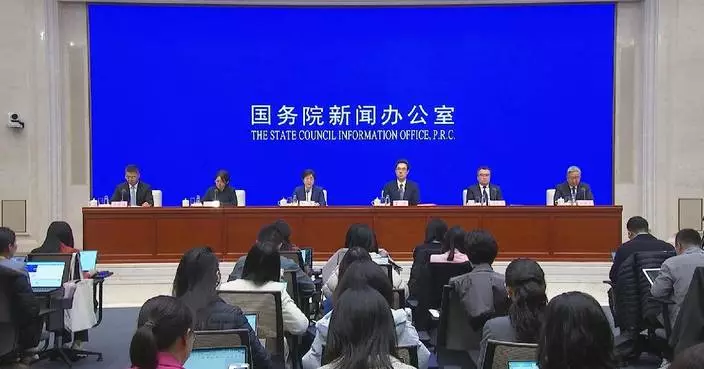
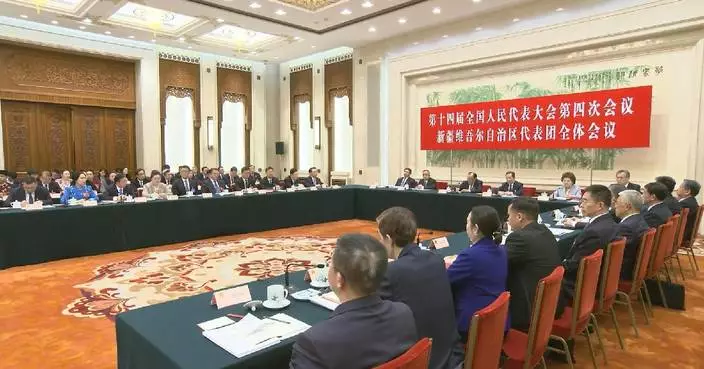
As China's 15th Five-Year Plan enters its inaugural year, Kenneth Fok Kai-kong, a re-elected Hong Kong deputy in the National People's Congress, said he hopes Hong Kong can better integrate into and contribute to the nation's overall development.
That involves ensuring Hong Kong's voice is heard in the development of national strategies, while effectively communicating the central government's vision to the people of Hong Kong, Fok said.
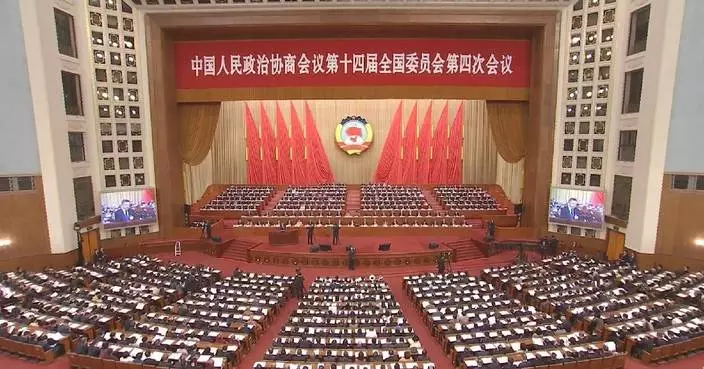
This year, Fok brought nine proposals to the ongoing 14th National People's Congress (NPC), China's top legislature, covering different areas including sports, culture, aviation and consumption.
"I'm always very concerned about sports and culture. This is where really my heart lies. But I think as a deputy I should also have a much broader [vision], not just concentrate on one specific area. So, of course, I mentioned about sports and also Greater Bay Area sports. But another issue, maybe first time I brought it to the table, is about our aviation hub. How do we keep up with the race with all the regional hubs also rising at the same time? This is our core strategy, core competence in Hong Kong and how do we make it better," Fok said in an interview with China Global Television Network (CGTN) released on Saturday.
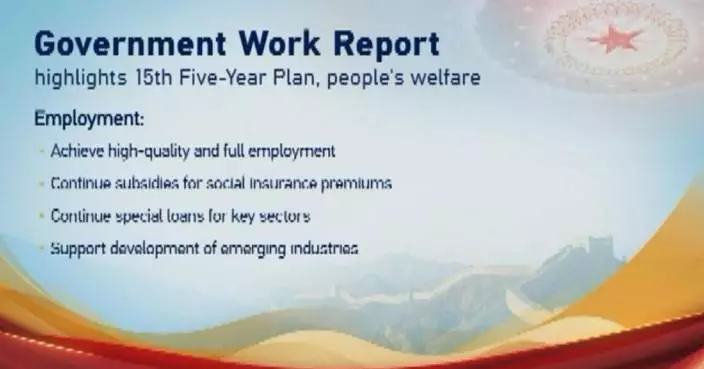
In the 2026 Government Work Report delivered by Chinese Premier Li Qiang at the opening session of the 14th NPC on Thursday, Guangdong-Hong Kong-Macao Greater Bay Area is encouraged to build itself into a world-class city cluster.
The report also pledged to develop the Greater Bay Area into an international center for scientific and technological innovation.
"I also think about the national objectives, what are the important milestones we are trying to hit in the next five years, next 10 years. China has been doing so well and it's such a great exporter to the world as a part of the world village. But we need to strengthen ourselves by increasing consumption. Actually, consumption should be the core of our engine. We should enable our own population to be able to consume more to boost the economy," he said.

China's NPC deputy discusses how HK can better integrate into country’s overall development
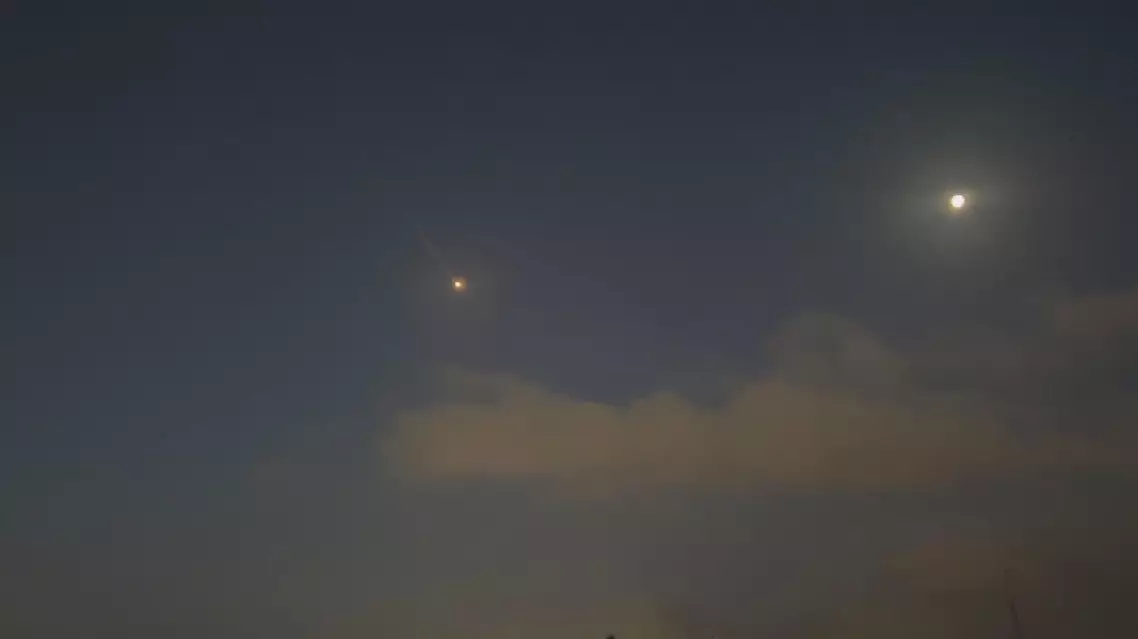
Iran continued its missile attacks on Israel with the same intensity as the previous day as the conflict entered its eighth day on Saturday.
According to the Israel Defense Forces (IDF), at least five Iranian missile launches toward Israel were detected from early Saturday morning until around 05:30. At about 11:30, Iran launched another barrage, the sixth of the day. As of noon, local health authorities reported no casualties.
Meanwhile, the interval between early warnings issued by Israel's Home Front Command and the sounding of air raid sirens during Iranian missile attacks has shortened, according to China Central Television (CCTV) reporter Liang Hui.
On several occasions, early warnings were issued only one or two minutes before the sirens sounded, compared with the previous minimum interval of about five minutes. This reduction has significantly limited the time available for residents to seek shelter.
In response, the IDF did not provide a clear explanation. It said the detection of missiles and rockets is influenced by various factors and therefore cannot guarantee sufficient time for the public to take cover in every instance. The military also acknowledged that in some cases no early warning may be issued and air raid sirens may sound directly.
The IDF also announced details of its latest operations, saying that from Friday night to early Saturday morning it launched a series of airstrikes on Iran’s capital, Tehran, and central Iran, deploying more than 80 fighter jets and dropping 230 bombs. The targets included underground facilities used for the production and storage of ballistic missiles, as well as a military academy belonging to Iran’s Islamic Revolutionary Guard Corps. The military added that it carried out another wave of airstrikes targeting infrastructure in Tehran and Isfahan on Saturday morning.
The United States and Israel launched large-scale strikes on Iran on Feb. 28, killing Iran's Supreme Leader Ali Khamenei, several senior military commanders and hundreds of civilians. Iran has responded with multiple waves of missile and drone attacks targeting Israel and U.S. assets across the region.
Iran continues missile attacks on Israel as IDF strikes Tehran on eighth day of conflict