The latest suite of new policies in China's real estate sector will invigorate the property market throughout the fourth quarter, according to industry watchers.
The People's Bank of China and the National Financial Regulatory Administration rolled out a wave of policies, including cutting mortgage rates and minimum down payment ratio, in late September to stabilize the real estate market.
In mid-November, the Ministry of Finance said the country will increase incentives in terms of deed tax to actively support people's essential housing needs to improve their housing conditions.
According to the Ministry of Housing and Urban-Rural Development, October marked three pivotal milestones for the national property market -- the first rise in transaction volume of new homes after 15 consecutive months of decline, the first increase in resold house sales after an eight-month downturn, and property sales in October outstripping those in September, a feat not seen in 17 years.
Dubbed "Golden September and Silver October" by the property market, the two months are considered a peak sales season in the second half of the year. Typically, September is the stronger of the two months as property developers push to hit third-quarter targets.
These shifts show the effectiveness of the favorable policies to stabilize the property sector released in September.
Analysts highlight the impact of a newly implemented policy across first-tier cities, which removes the distinction between ordinary and non-ordinary housing.
The policy exempts individuals who have owned a property for two years or more from paying value-added tax when selling their homes regardless of their property types.
This, they say, will inject fresh impetus into the real estate market, accelerating its recovery and boosting transactions.
With first-tier cities leading the rebound, confidence is expected to spread to other cities, further stabilizing the market.
"Of course, following this round of policy arrangements, the policies are now largely in place. We also anticipate that in the fourth quarter, sales of commodity housing, including in core urban areas, are likely to outperform the same period last year. The previously hesitant sentiment among the public has significantly improved, reflecting a positive shift in market expectations, with activities moving from increased viewing properties to increased purchasing," said Tang Yanbing, director of the Real Estate Market Division of the Chongqing Housing and Urban-rural Development Commission.
The positive outlook is further bolstered by the recent policy-supported expansion of urban village redevelopment, now covering nearly 300 cities at prefecture level and above.
These policies are poised to stimulate demand and supply, offering additional support to the market's recovery.
"The policies for the real estate market truly feel like a warm breeze, boosting everyone's confidence, which I believe is the fundamental target. In my opinion, the increased transaction activity and stronger confidence in the real estate market are likely to continue through the fourth quarter. If our policies exert further support, this trend will become even more pronounced, and the steady recovery and positive momentum will become even more solid," said Wang Ruimin, an associate research fellow at the Institute of Market Economy under the Development Research Center of the State Council.
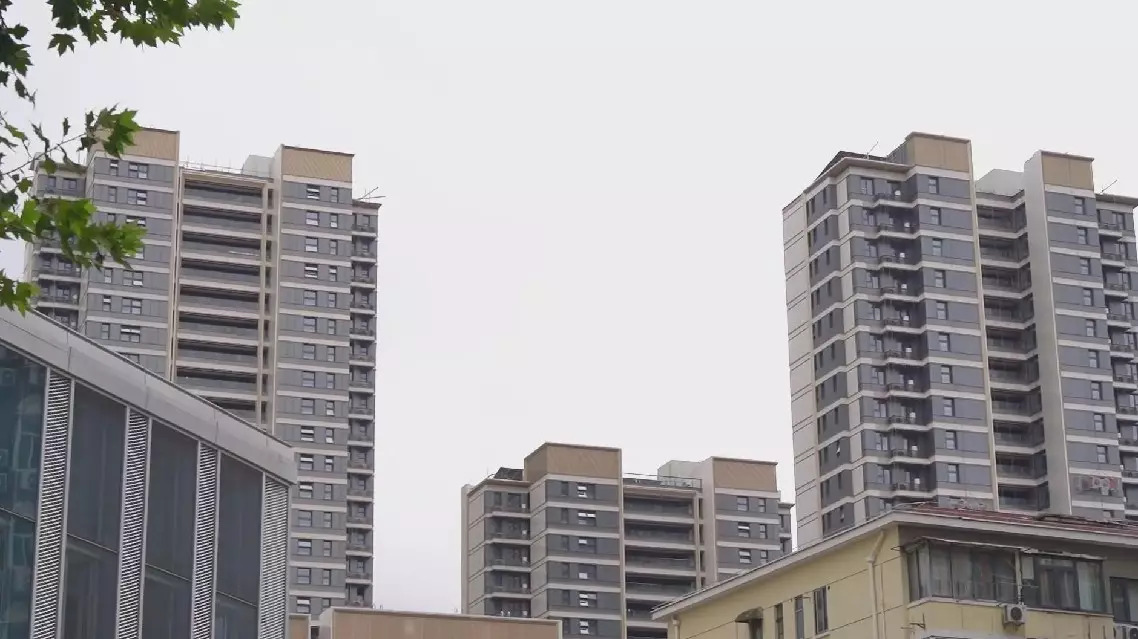
China's real estate policies spur sector recovery: industry watchers
Foreign diplomats and scholars are looking closely at this year's "two sessions", saying China's 15th Five-Year Plan (2026-2030) will not only chart the nation's economic and technological priorities but also reshape global value chains.
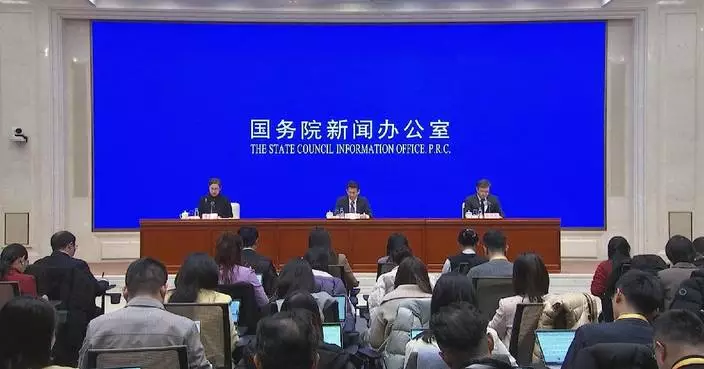
The fourth session of the 14th National Committee of the Chinese People's Political Consultative Conference (CPPCC), the nation's top political advisory body, opened on Wednesday, followed by the annual session of the National People's Congress (NPC) on Thursday. Together known as the "two sessions," these meetings offer a comprehensive view into China's development priorities.
Global observers emphasized that the 15th Five-Year Plan, a blueprint guiding the nation's economic, social, and technological priorities over the next five years, marks a decisive shift toward high‑quality growth anchored in advanced technologies, with ripple effects across the world.
"The two sessions will discuss China's five-year plan, which is heavily oriented toward China's major technological development. I believe this is important because it represents the new blueprint for China's economy, which is now oriented toward the renowned high-quality development, and this will undoubtedly impact the entire world. I think it is worth studying. This is very important for Latin America. It will help us integrate more intelligently into global value chains and into all aspects of the major development that China is promoting in iconic industrial sectors, such as artificial intelligence, quantum computing, and space development, where Latin America also has much to contribute beyond just commercial growth," said Gustavo Sabino Vaca Narvaja, former Argentine Ambassador to China.
"The two sessions are a major political milestone in China, and this year's gathering carries even greater significance as this year marks the start of the 15th Five-Year Plan. This plan represents not only a blueprint for China, but also a guide for other countries. Instruments like the five-year plan effectively provide greater certainty and predictability for the rest of the world," said Chilean scholar of international relations Ignacio Araya Heredia.
"This is a particularly important date, especially due to the fact that the next Five-Year Plan shall be positioned and we're going to see what its main elements shall be. Serbia, which has a very high degree of steel friendship with the People's Republic of China, can expect further assistance in identifying the most prominent areas of Serbian economy and being helped by its great partner, such as it has been done in the previous period, from one part with establishing the main infrastructure projects, but also reshaping the industrial sector of Serbia, not just Serbia, but the region as a whole," said Veljko Mijuskovic, assistant professor of the Faculty of Economics of the University of Belgrade.
Beyond the policy framework, experts also pointed to China's achievements in green energy and technological innovation as models worth emulating.
Tomasz Bielinski, adjunct professor at the University of Gdansk's Faculty of Economics, said the robotics displays at the 2026 China Media Group (CMG) Spring Festival Gala reflected China's broader push in technological innovation.
"I was really impressed about the robotics. I'm very impressed with Chinese development in the technological field, we can still make great deals with Chinese businessmen and we can cooperate together to use this technology for both the good of China and the European Union. I'm aware of the innovation especially in autonomous drive on the on the Chinese side," he said.
"We hope for more of China's economic cooperation, especially in trade and also in investment. Also, and the other focus, if I talk about the focus of the development, don't forget about the green energy. We know that China is great in the electric vehicle field. So because China's electric vehicles in Indonesia nowadays, since couple of years ago, are very, very popular," said Al Busyra Basnur, president of the Indonesia-China Friendship Association.
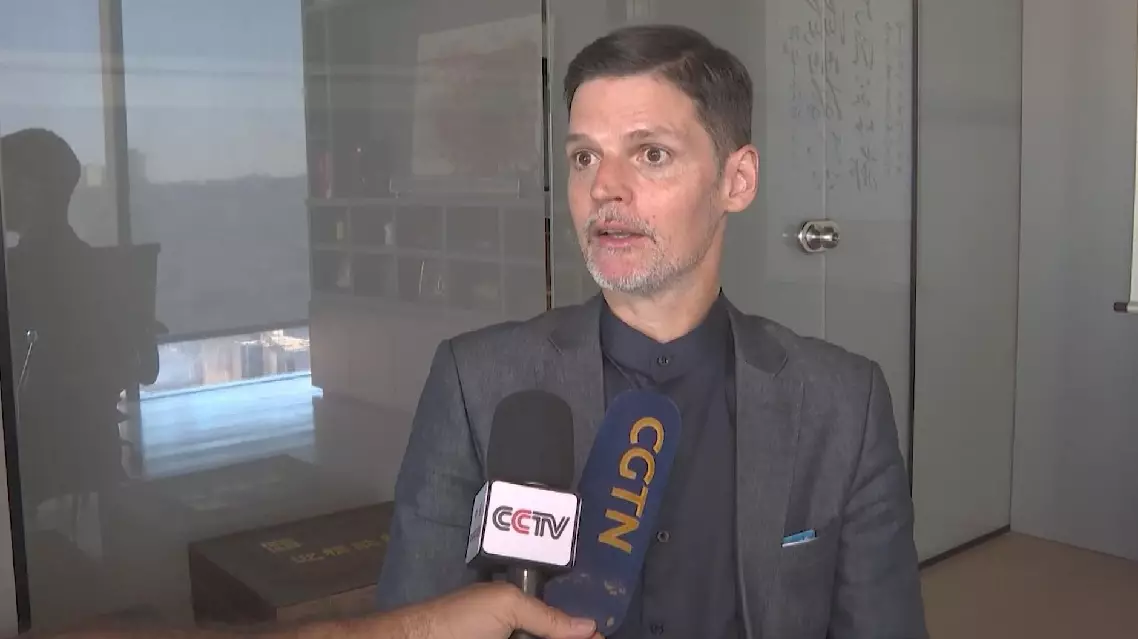
Observers see China's new five-year plan driving high-quality development, global tech shifts