The first day of the ongoing 12th National Traditional Games of Ethnic Minorities of China, held on Saturday in Sanya, south China's Hainan Province, featured traditional events such as stilt racing from the Tujia and Miao ethnic groups, and swing competition.
Opened on Friday night, the grand event, which will take place through Nov 30, has gathered nearly 7,000 athletes, representing 35 delegations across China who will compete in 18 sports and three demonstration sports, most of which were once unique to specific ethnic groups or regions.
Unlike traditional sporting events, the games feature competitions rooted in traditional customs and the daily life of people from different ethnic groups in China.
Stilt walking was originally used by the Tujia and Miao ethnic groups during the rainy season to navigate flooded areas and cross shallow rivers. It was also used by the Jing ethnic group for wading in the sea to catch shrimp and fish. Today, stilts have been transformed into a racing tool, adding unique fun and challenges to the track and field events.
Swinging has deep roots in Chinese tradition. Historically, it was a favored pastime, even gracing the royal palace during the reign of Emperor Wu of the Han Dynasty (202 BC–AD 220).
The swing competition, which is exclusive to female athletes, hails from the Korean ethnic group in northeast China and aims to empower women by encouraging them to broaden their horizons through sport.
Since being officially included as a competitive event at the Fifth National Traditional Sports Games of Ethnic Minorities in 1995, Jianqiu has grown in popularity. It is highly technical and entertaining, requiring athletes to have speed and agility.
China's tradition of kicking Jianzi, a special shuttlecock handmade from materials such as cloth and leather, dates back to the Han Dynasty, with a history of over 2,000 years.
Another highlight of this grand event is the Muqiu, a unique team sport originated in northwest China's Ningxia Hui Autonomous Region. It evolved from an ancient game played by young herders and retains a strong rural flavor with traditional herding movements, while also incorporating the competitive element.
Beginning with less than 400 athletes from 13 ethnic groups, the event was first launched in 1953 with only eight sports. It's one of China's oldest national multisport games.
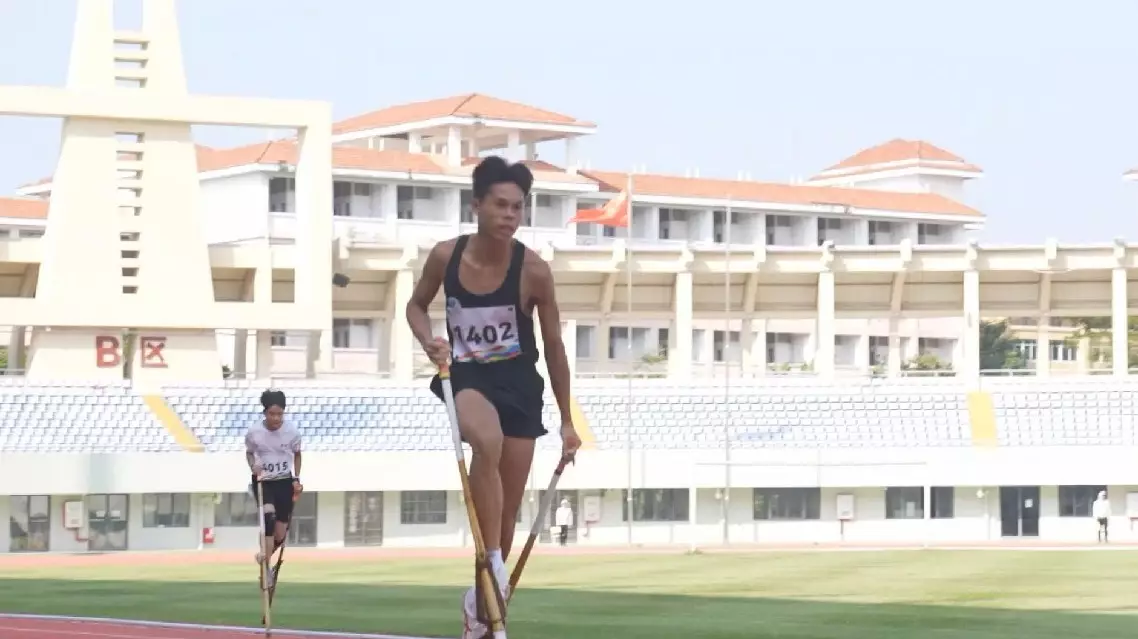
Stilt racing, swing competition held on first day of national games of ethnic minorities