The remains of 43 Chinese People's Volunteers (CPV) soldiers who fell in action during the War to Resist U.S. Aggression and Aid Korea (1950-1953) returned to China on Thursday morning from the Republic of Korea (ROK).
It is the 11th repatriation of CPV martyrs' remains since the signing of a handover agreement between China and the ROK.
The first batch of the remains of 437 CPV martyrs was transferred to China from Incheon, west of the capital Seoul of the ROK, on March 28, 2014.
Earlier Thursday, the People's Liberation Army Air Force dispatched two J-20 fighter jets to escort the Y-20 transport aircraft carrying the martyrs' remains after it entered China's territorial airspace.
After the landing of the aircraft, two fire trucks sprayed water along the way to form a water gate, the highest etiquette in the civil aviation industry.
The Y-20 transport aircraft slowly passed through, and the water salute symbolized a ceremonial welcome, signifying a "welcome and dust cleansing" gesture.
The burial ceremony for the remains of the CPV martyrs will be held at the Shenyang Cemetery for Martyrs of the War to Resist U.S. Aggression and Aid Korea on Friday.
Since 2014, the remains of 981 CPV martyrs have been handed over to China, their home country
Almost 200,000 CPV soldiers were confirmed killed in the War to Resist U.S. Aggression and Aid Korea, with most interred on the Korean Peninsula.
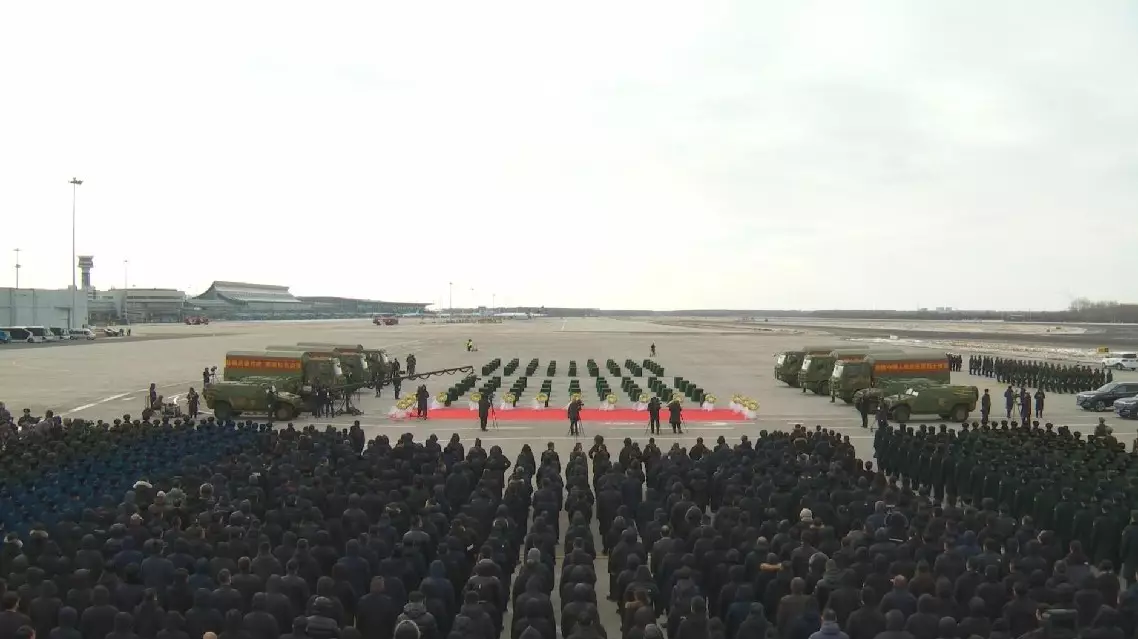
Remains of 43 CPV martyrs return to China from ROK
Price hikes in Cambodia resulting from the global energy crisis have made local people's life more difficult.
Among Southeast Asian countries, Cambodia is the most severely affected by the fuel crisis triggered by the war in Iran.
It has neither domestic commercial oil production capability nor oil refinery, and even under normal conditions it has less than a month's supply of petrol, diesel, jet fuel, and liquefied petroleum gas (LPG).
The vast majority of the country's tuk-tuks which run on LPG have faced soaring prices.
"The fares for the ride-hailing apps we work with don't increase. They don't adjust in line with the rising gas prices. It's very hard to make a living. Even affording three meals a day is difficult, it's sometimes not enough," said Nov Hout, an LPG tuk-tuk driver.
Hout said some drivers have already switched to electric vehicles to save LPG costs.
Meanwhile, the sharp rise in the LPG price has compelled many Cambodians to abandon modern cooking methods and revert to traditional practices.
"We have to use firewood for cooking for the time being. It's just not as convenient as cooking with gas, but we must save money because gas is so expensive," said Chea Yon, a resident on Cambodia's Silk Island.
Cambodia relies heavily on road transportation, and rising fuel costs are driving up the price of all sorts of goods.
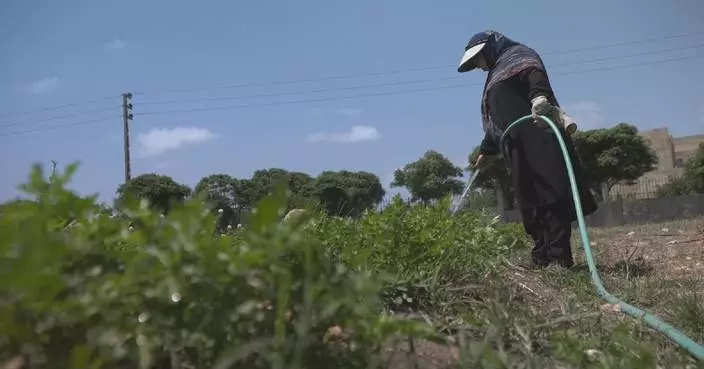
Farmers are not only feeling the pinch of rising fertilizer costs, but also pressures from fuel costs.
"We need to use a machine to pump water for irrigation, which requires a lot of fuel. The other day when we dug up ginger, we didn't make a profit at all. In fact, we lost money because fuel prices are so high," said Ra Hong, a farmer in Phnom Penh.
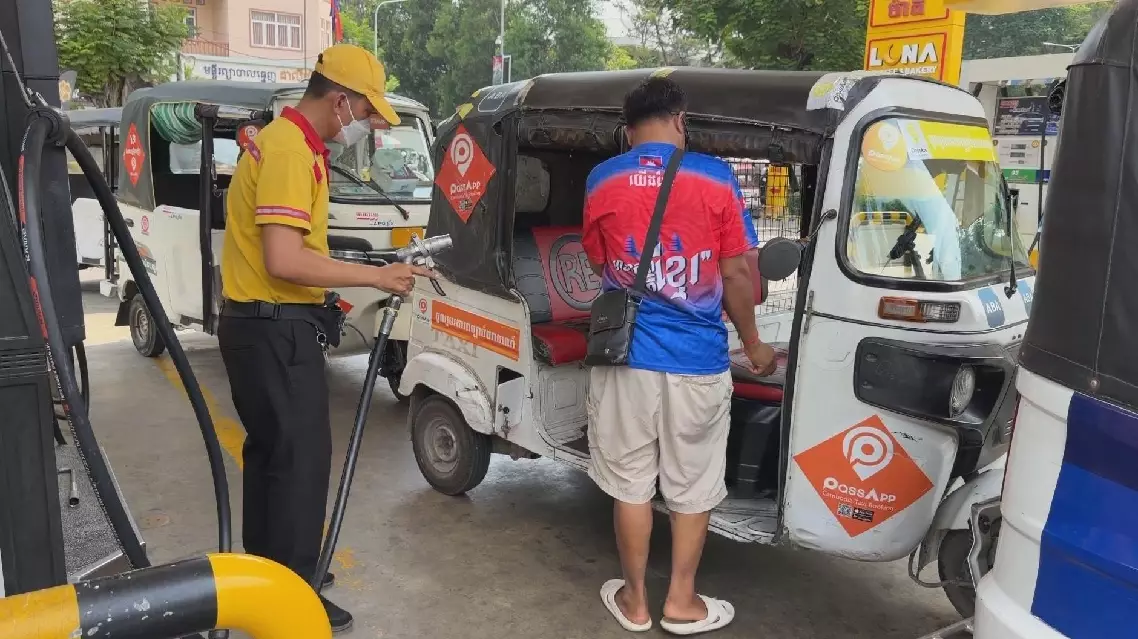
Fuel price hikes in Cambodia make life harder for local people