Skip to Content Facebook Feature Image

Chang'e-6 lunar sample unveils key clues to moon's geological evolution

China

China

China

Chang'e-6 lunar sample unveils key clues to moon's geological evolution

2026-01-14 06:25 Last Updated At:16:30

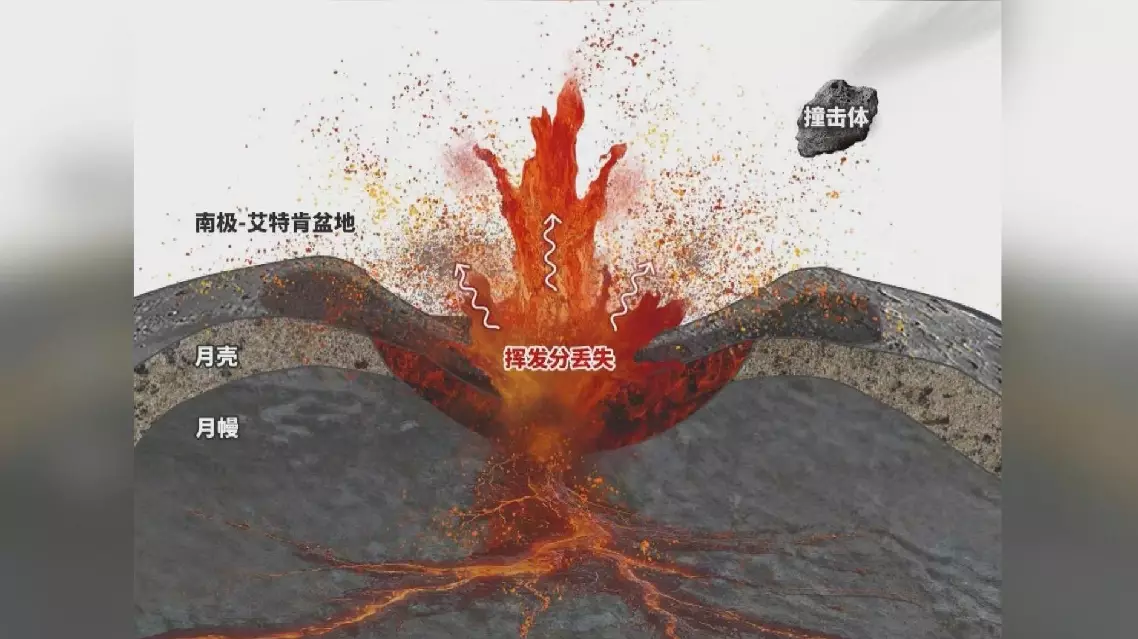
A group of Chinese researchers revealed that the volatile loss from the lunar mantle was induced by the giant impact that formed the South Pole-Aitken (SPA) Basin in the moon's far side, providing crucial evidence for understanding the impact of large-scale collisions on the lunar evolution and for uncovering the causes of different nature of moon's near side and far side.

The study was published in the Proceedings of the National Academy of Sciences on Tuesday.

Since the formation of the moon, asteroid impacts have been the dominant geological processes triggered by events outside the moon, producing impact craters and basins across the lunar surface and profoundly modifying its topography and geochemical characteristics. However, the extent to which large-scale impact events have affected the moon's deep interior remains unclear.

A research team led by Tian Hengci from the Institute of Geology and Geophysics, Chinese Academy of Sciences, examined the isotopic compositions of potassium (K) in Chang'e-6 lunar basalts collected from the SPA basin.

The isotopic systems of moderately volatile elements, such as K, are prone to volatilization and fractionation under the high-temperature conditions generated by impacts. Their compositions can record information such as temperature, pressure, and material sources during impact events, making them key evidence for revealing impact scales, thermal histories, and their modifications to the lunar crust and mantle materials.

The team found that the Chang'e-6 lunar basalts exhibit significantly heavier K isotopic compositions than all previously reported lunar basalts from Apollo missions and lunar meteorites. Then they evaluated potential mechanisms that could modify K isotope composition, including long-term cosmic-ray irradiation, magmatic differentiation and impactor input. But the result showed that such factors only exert minor effects.

Further research showed that the impact events altered the K isotope composition of the lunar mantle, leading to an increase in isotope values. During the high-temperature and high-pressure processes generated by impacts, lighter K isotopes were preferentially lost compared to heavier ones, leading to elevated isotopic ratios in the residual materials.

The study also implied that such volatile depletion may have suppressed magma generation and volcanic activity on the lunar far side, potentially contributing to the long-recognized asymmetry in volcanic activity between the near side and far side of the moon.
Chang'e-6 lunar sample unveils key clues to moon's geological evolution
Chang'e-6 lunar sample unveils key clues to moon's geological evolution
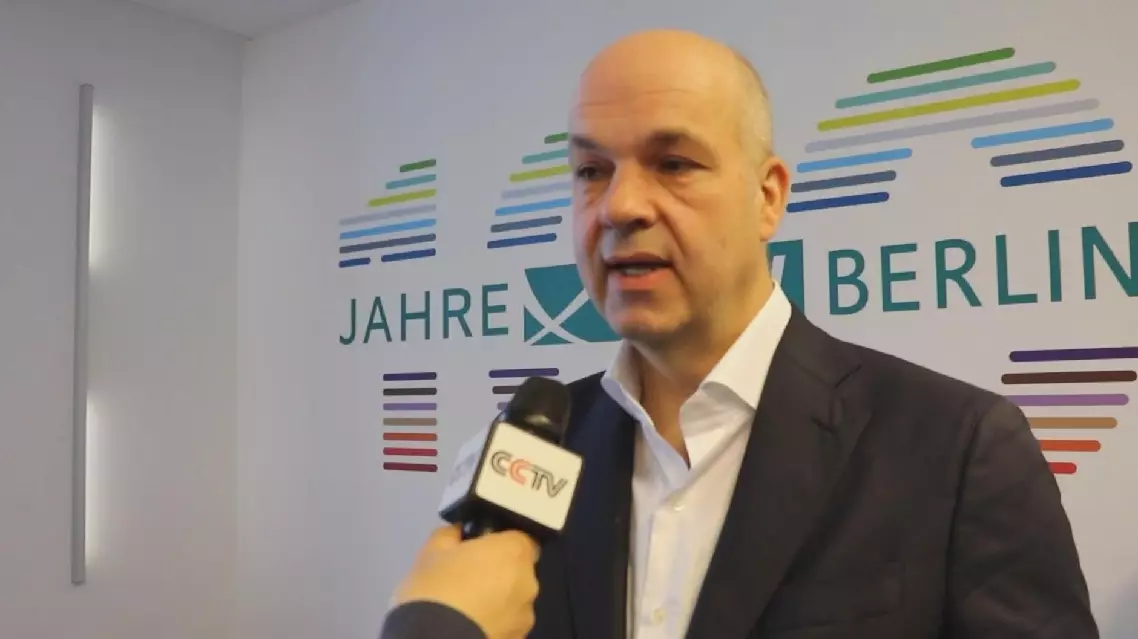
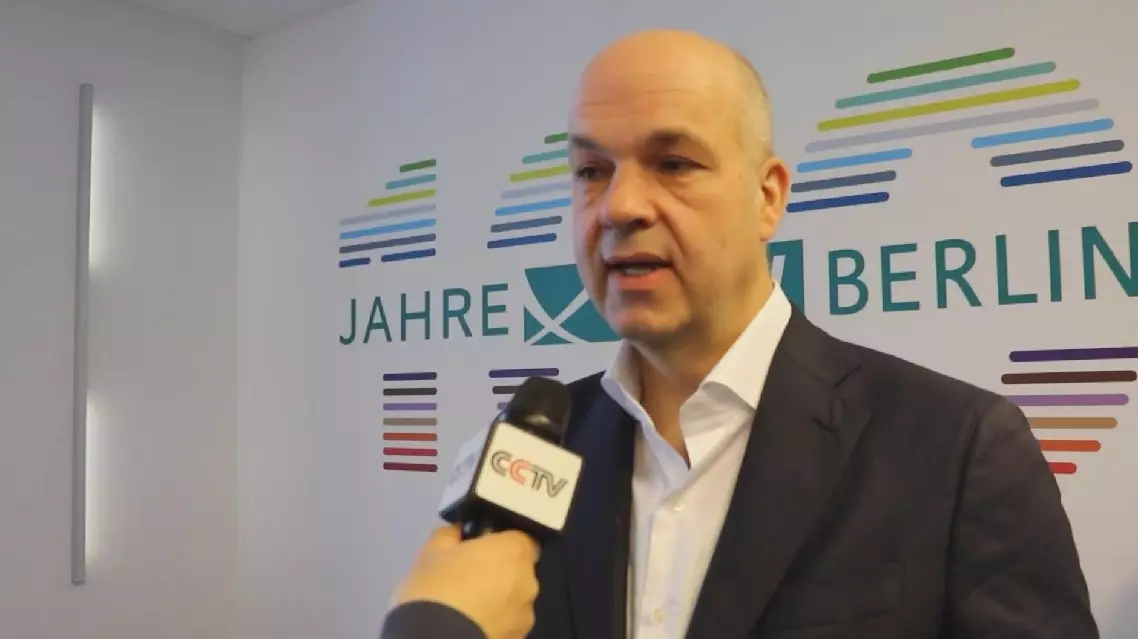
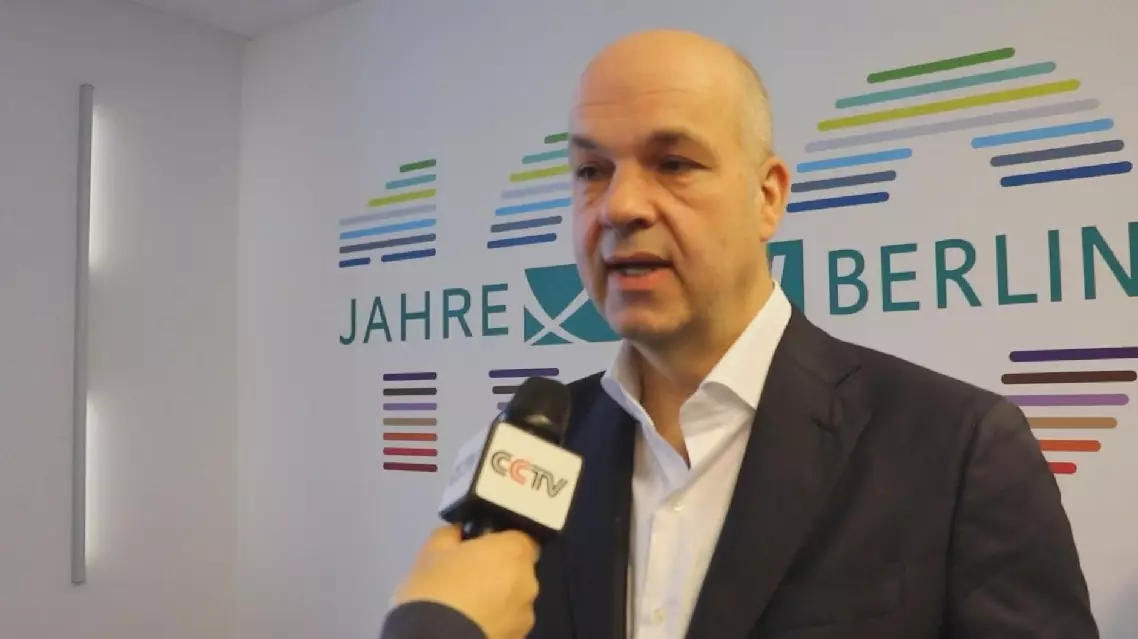
Germany's fragile economic recovery is at risk amid the surging energy costs linked to the ongoing Middle East conflict, which will potentially trigger another recession, said Marcel Fratzscher, president of the German Institute for Economic Research (DIW).

Fratzscher made the comments in a recent interview with the China Media Group (CMG) following the release of the institute's spring 2026 growth forecast for Germany.

"We are cautiously optimistic of the German economy this year. We see a clear recovery in growth, with 1.0 percent of growth expected this year and 1.4 percent next year. For Germany, these are respectable growth figures. But our great concern is the ongoing U.S.-Israeli military strikes against Iran, which could hit German industry hard through higher energy costs and rising inflation. In an extreme scenario, if the war escalates further, this could mean another recession for Germany's economy," he warned.

Fratzscher identified U.S. tariff policies and geopolitical tensions as key uncertainties for German growth, stressing that for Germany and Europe, the fate of the Strait of Hormuz matters more than the duration of the conflict.

"For the economic impact on Germany and Europe, how long the war lasts is less important than what happens with the Strait of Hormuz. Will it be reopened and remain permanently open for oil and gas exports? If that succeeds, we assume prices could fall relatively quickly, meaning we won't continue to see the high prices for oil and gas that we have now. That would be a significant relief for the European economy and also for Germany," he said.

The ongoing tensions in the Middle East have already pushed up fuel prices in Germany. As Europe's largest economy, Germany's manufacturing sector relies heavily on stable energy supplies. Persistent high energy costs risk slowing business investment and consumer spending, potentially undermining Germany's fragile economic recovery.

Germany's fragile economic recovery at risk amid Middle East tensions: senior economist

Germany's fragile economic recovery at risk amid Middle East tensions: senior economist

Germany's fragile economic recovery at risk amid Middle East tensions: senior economist

Germany's fragile economic recovery at risk amid Middle East tensions: senior economist

Germany's fragile economic recovery at risk amid Middle East tensions: senior economist

Germany's fragile economic recovery at risk amid Middle East tensions: senior economist

Recommended Articles