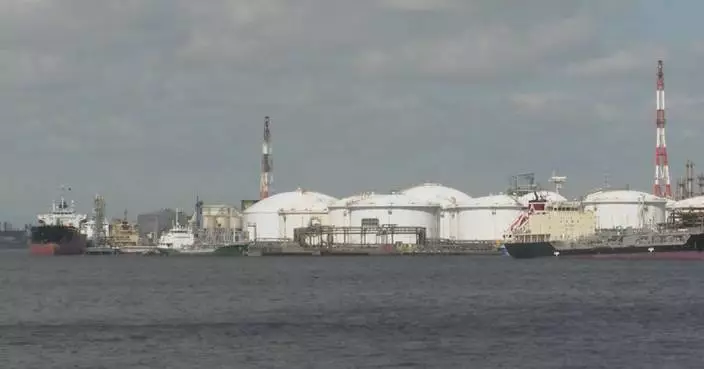
U.S. President Donald Trump said Sunday that he has "demanded" about seven countries heavily reliant on Middle East oil join a coalition to escort vessels through the Strait of Hormuz, a key waterway through which about 20 percent of the world's oil passes.
Trump didn't name the countries the White House is negotiating with.
Just one day ahead, Trump wrote in a Truth Social post, calling on countries to send warships to the strait, and said that the United States would provide support.
"The Countries of the World that receive Oil through the Hormuz Strait must take care of that passage, and we will help - A LOT! The U.S. will also coordinate with those Countries so that everything goes quickly, smoothly, and well," he wrote in the post.
According to an exclusive report from the Wall Street Journal on Sunday, the Trump administration is planning to form a coalition with the approval of multiple countries to escort ships through the Strait of Hormuz.
According to U.S. officials, they are still discussing whether the operations will begin before or after the military strikes against Iran.
Meanwhile, German Foreign Minister Johann Wadephul said on Sunday that Germany would not participate in the recent conflicts over the Strait of Hormuz.
In an interview with German public broadcaster ARD, he expressed skepticism regarding the potential expansion of the EU naval mission "Aspides" to the Strait of Hormuz.
He noted that while Europe has always provided constructive support in securing maritime routes, he "sees neither an immediate necessity, nor, above all, that Germany should participate."
"Our demand to the U.S. and Israel is to keep us informed and tell us which concrete objectives are still being pursued, and then discuss with us how this war can be brought to an end," he added.
Also on Sunday, British Prime Minister Keir Starmer spoke with Trump to discuss the situation in the Middle East and the disruption to global shipping caused by the closure of the Strait of Hormuz.
During the conversation, Starmer stressed the importance of reopening the strategic waterway to help restore normal shipping routes and ease rising global costs, a statement from 10 Downing Street said.
Both leaders agreed to remain in close contact regarding the developments in the region, according to the statement.
Earlier on Sunday, British Energy Secretary Ed Miliband said that Britain was looking at options that would help reopen the strait, including working with its allies. He stressed that "ending the conflict is the best and surest way to get the strait reopened".
Furthermore, Australian Minister for Infrastructure, Transport, Regional Development and Local Government Catherine King said on Monday that Australia will not send navy ships to protect oil tankers in the Strait of Hormuz.
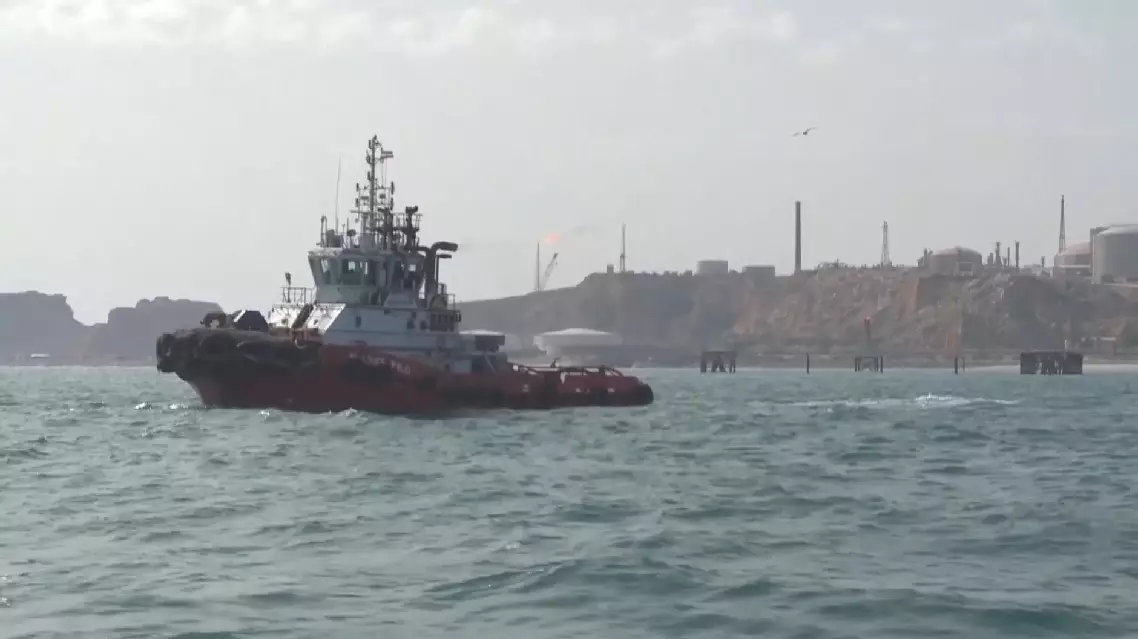
Trump says he demands 7 countries escort ships through Strait of Hormuz