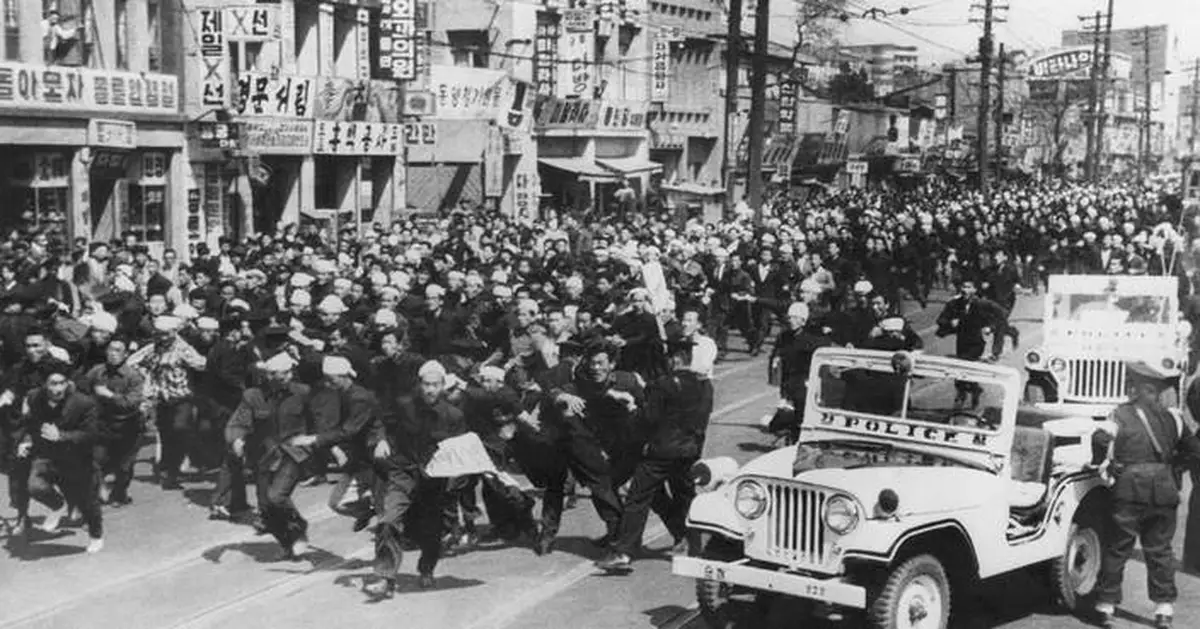
Skip to Content Facebook Feature Image

A history of martial law in South Korea in Associated Press photographs

News

A history of martial law in South Korea in Associated Press photographs
News

News

A history of martial law in South Korea in Associated Press photographs

2024-12-04 16:05 Last Updated At:16:20

SEOUL, South Korea (AP) — When South Korean President Yoon Suk Yeol declared martial law this week it was the first time a South Korean government took such a drastic measure since it became a fully functioning democracy more than 35 years ago.

But in the decades of largely autocratic governments and military rule from the end of World War II until the establishment of the Sixth Republic in 1988, martial law was not uncommon as the country faced political turmoil, uprisings, frequent protests and all-out war with North Korea.

More Images
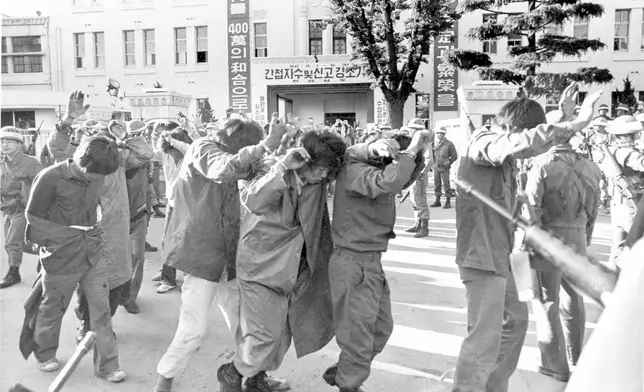
FILE- Scores of captured rebels with hands up are being led away Tuesday May 27, 1980, by armed soldiers from the provincial government HQ., in this city of Gwangju (Kwangju) which South Korean troops recaptured in a firefight earlier in the day. (AP Photo)
FILE- Scores of captured rebels with hands up are being led away Tuesday May 27, 1980, by armed soldiers from the provincial government HQ., in this city of Gwangju (Kwangju) which South Korean troops recaptured in a firefight earlier in the day. (AP Photo)

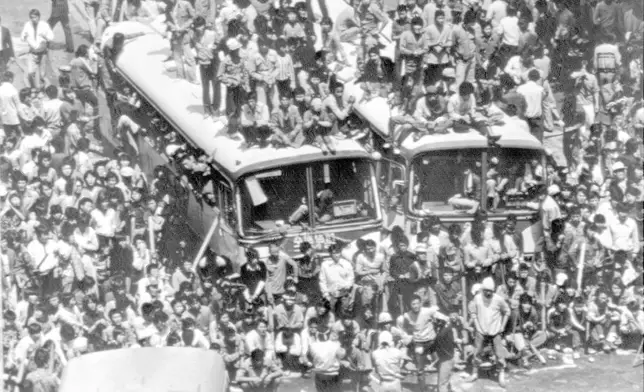
FILE- Commandeered city buses are used to block a main downtown street of Gwangju (Kwangju), May 23, 1980 by demonstrators against riot police and paratroopers during riotous anti-government protests this week. (AP Photo/File)
FILE- Commandeered city buses are used to block a main downtown street of Gwangju (Kwangju), May 23, 1980 by demonstrators against riot police and paratroopers during riotous anti-government protests this week. (AP Photo/File)

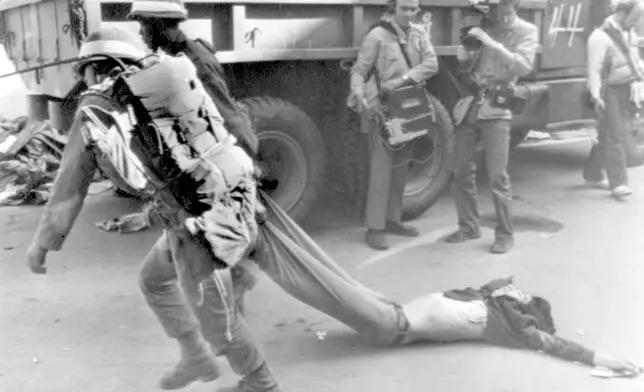
FILE- Soldiers carry away the body of a rebel killed in a firefight Tuesday May 27, 1980, when South Korean troops recaptured this riot-battered city of Gwangju (Kwangju). (AP Photo/File)
FILE- Soldiers carry away the body of a rebel killed in a firefight Tuesday May 27, 1980, when South Korean troops recaptured this riot-battered city of Gwangju (Kwangju). (AP Photo/File)

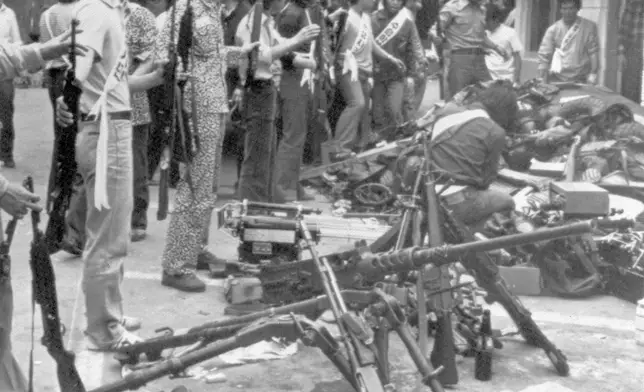
FILE- Korean student demonstrators gather with their collection of weapons, stolen from police and military, at a government building, in Gwangju (Kwangju), South Korea, May 24, 1980, during anti-government demonstrations. (AP Photo/File)
FILE- Korean student demonstrators gather with their collection of weapons, stolen from police and military, at a government building, in Gwangju (Kwangju), South Korea, May 24, 1980, during anti-government demonstrations. (AP Photo/File)

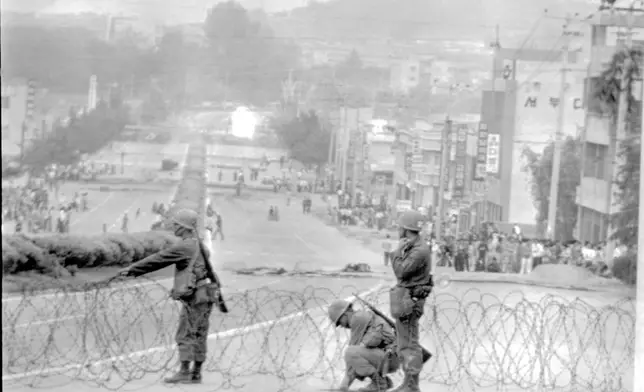
FILE- Government soldiers are erecting a roadblock on a street leading to downtown Gwangju (Kwangju), with citizens looking on, May 26, 1980. Rebels are holding the provincial capital in south western Korea days now. (AP Photo/ File)
FILE- Government soldiers are erecting a roadblock on a street leading to downtown Gwangju (Kwangju), with citizens looking on, May 26, 1980. Rebels are holding the provincial capital in south western Korea days now. (AP Photo/ File)

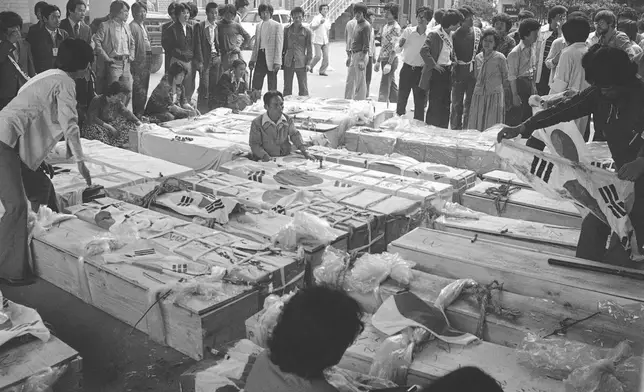
FILE- Families and relatives gather around the coffins of dead protesters at provincial headquarters in Gwangju (Kwangju), South Korea, May 23, 1980, some 250 kilometers south of Seoul, South Korea. (AP Photo/Kin Chon Kil, File)
FILE- Families and relatives gather around the coffins of dead protesters at provincial headquarters in Gwangju (Kwangju), South Korea, May 23, 1980, some 250 kilometers south of Seoul, South Korea. (AP Photo/Kin Chon Kil, File)

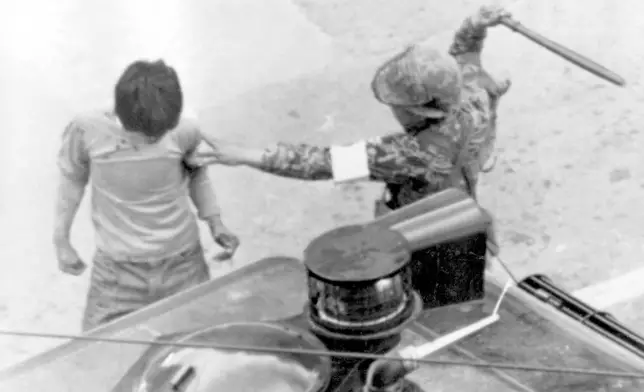
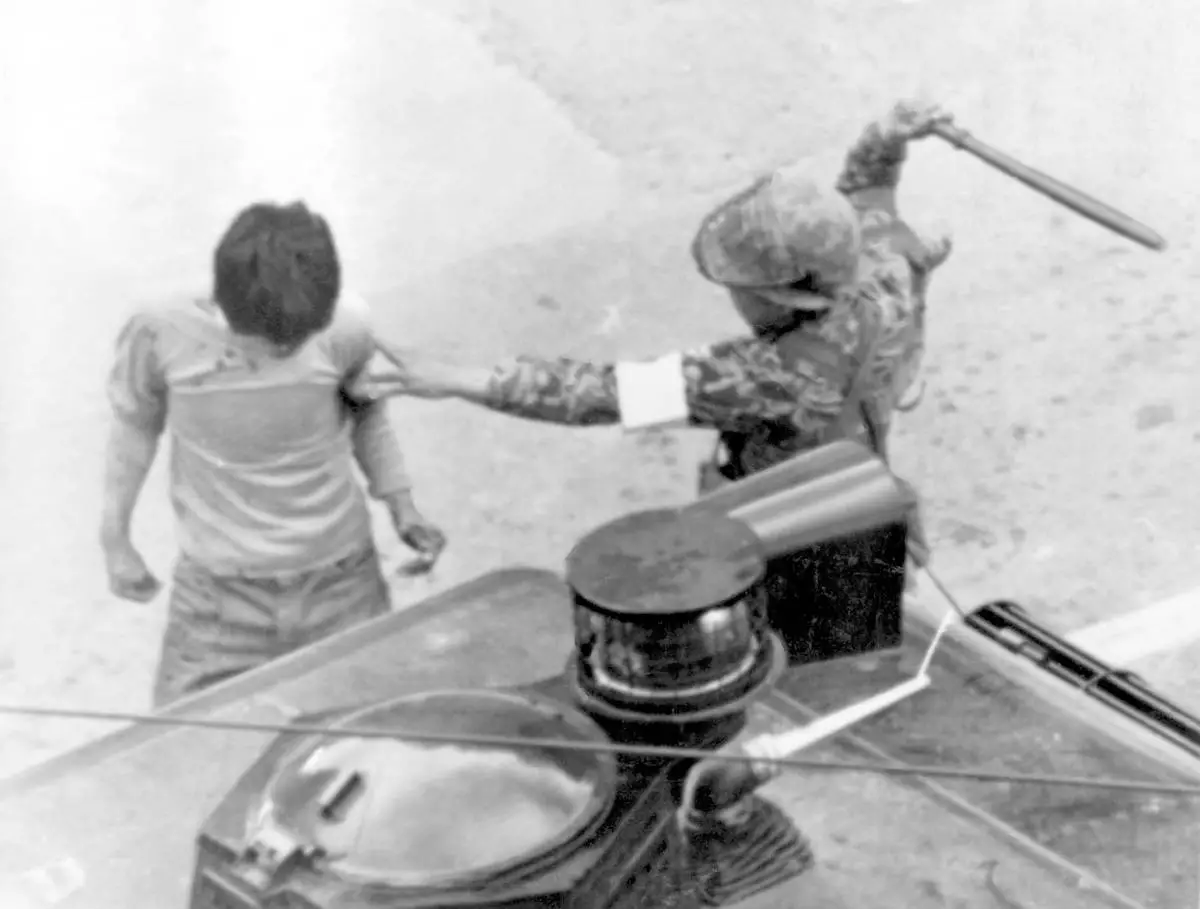
FILE- A helmeted army paratroops beats a man arrested during violent anti-government demonstrations in Gwangju (Kwangju), May 20, 1980. (AP Photo/File)
FILE- A helmeted army paratroops beats a man arrested during violent anti-government demonstrations in Gwangju (Kwangju), May 20, 1980. (AP Photo/File)

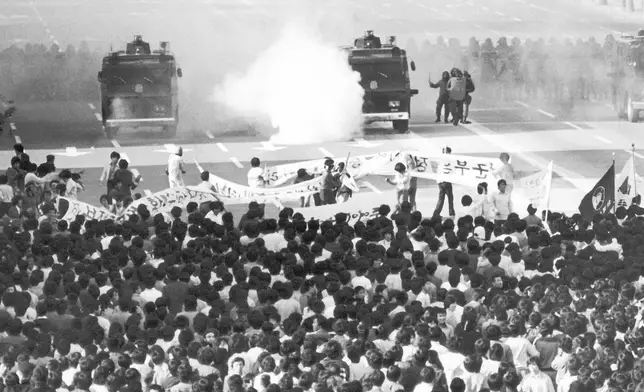
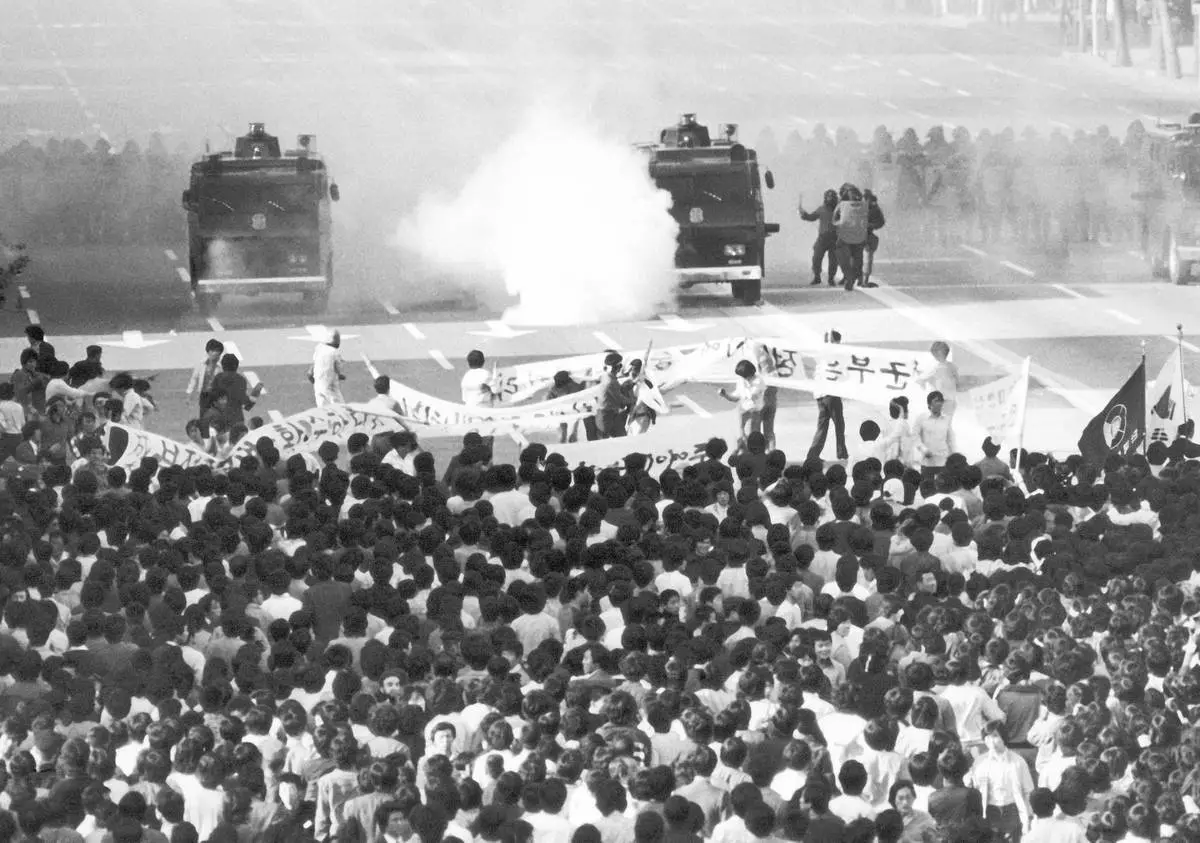
FILE- Police vehicle sprays tear gas at tens of thousands of student demonstrators in downtown Seoul, South Korea on Thursday, May 15, 1980. (AP Photo/Kim Chon-Kil, File)
FILE- Police vehicle sprays tear gas at tens of thousands of student demonstrators in downtown Seoul, South Korea on Thursday, May 15, 1980. (AP Photo/Kim Chon-Kil, File)

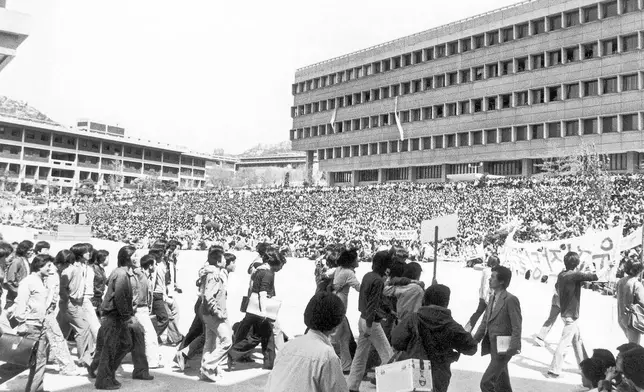
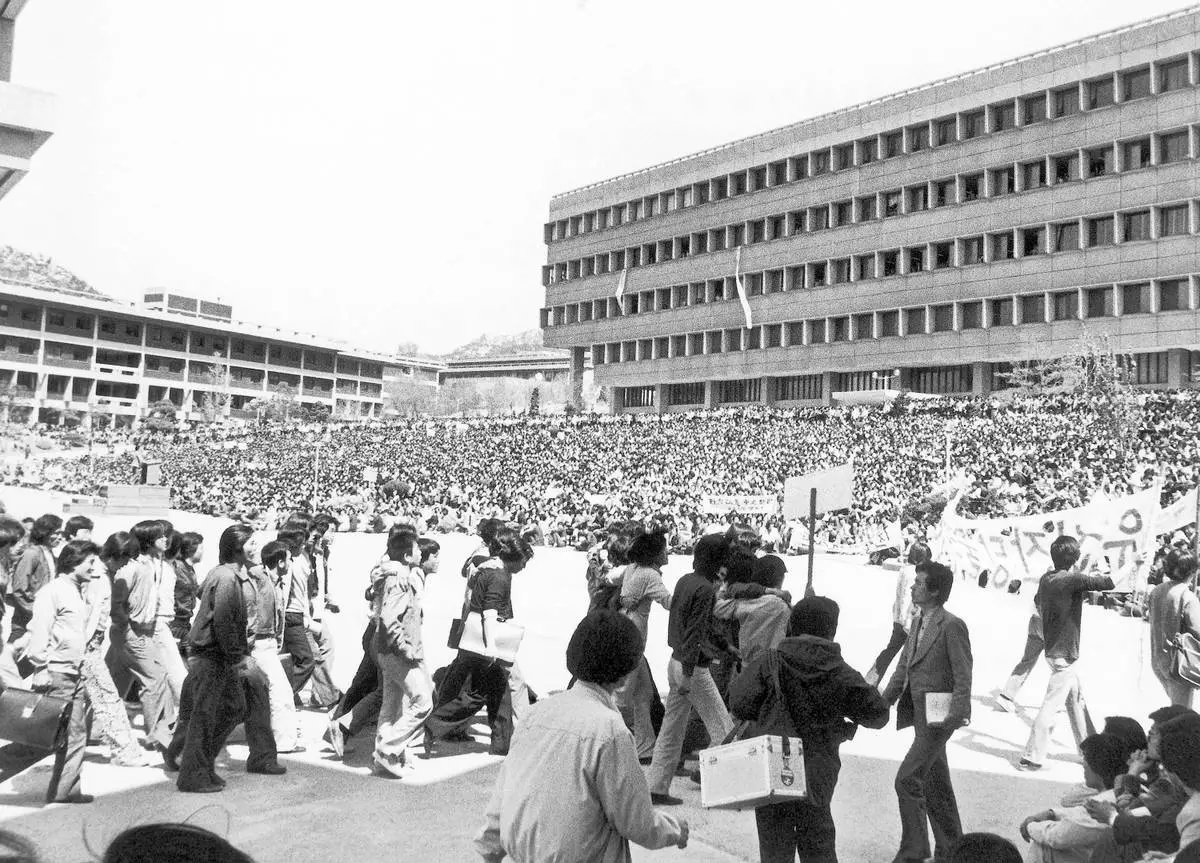
FILE- Some 10,000 students of Seoul National University hold a campus rally on Friday, May 2, 1980 to demand the lifting of martial law and the resignation of Premier Shin Hyon-Hwack and Korean Central Intelligence Chief Lt. Gen. Chin Doc-Hwan. (AP Photo/Kim Chon Kil, File)
FILE- Some 10,000 students of Seoul National University hold a campus rally on Friday, May 2, 1980 to demand the lifting of martial law and the resignation of Premier Shin Hyon-Hwack and Korean Central Intelligence Chief Lt. Gen. Chin Doc-Hwan. (AP Photo/Kim Chon Kil, File)

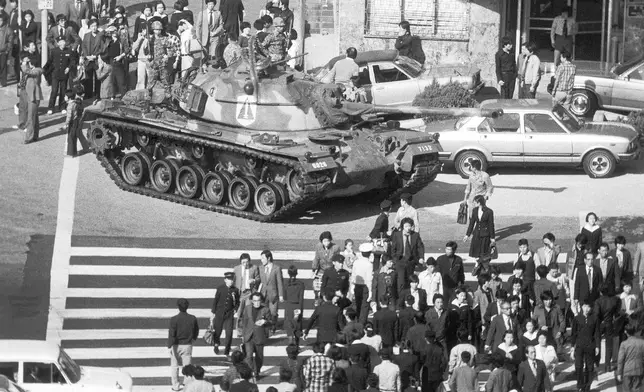
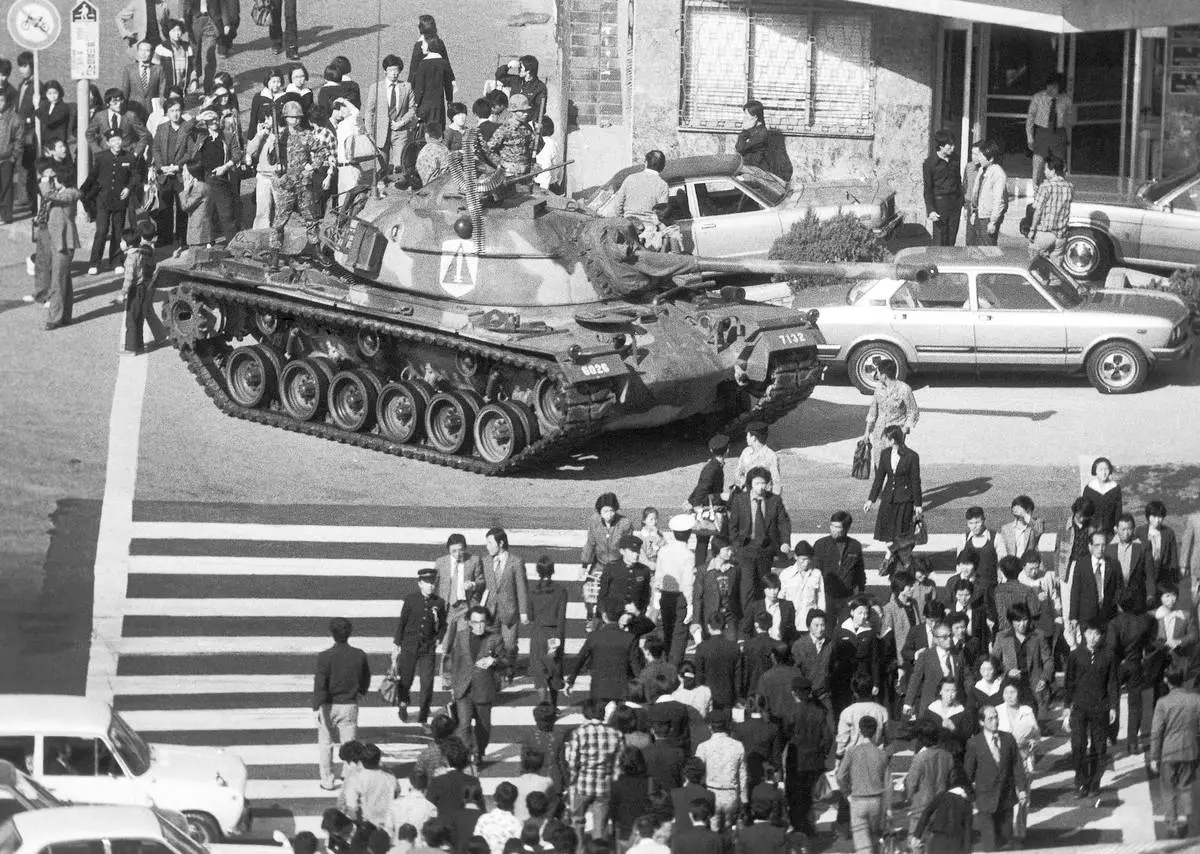
FILE- Seoul citizens walk beside an army tank on Saturday, Oct. 27, 1979, after martial law was declared following the death of President Park Chung-Hee. (AP Photo/Kim Chon-Kil, File)
FILE- Seoul citizens walk beside an army tank on Saturday, Oct. 27, 1979, after martial law was declared following the death of President Park Chung-Hee. (AP Photo/Kim Chon-Kil, File)

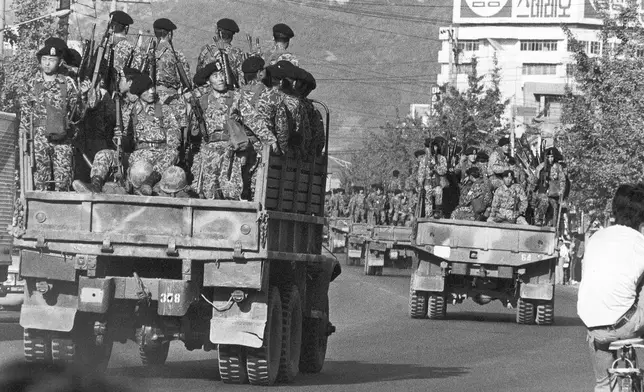
FILE- Truckloads of South Korean paratroopers move in downtown Masan on Oct. 20, 1979 as a "garrison decree" was proclaimed following two days of rioting against the government in this south coast city, 300 km south of Seoul, South Korea. (AP Photo/Kim Chon-Kil, File)
FILE- Truckloads of South Korean paratroopers move in downtown Masan on Oct. 20, 1979 as a "garrison decree" was proclaimed following two days of rioting against the government in this south coast city, 300 km south of Seoul, South Korea. (AP Photo/Kim Chon-Kil, File)

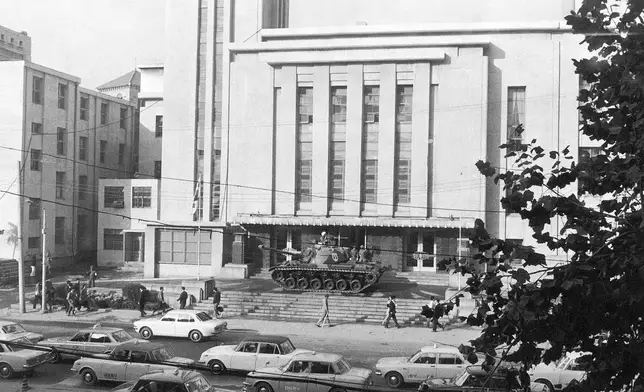
FILE- An army tank stands guard in front of the National Assembly building in the heart of this South Korean capital of Seoul on Oct. 18, 1972. The single-house parliament was closed by Martial Law proclaimed. (AP Photo/File)
FILE- An army tank stands guard in front of the National Assembly building in the heart of this South Korean capital of Seoul on Oct. 18, 1972. The single-house parliament was closed by Martial Law proclaimed. (AP Photo/File)

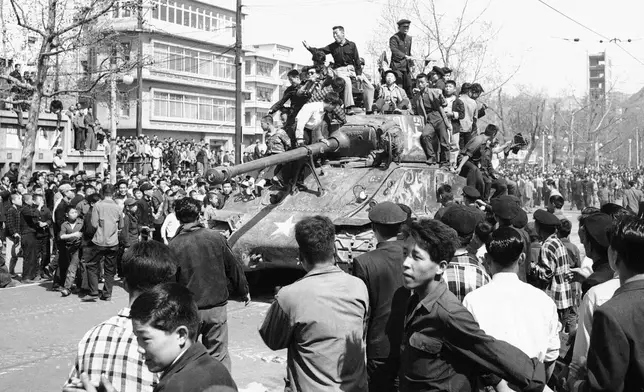
FILE- Jubilant South Koreans surmounted an army tank in Seoul's City Hall Plaza on April 27, 1960 as they celebrated apparent victory over President Syngman Rhee's government. Rhee resigned on April 27 in the face of nationwide demonstrations for democratic reforms and new elections. (AP Photo/File)
FILE- Jubilant South Koreans surmounted an army tank in Seoul's City Hall Plaza on April 27, 1960 as they celebrated apparent victory over President Syngman Rhee's government. Rhee resigned on April 27 in the face of nationwide demonstrations for democratic reforms and new elections. (AP Photo/File)

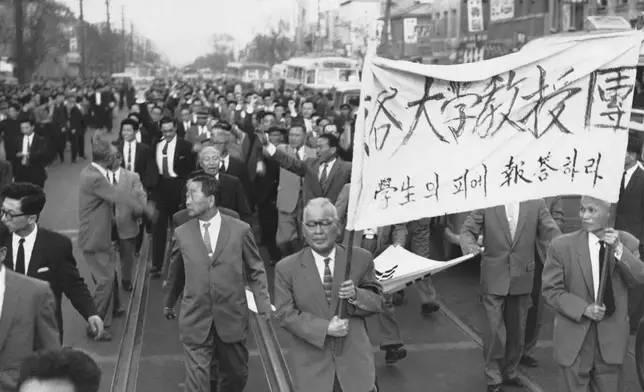
FILE- Some 200 college professors representing 27 colleges, march along a Seoul street, in South Korea, on April 25, 1960, after a meeting at the Seoul University. The professors expressed embarrassment that they had left it to their students to lead the movement against what they considered misrule by President Sungman Rhee. (AP Photo/File)
FILE- Some 200 college professors representing 27 colleges, march along a Seoul street, in South Korea, on April 25, 1960, after a meeting at the Seoul University. The professors expressed embarrassment that they had left it to their students to lead the movement against what they considered misrule by President Sungman Rhee. (AP Photo/File)

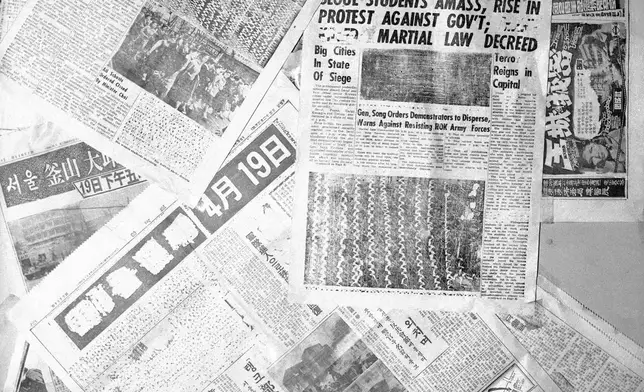
FILE- These are three South Korean newspapers for Wednesday, April 20, which show crude censoring by officials shown April 19, 1960. (AP Photo/File)
FILE- These are three South Korean newspapers for Wednesday, April 20, which show crude censoring by officials shown April 19, 1960. (AP Photo/File)

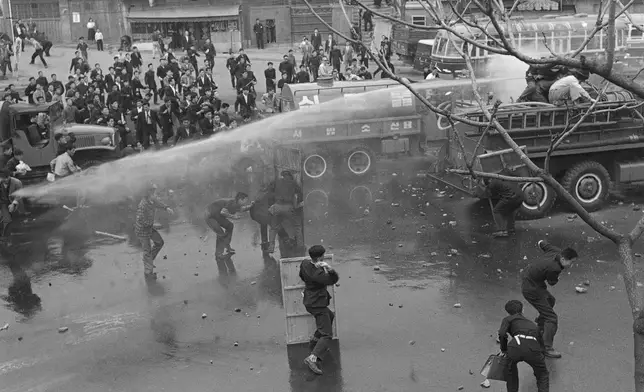
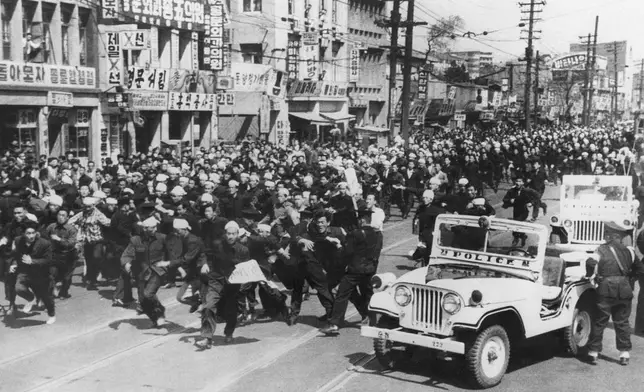
FILE- Students in South Korea capital of Seoul use shield to defy attempts to disperse them with fire hoses on April 19, 1960. Students were protesting manner in which recent election was managed. (AP Photo/Kim Chon Kil, File)
FILE- Students in South Korea capital of Seoul use shield to defy attempts to disperse them with fire hoses on April 19, 1960. Students were protesting manner in which recent election was managed. (AP Photo/Kim Chon Kil, File)

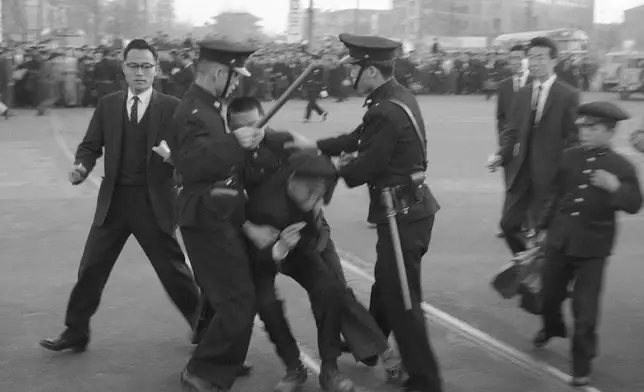
FILE- Two policemen flank demonstrators in Seoul, South Korea on April 18, 1960 using clubs to break up a riot protesting the March 15 presidential election. Demonstrations continued and on April 19 in the South Korean capital martial law was declared. (AP Photo, File)
FILE- Two policemen flank demonstrators in Seoul, South Korea on April 18, 1960 using clubs to break up a riot protesting the March 15 presidential election. Demonstrations continued and on April 19 in the South Korean capital martial law was declared. (AP Photo, File)

FILE- Students hurl rocks and shout slogans at the police in defiance of a government ban on demonstrations in South Korea, on Monday, April 18, 1960. (AP Photo/File)

FILE- Students hurl rocks and shout slogans at the police in defiance of a government ban on demonstrations in South Korea, on Monday, April 18, 1960. (AP Photo/File)

It was last imposed in 1979 by Prime Minister Choi Kyu-hah after the assassination of President Park Chung-hee, a military dictator who had seized power in a 1961 coup. It was then extended in 1980 by Gen. Chun Doo-hwan, who also took the presidency in a military coup.

He used military force to put down student-led demonstrations in Gwangju, some 250 kilometers (150 miles) south of Seoul, killing hundreds of protesters.

In Seoul, thousands of university students took to the streets to demand an end to martial law, and were confronted by riot police using tear gas. Martial law was eventually lifted in 1981.

Martial law was first used in 1948 by South Korea's first president Syngman Rhee as he cracked down on communist uprisings, killing thousands.

It was also invoked during the 1950-53 Korean War to allow South Korea to use its military to stifle anti-government protests.

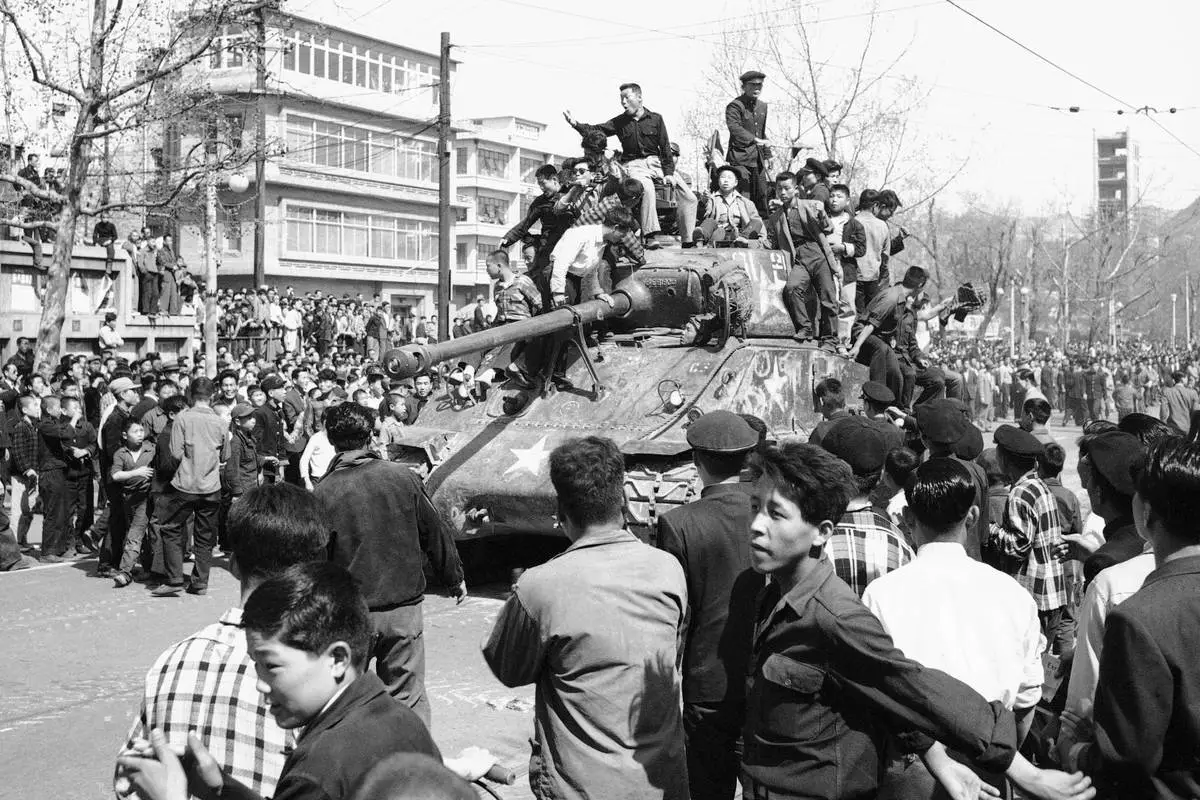
As Rhee struggled to hold onto power in the face of growing opposition, he imposed martial law again in 1960. Hundreds were killed in clashes between protesters and police. After Rhee was forced to resign in the face of nationwide demonstrations, jubilant South Koreans climbed aboard a tank outside Seoul's City Hall to celebrate.

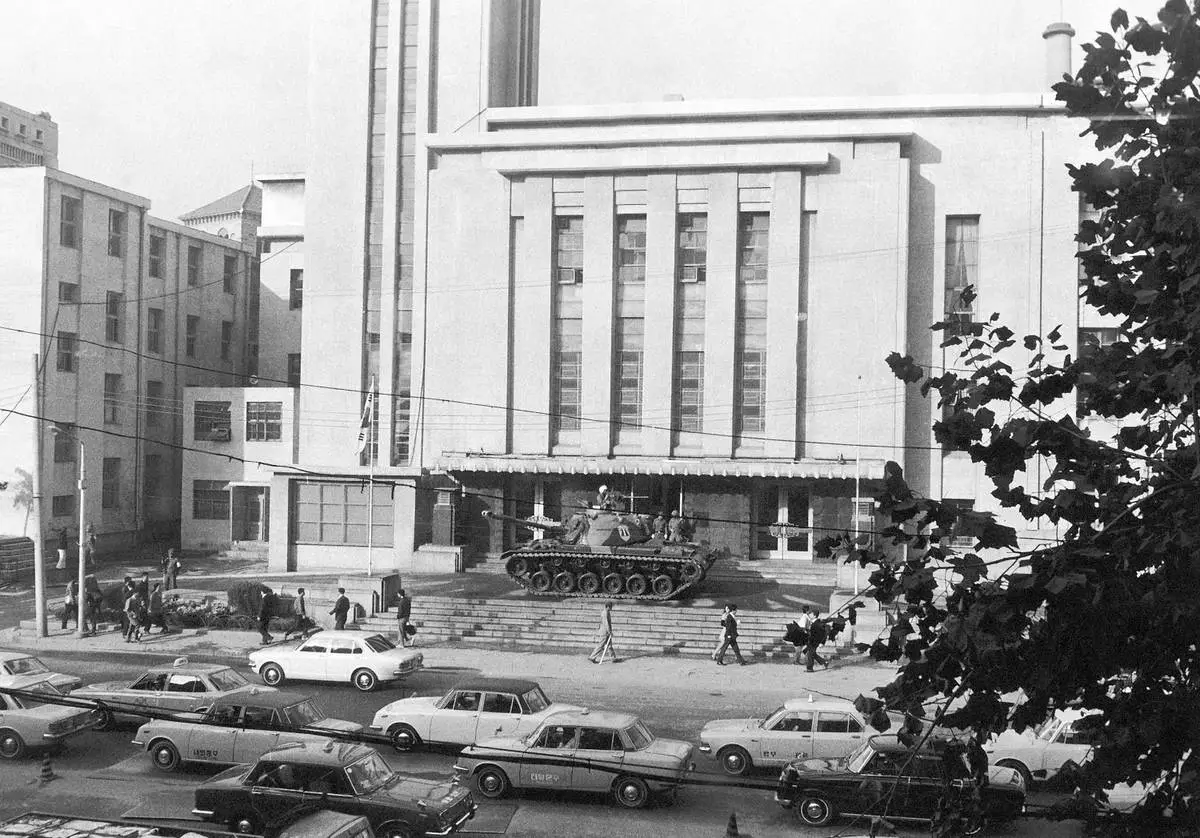
While still president in 1972, Park Chung-hee initiated another coup to give himself dictatorial powers and declared martial law, again sending tanks into the streets of Seoul. It was lifted later the same year.

Through the years until his assassination in 1979, protests against Park's rule grew, and he used emergency measures to justify the jailing of hundreds of dissidents.
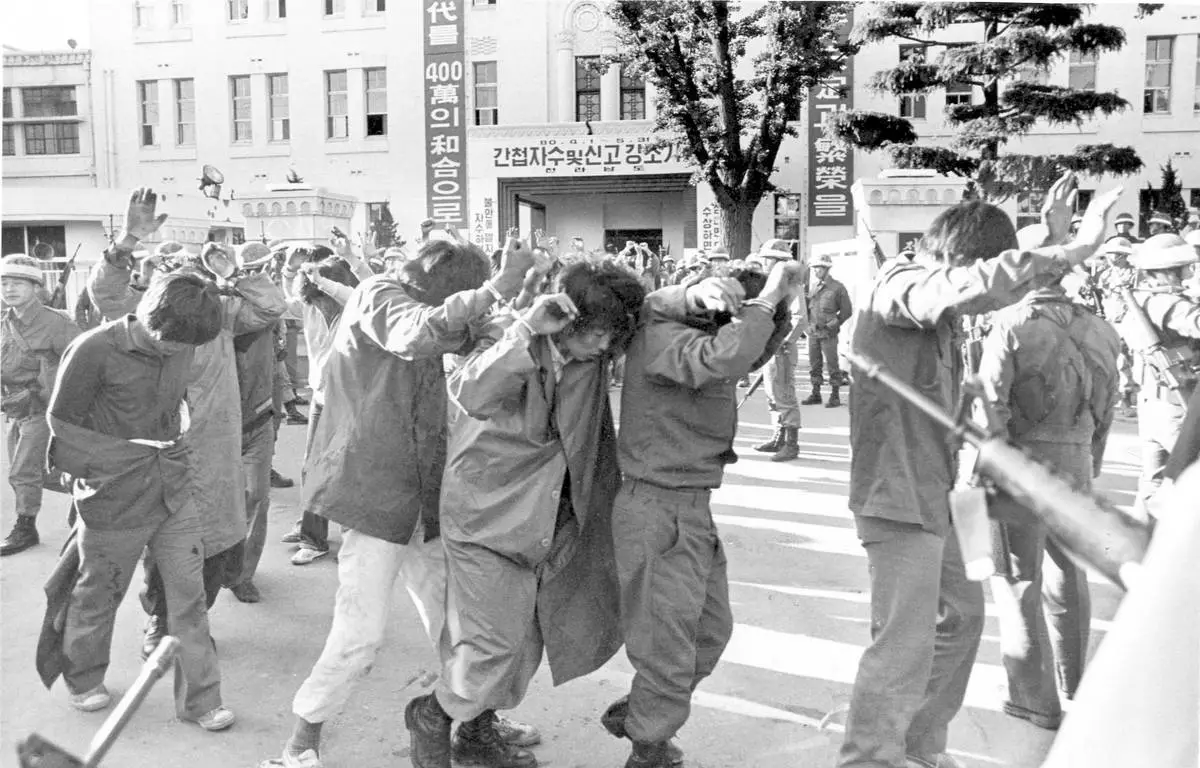
FILE- Scores of captured rebels with hands up are being led away Tuesday May 27, 1980, by armed soldiers from the provincial government HQ., in this city of Gwangju (Kwangju) which South Korean troops recaptured in a firefight earlier in the day. (AP Photo)
FILE- Scores of captured rebels with hands up are being led away Tuesday May 27, 1980, by armed soldiers from the provincial government HQ., in this city of Gwangju (Kwangju) which South Korean troops recaptured in a firefight earlier in the day. (AP Photo)

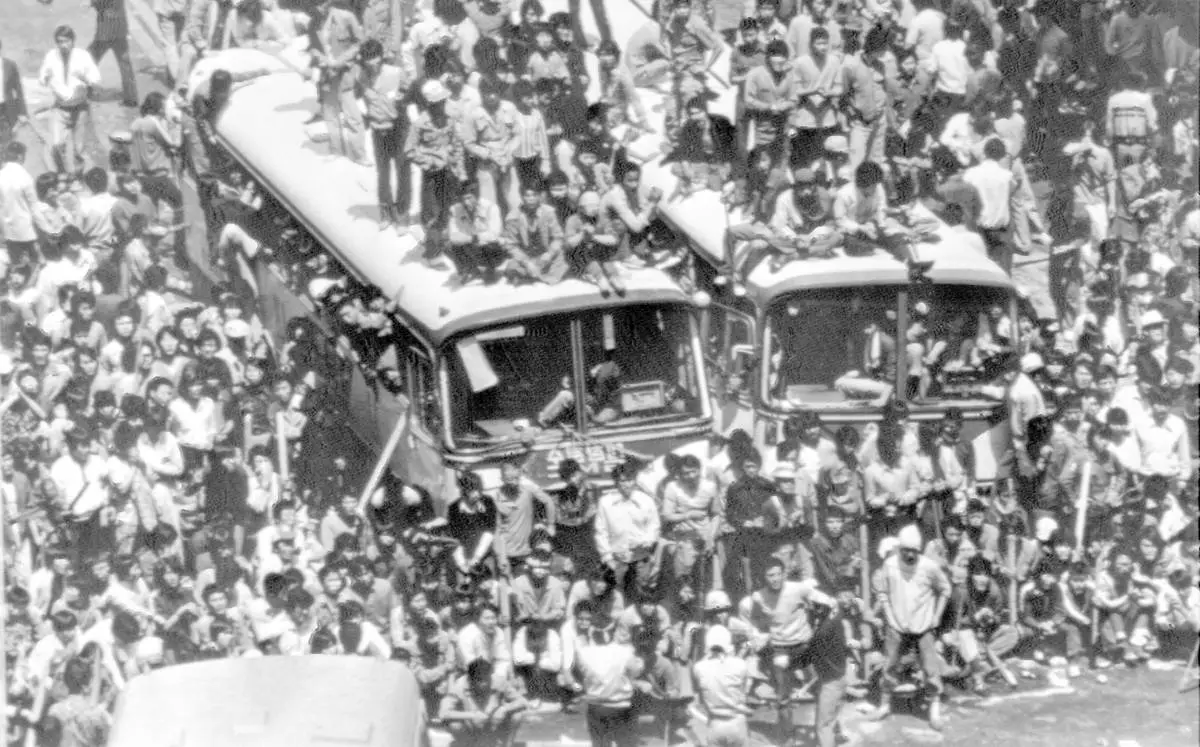
FILE- Commandeered city buses are used to block a main downtown street of Gwangju (Kwangju), May 23, 1980 by demonstrators against riot police and paratroopers during riotous anti-government protests this week. (AP Photo/File)
FILE- Commandeered city buses are used to block a main downtown street of Gwangju (Kwangju), May 23, 1980 by demonstrators against riot police and paratroopers during riotous anti-government protests this week. (AP Photo/File)

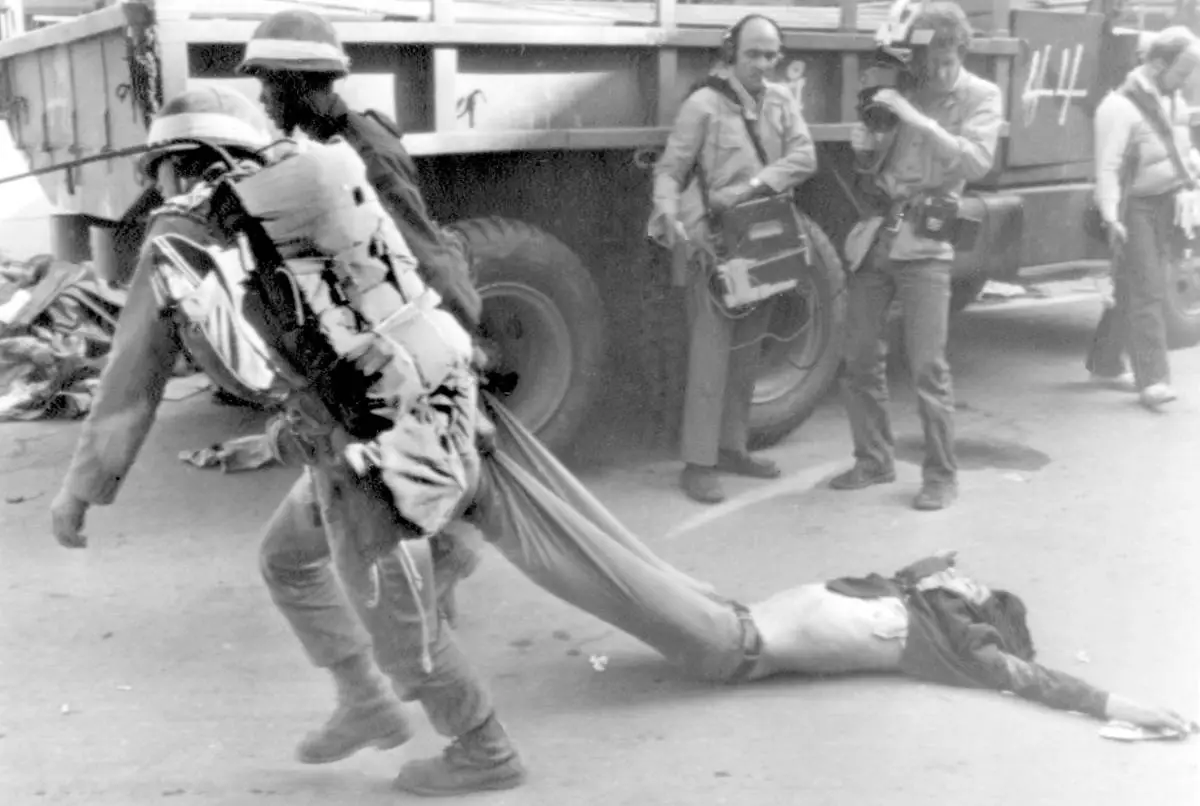
FILE- Soldiers carry away the body of a rebel killed in a firefight Tuesday May 27, 1980, when South Korean troops recaptured this riot-battered city of Gwangju (Kwangju). (AP Photo/File)
FILE- Soldiers carry away the body of a rebel killed in a firefight Tuesday May 27, 1980, when South Korean troops recaptured this riot-battered city of Gwangju (Kwangju). (AP Photo/File)

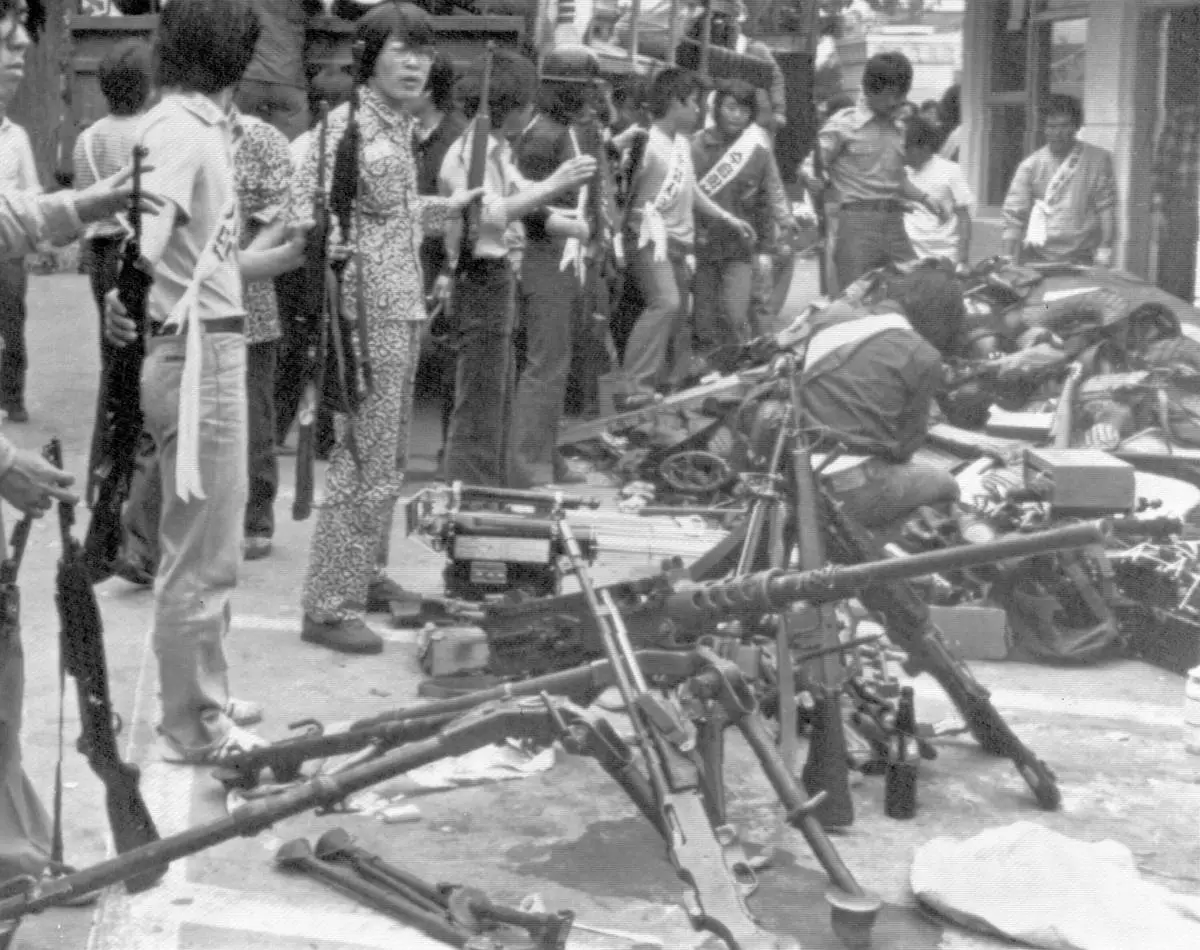
FILE- Korean student demonstrators gather with their collection of weapons, stolen from police and military, at a government building, in Gwangju (Kwangju), South Korea, May 24, 1980, during anti-government demonstrations. (AP Photo/File)
FILE- Korean student demonstrators gather with their collection of weapons, stolen from police and military, at a government building, in Gwangju (Kwangju), South Korea, May 24, 1980, during anti-government demonstrations. (AP Photo/File)

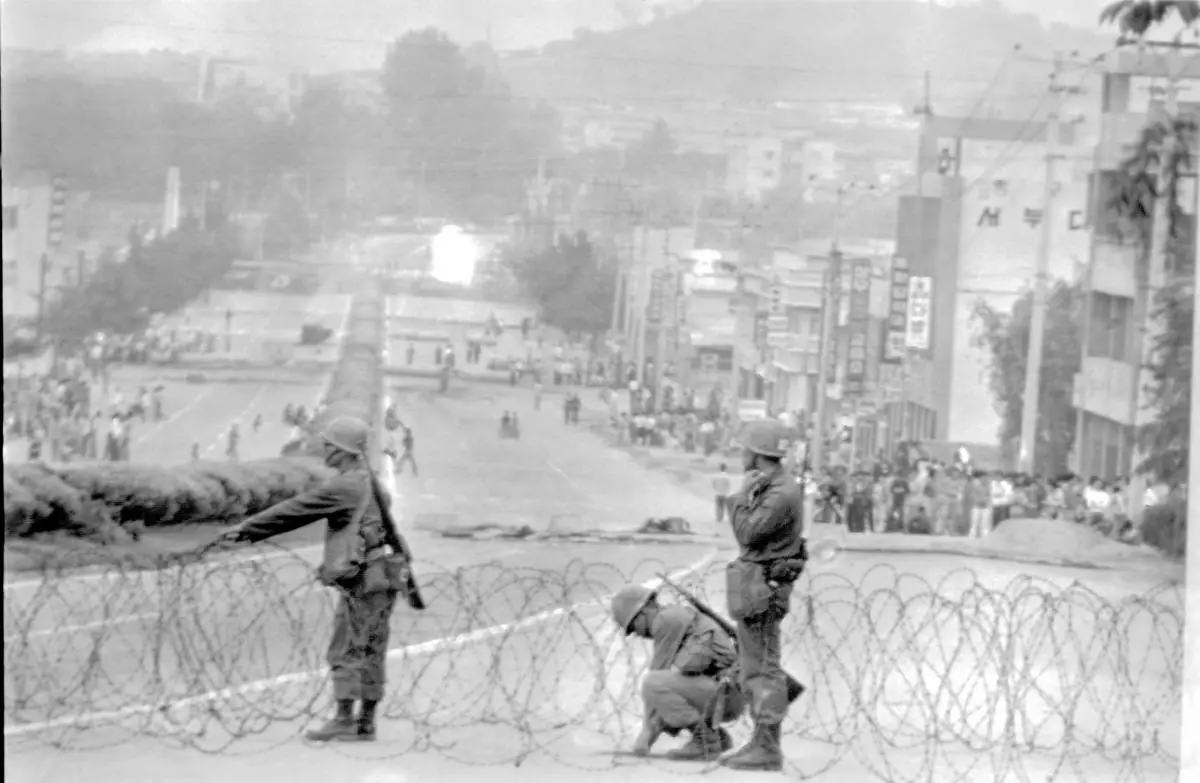
FILE- Government soldiers are erecting a roadblock on a street leading to downtown Gwangju (Kwangju), with citizens looking on, May 26, 1980. Rebels are holding the provincial capital in south western Korea days now. (AP Photo/ File)
FILE- Government soldiers are erecting a roadblock on a street leading to downtown Gwangju (Kwangju), with citizens looking on, May 26, 1980. Rebels are holding the provincial capital in south western Korea days now. (AP Photo/ File)

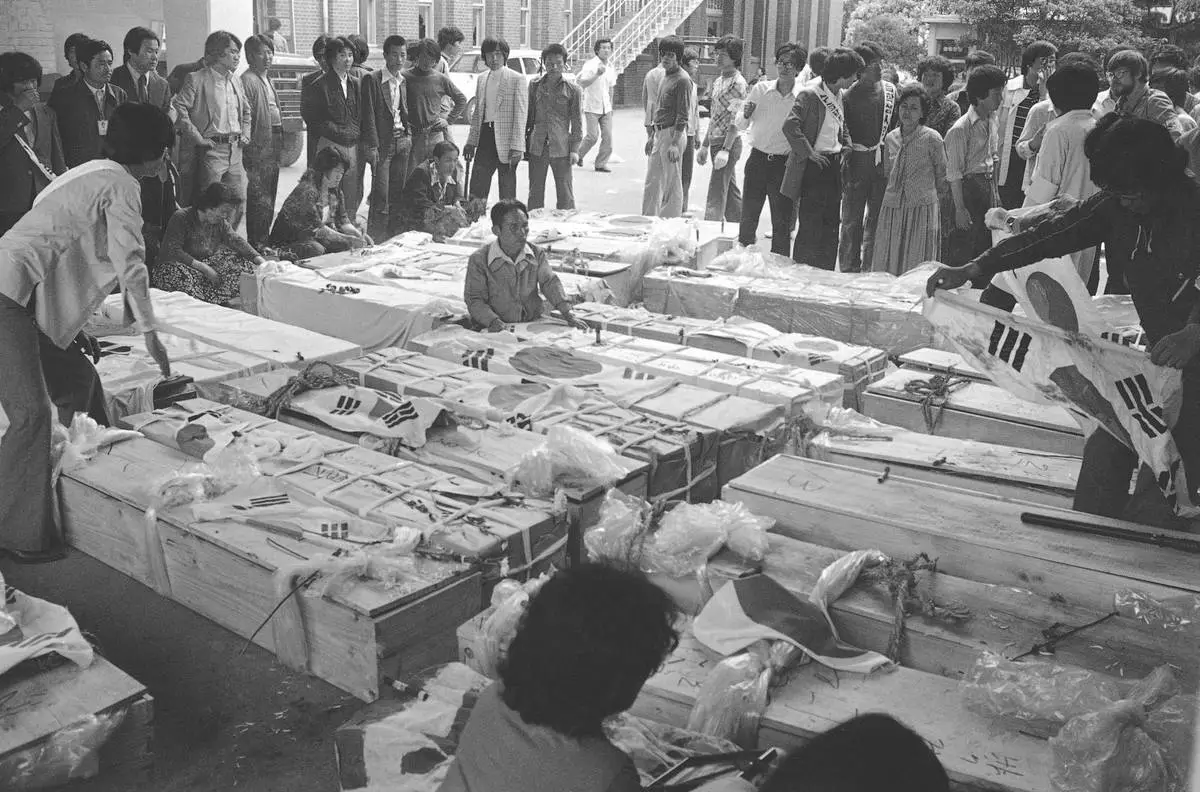
FILE- Families and relatives gather around the coffins of dead protesters at provincial headquarters in Gwangju (Kwangju), South Korea, May 23, 1980, some 250 kilometers south of Seoul, South Korea. (AP Photo/Kin Chon Kil, File)
FILE- Families and relatives gather around the coffins of dead protesters at provincial headquarters in Gwangju (Kwangju), South Korea, May 23, 1980, some 250 kilometers south of Seoul, South Korea. (AP Photo/Kin Chon Kil, File)

FILE- A helmeted army paratroops beats a man arrested during violent anti-government demonstrations in Gwangju (Kwangju), May 20, 1980. (AP Photo/File)
FILE- A helmeted army paratroops beats a man arrested during violent anti-government demonstrations in Gwangju (Kwangju), May 20, 1980. (AP Photo/File)

FILE- Police vehicle sprays tear gas at tens of thousands of student demonstrators in downtown Seoul, South Korea on Thursday, May 15, 1980. (AP Photo/Kim Chon-Kil, File)
FILE- Police vehicle sprays tear gas at tens of thousands of student demonstrators in downtown Seoul, South Korea on Thursday, May 15, 1980. (AP Photo/Kim Chon-Kil, File)

FILE- Some 10,000 students of Seoul National University hold a campus rally on Friday, May 2, 1980 to demand the lifting of martial law and the resignation of Premier Shin Hyon-Hwack and Korean Central Intelligence Chief Lt. Gen. Chin Doc-Hwan. (AP Photo/Kim Chon Kil, File)
FILE- Some 10,000 students of Seoul National University hold a campus rally on Friday, May 2, 1980 to demand the lifting of martial law and the resignation of Premier Shin Hyon-Hwack and Korean Central Intelligence Chief Lt. Gen. Chin Doc-Hwan. (AP Photo/Kim Chon Kil, File)

FILE- Seoul citizens walk beside an army tank on Saturday, Oct. 27, 1979, after martial law was declared following the death of President Park Chung-Hee. (AP Photo/Kim Chon-Kil, File)
FILE- Seoul citizens walk beside an army tank on Saturday, Oct. 27, 1979, after martial law was declared following the death of President Park Chung-Hee. (AP Photo/Kim Chon-Kil, File)

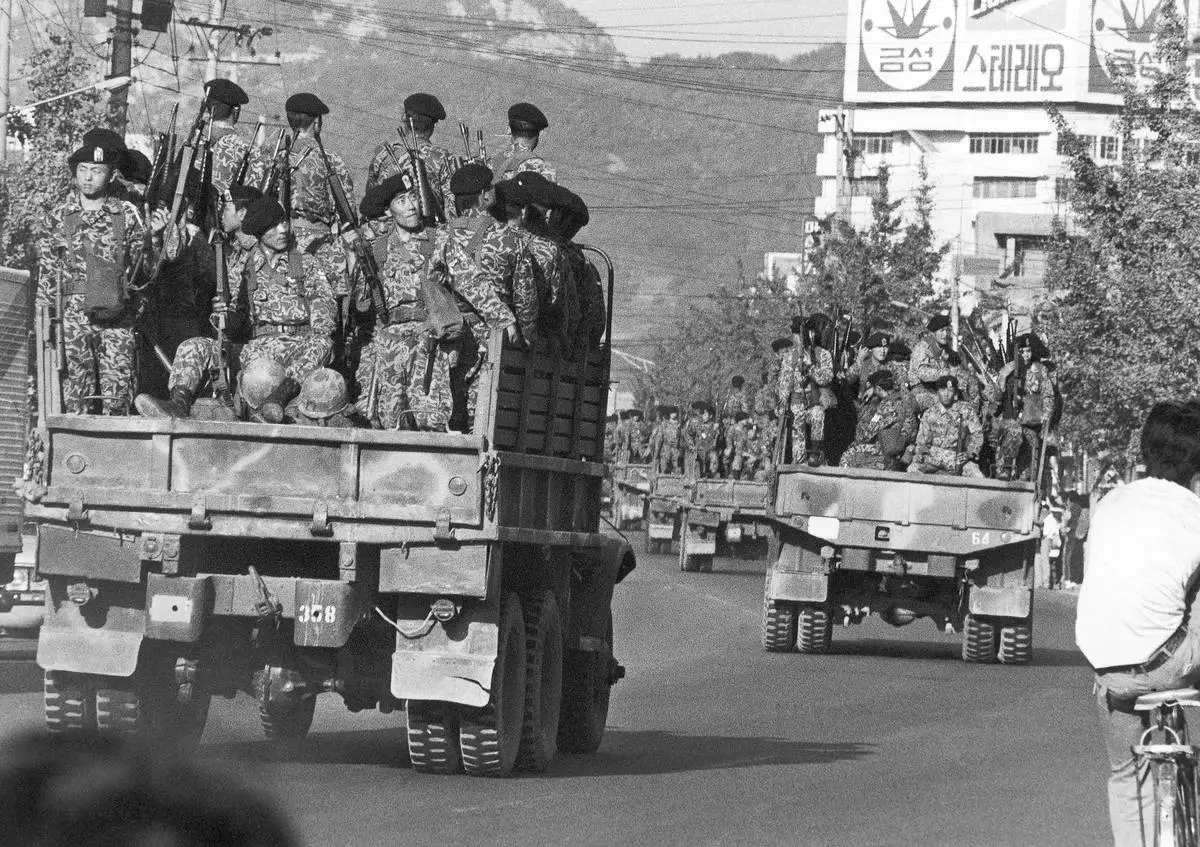
FILE- Truckloads of South Korean paratroopers move in downtown Masan on Oct. 20, 1979 as a "garrison decree" was proclaimed following two days of rioting against the government in this south coast city, 300 km south of Seoul, South Korea. (AP Photo/Kim Chon-Kil, File)
FILE- Truckloads of South Korean paratroopers move in downtown Masan on Oct. 20, 1979 as a "garrison decree" was proclaimed following two days of rioting against the government in this south coast city, 300 km south of Seoul, South Korea. (AP Photo/Kim Chon-Kil, File)

FILE- An army tank stands guard in front of the National Assembly building in the heart of this South Korean capital of Seoul on Oct. 18, 1972. The single-house parliament was closed by Martial Law proclaimed. (AP Photo/File)
FILE- An army tank stands guard in front of the National Assembly building in the heart of this South Korean capital of Seoul on Oct. 18, 1972. The single-house parliament was closed by Martial Law proclaimed. (AP Photo/File)

FILE- Jubilant South Koreans surmounted an army tank in Seoul's City Hall Plaza on April 27, 1960 as they celebrated apparent victory over President Syngman Rhee's government. Rhee resigned on April 27 in the face of nationwide demonstrations for democratic reforms and new elections. (AP Photo/File)
FILE- Jubilant South Koreans surmounted an army tank in Seoul's City Hall Plaza on April 27, 1960 as they celebrated apparent victory over President Syngman Rhee's government. Rhee resigned on April 27 in the face of nationwide demonstrations for democratic reforms and new elections. (AP Photo/File)

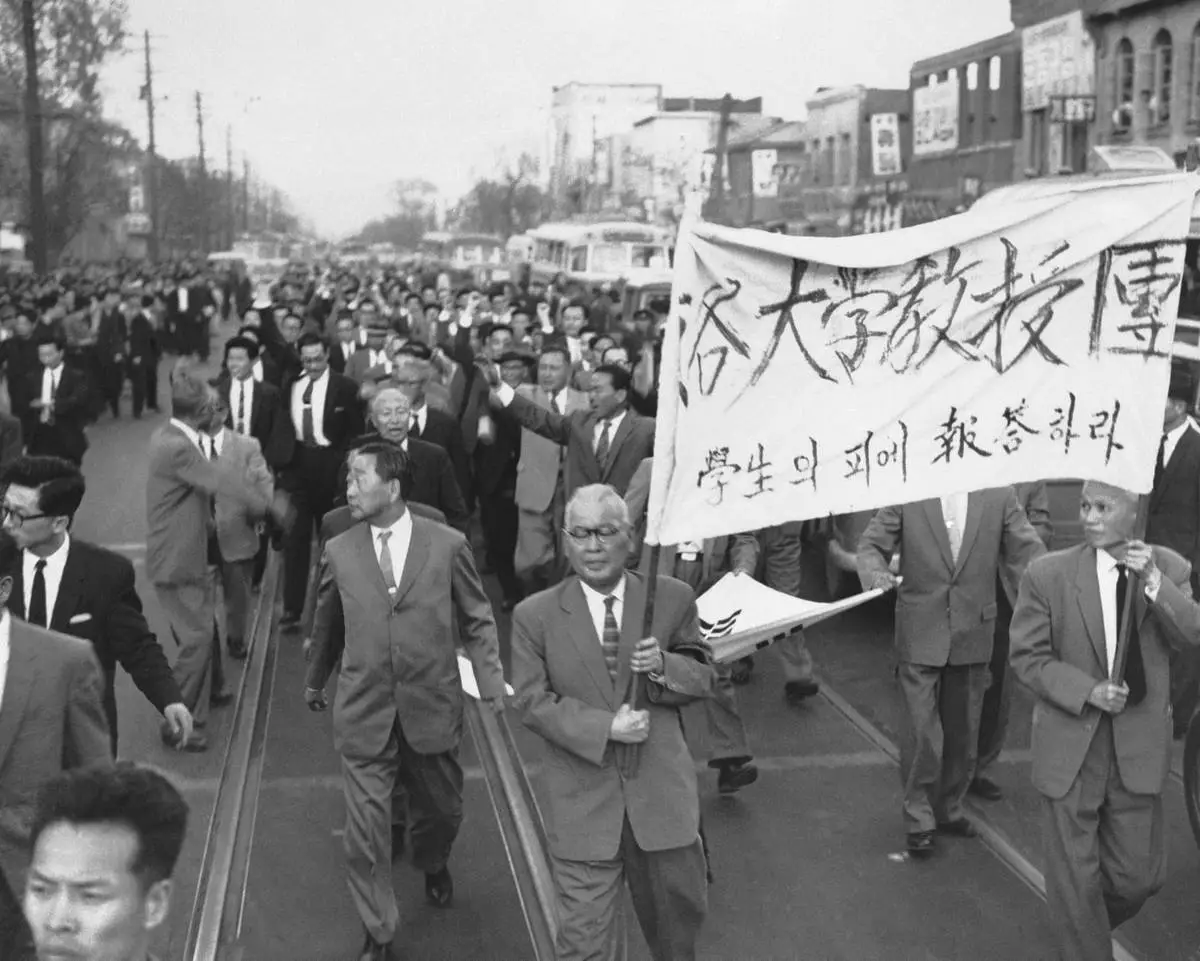
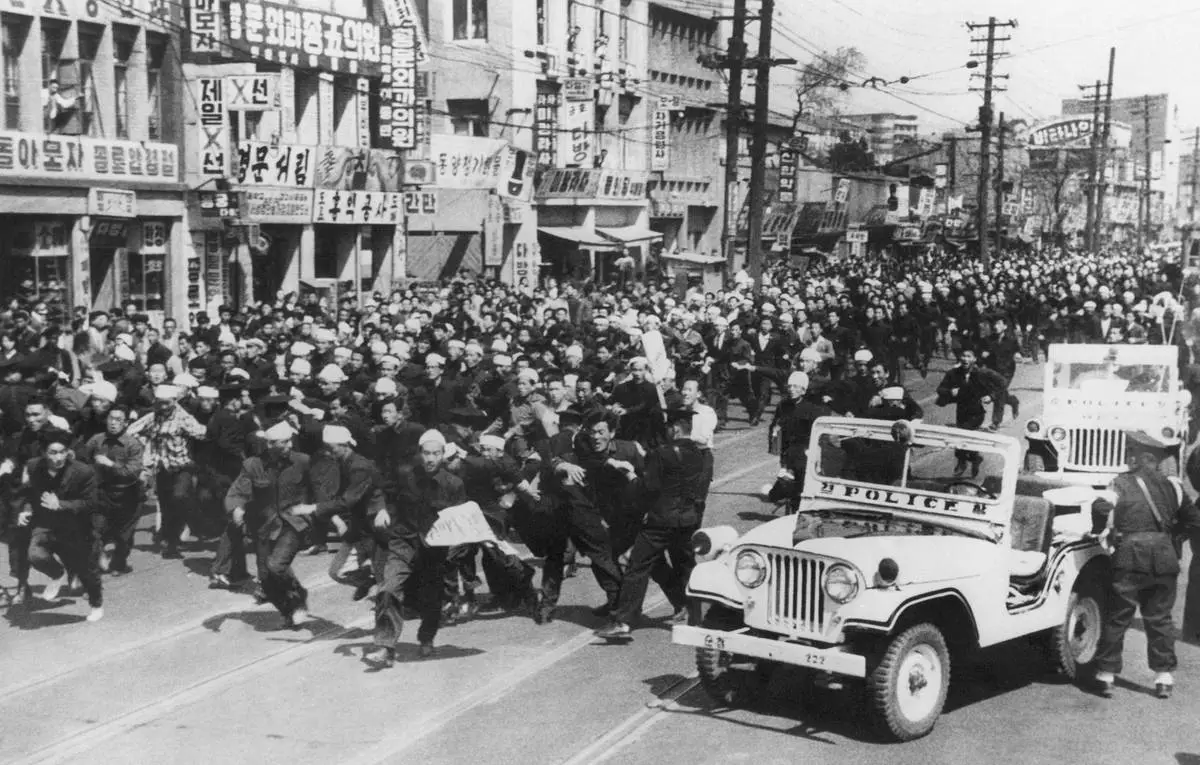
FILE- Some 200 college professors representing 27 colleges, march along a Seoul street, in South Korea, on April 25, 1960, after a meeting at the Seoul University. The professors expressed embarrassment that they had left it to their students to lead the movement against what they considered misrule by President Sungman Rhee. (AP Photo/File)
FILE- Some 200 college professors representing 27 colleges, march along a Seoul street, in South Korea, on April 25, 1960, after a meeting at the Seoul University. The professors expressed embarrassment that they had left it to their students to lead the movement against what they considered misrule by President Sungman Rhee. (AP Photo/File)

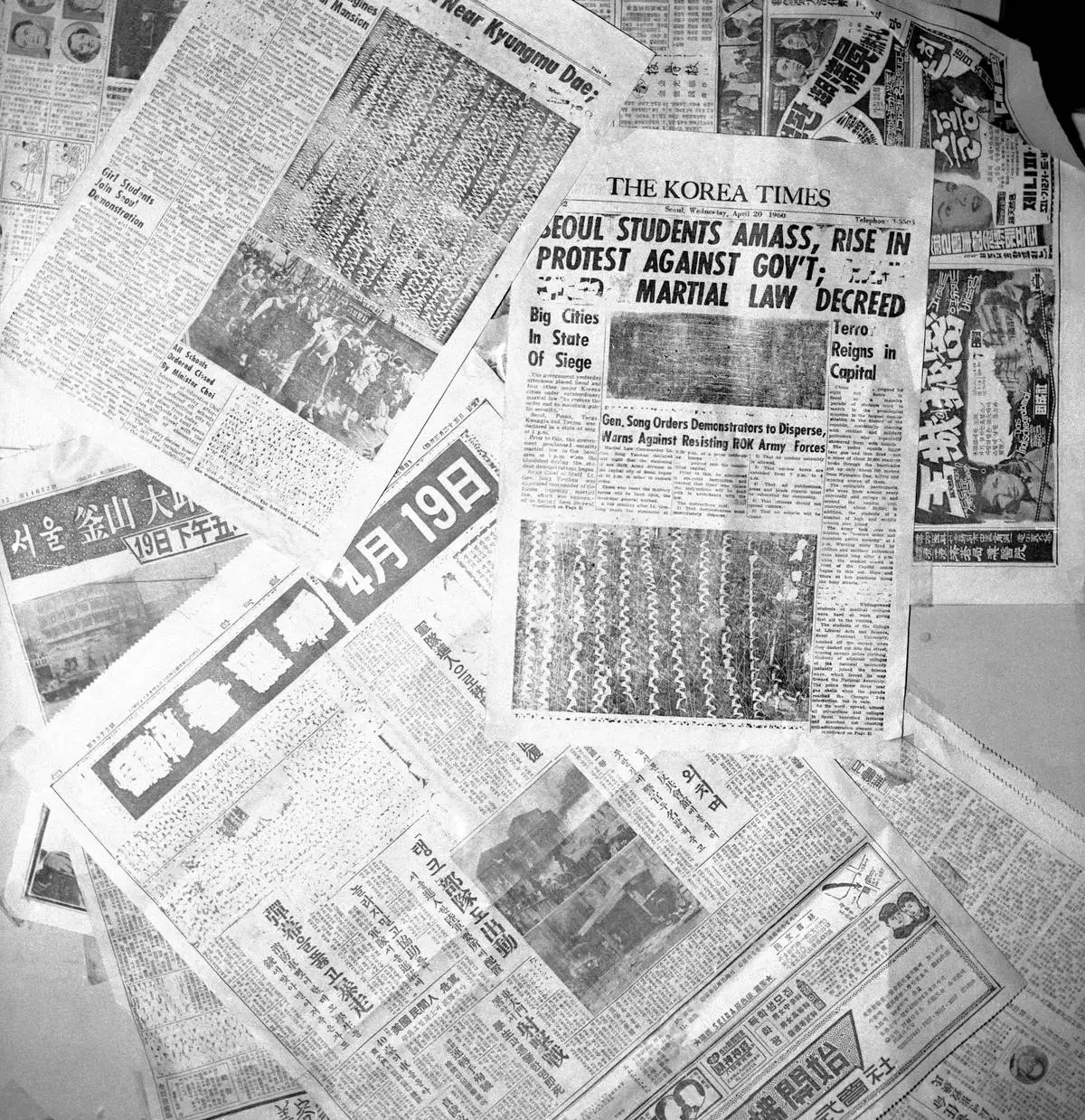
FILE- These are three South Korean newspapers for Wednesday, April 20, which show crude censoring by officials shown April 19, 1960. (AP Photo/File)
FILE- These are three South Korean newspapers for Wednesday, April 20, which show crude censoring by officials shown April 19, 1960. (AP Photo/File)

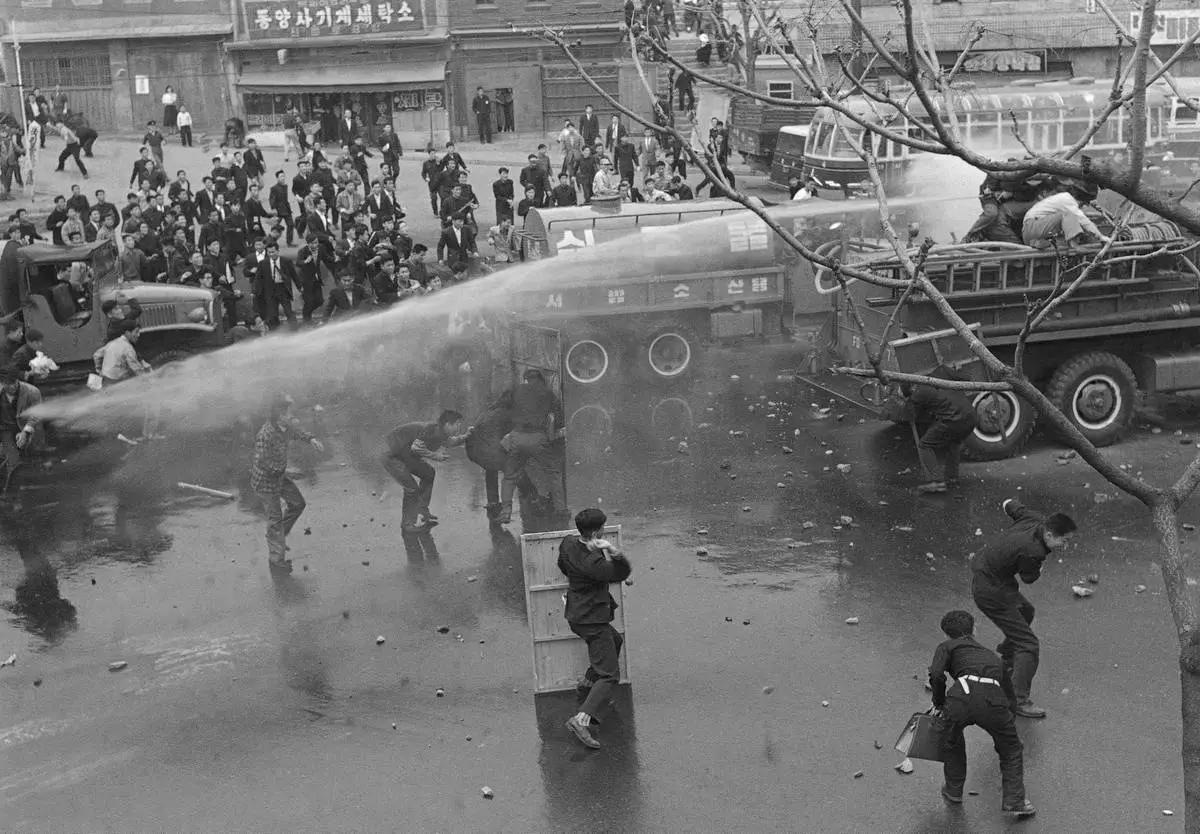
FILE- Students in South Korea capital of Seoul use shield to defy attempts to disperse them with fire hoses on April 19, 1960. Students were protesting manner in which recent election was managed. (AP Photo/Kim Chon Kil, File)
FILE- Students in South Korea capital of Seoul use shield to defy attempts to disperse them with fire hoses on April 19, 1960. Students were protesting manner in which recent election was managed. (AP Photo/Kim Chon Kil, File)

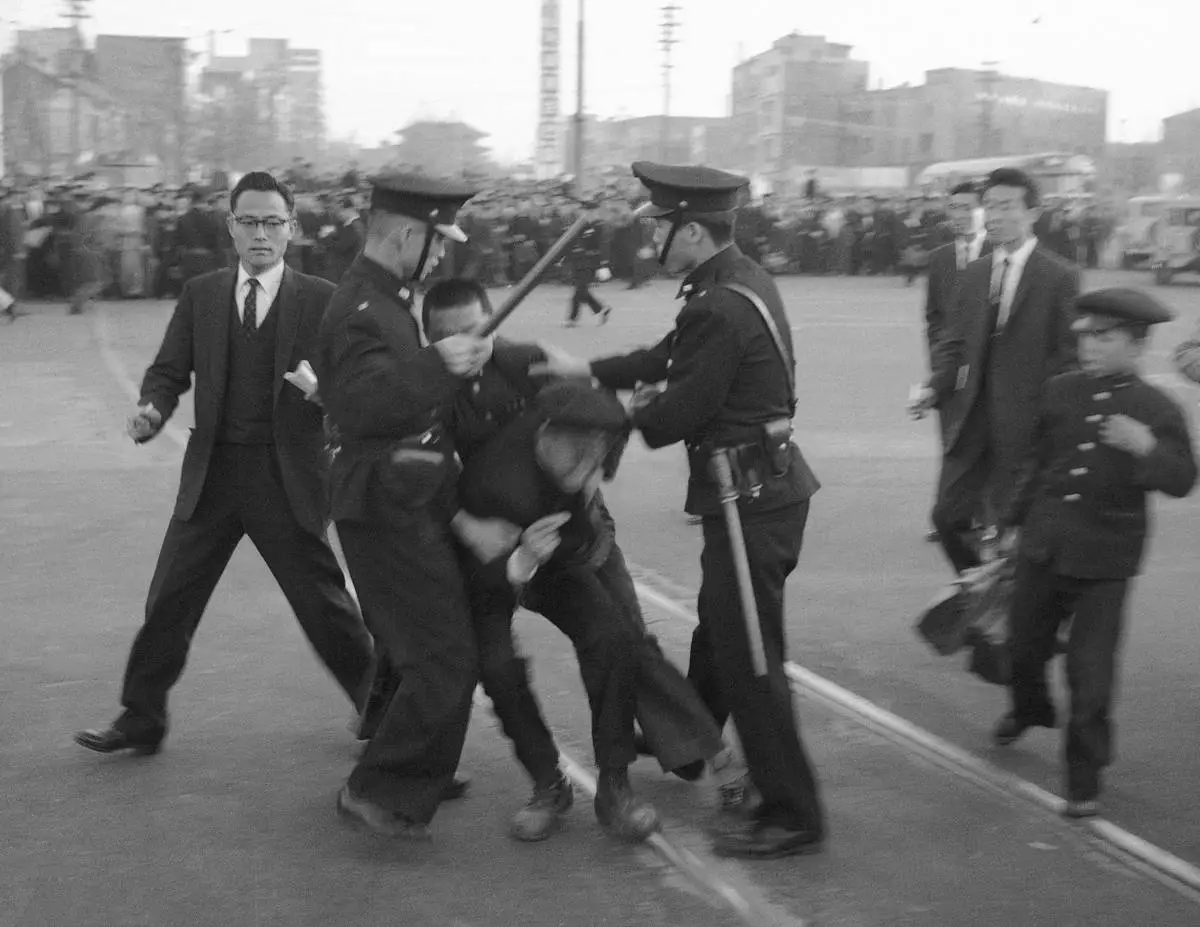
FILE- Two policemen flank demonstrators in Seoul, South Korea on April 18, 1960 using clubs to break up a riot protesting the March 15 presidential election. Demonstrations continued and on April 19 in the South Korean capital martial law was declared. (AP Photo, File)
FILE- Two policemen flank demonstrators in Seoul, South Korea on April 18, 1960 using clubs to break up a riot protesting the March 15 presidential election. Demonstrations continued and on April 19 in the South Korean capital martial law was declared. (AP Photo, File)

FILE- Students hurl rocks and shout slogans at the police in defiance of a government ban on demonstrations in South Korea, on Monday, April 18, 1960. (AP Photo/File)
FILE- Students hurl rocks and shout slogans at the police in defiance of a government ban on demonstrations in South Korea, on Monday, April 18, 1960. (AP Photo/File)
MILAN (AP) — Italy coach Gennaro Gattuso left his role “by mutual consent” on Friday, three days after the national team failed to qualify for a third consecutive World Cup.

The Italian soccer federation announced the news in a statement thanking Gattuso “for the dedication and passion” during his nine months in charge.

Italy’s chances of reaching this year’s tournament in North America ended on Tuesday after a penalty shootout loss to Bosnia and Herzegovina in a qualifying playoff.

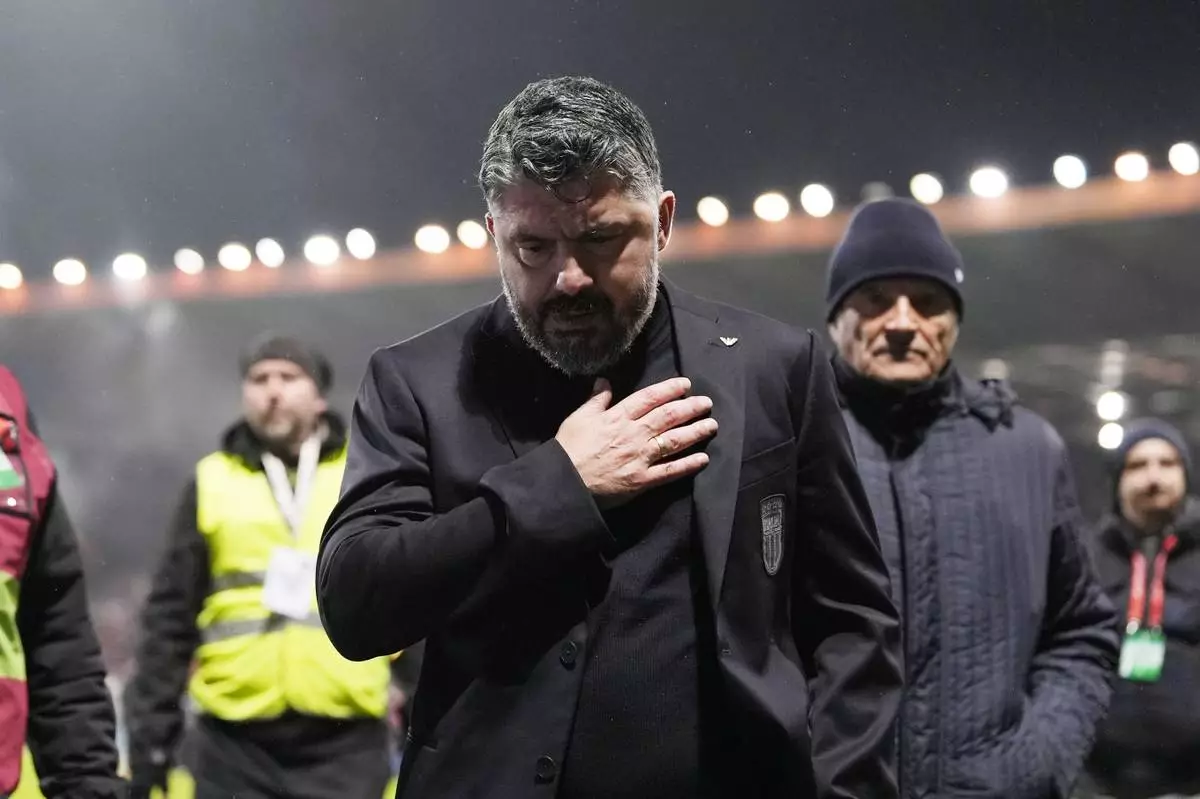
“With pain in my heart, not having achieved the goal we had set ourselves, I consider my experience on the national team bench to be over,” Gattuso said.

Gattuso’s departure comes a day after Italy’s soccer federation president Gabriele Gravina resigned along with Gianluigi Buffon, who was the national team’s delegation chief.

The defeat to Bosnia added more misery for four-time champion Italy after being eliminated by Sweden and North Macedonia, respectively, in the qualifying playoffs for the last two World Cups.

Gattuso took over from the fired Luciano Spalletti in June with the squad already in crisis mode following a defeat at Norway in its opening qualifier.

The Azzurri then went on a six-match winning streak before another loss to Norway in November to finish second in their group and end up in the playoffs again.

AP soccer: https://apnews.com/hub/soccer

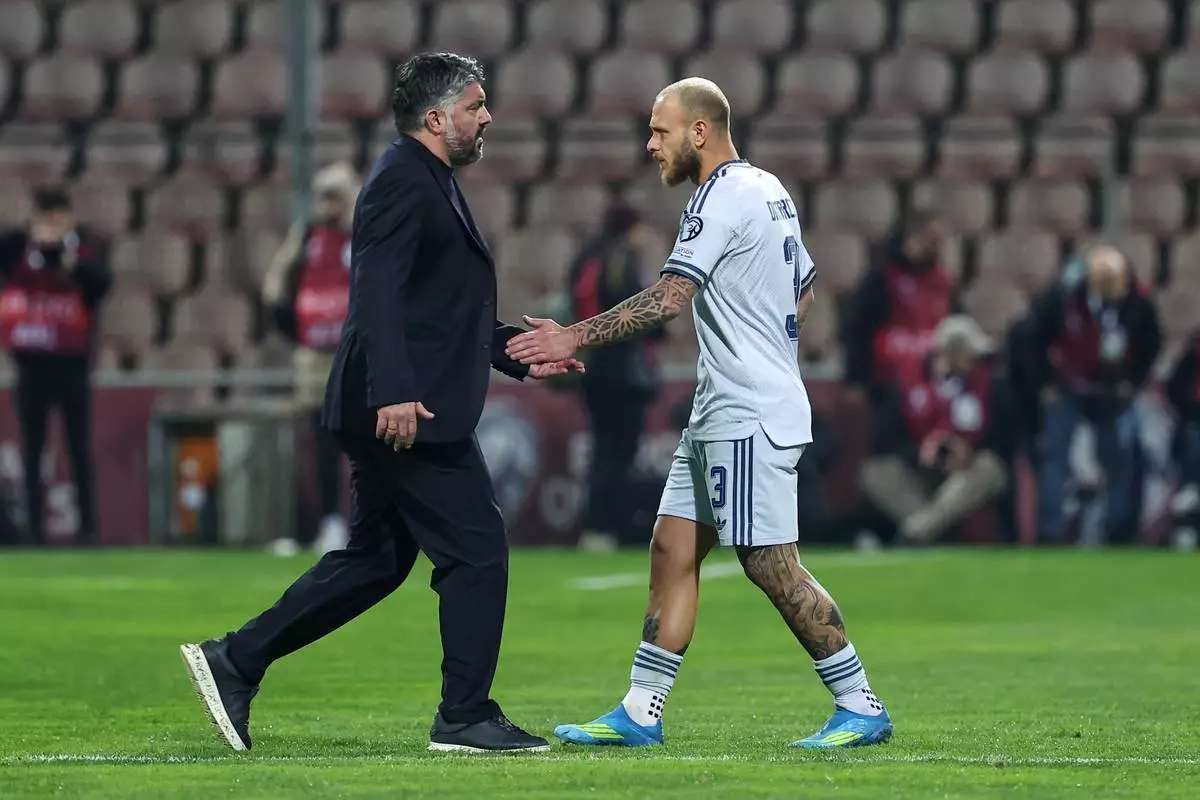
Italy coach Gennaro Gattuso greets Federico Dimarco during the World Cup qualifying playoff final soccer match between Bosnia and Italy in Zenica, Bosnia, Tuesday, March 31, 2026. (AP Photo/Armin Durgut)

Italy coach Gennaro Gattuso greets Federico Dimarco during the World Cup qualifying playoff final soccer match between Bosnia and Italy in Zenica, Bosnia, Tuesday, March 31, 2026. (AP Photo/Armin Durgut)

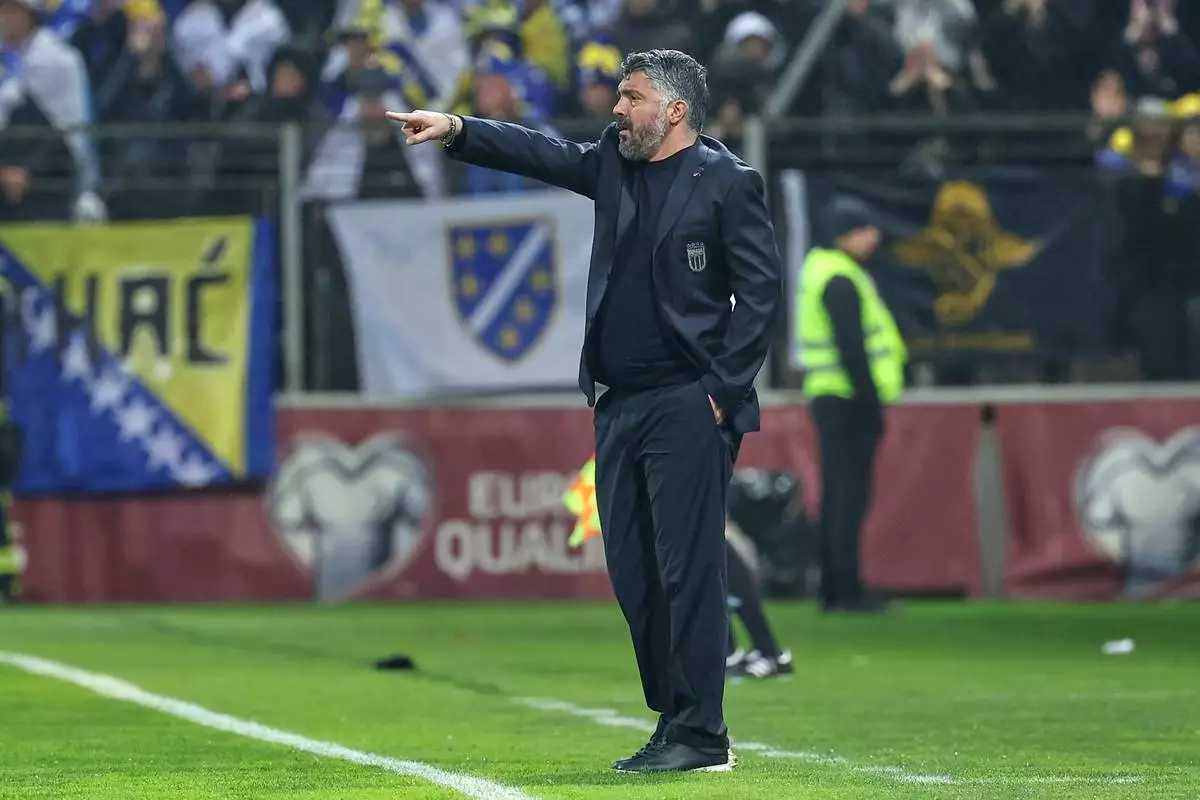
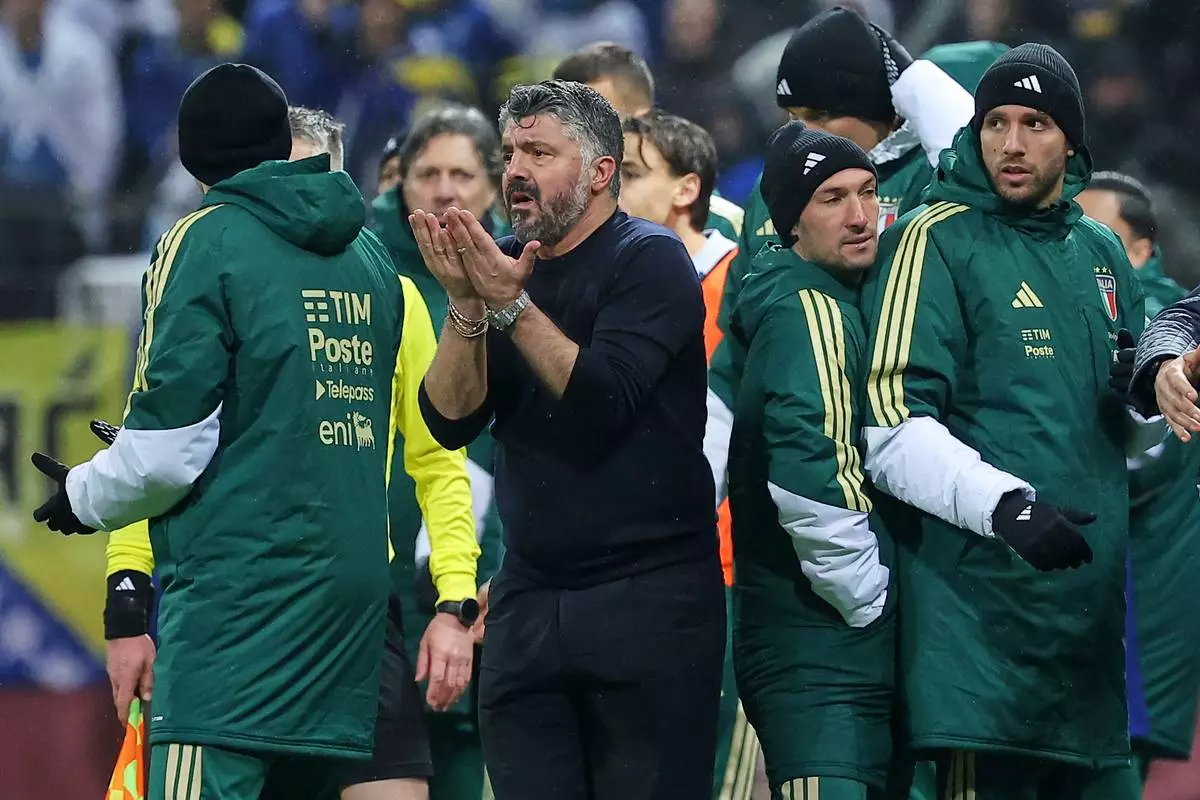
Italy's coach Gennaro Gattuso directs his team during the World Cup qualifying playoff final soccer match between Bosnia and Italy in Zenica, Bosnia, Tuesday, March 31, 2026. (Fabio Ferrari/LaPresse via AP)

Italy's coach Gennaro Gattuso directs his team during the World Cup qualifying playoff final soccer match between Bosnia and Italy in Zenica, Bosnia, Tuesday, March 31, 2026. (Fabio Ferrari/LaPresse via AP)

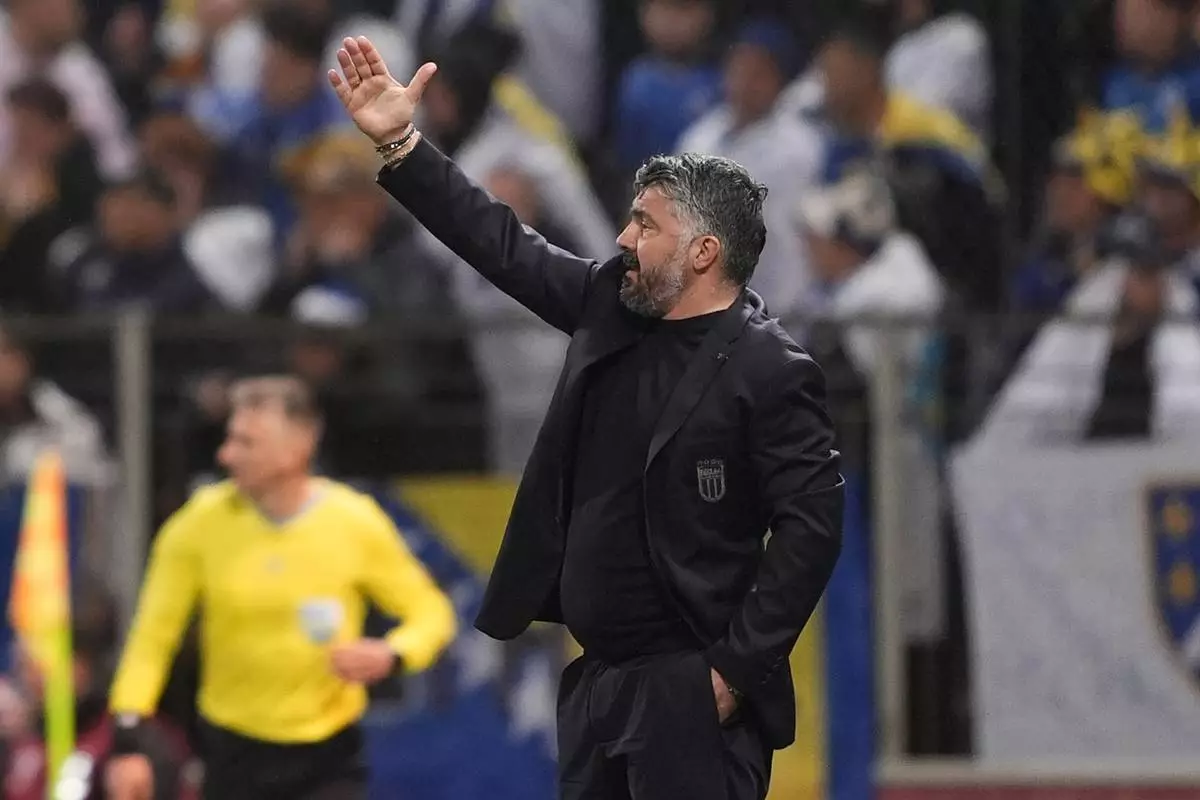
Italy coach Gennaro Gattuso gestures from the touchline during the World Cup qualifying playoff final soccer match between Bosnia and Italy in Zenica, Bosnia, Tuesday, March 31, 2026. (AP Photo/Armin Durgut)

Italy coach Gennaro Gattuso gestures from the touchline during the World Cup qualifying playoff final soccer match between Bosnia and Italy in Zenica, Bosnia, Tuesday, March 31, 2026. (AP Photo/Armin Durgut)

Italy coach Gennaro Gattuso gestures from the touchline during the World Cup qualifying playoff final soccer match between Bosnia and Italy in Zenica, Bosnia, Tuesday, March 31, 2026. (AP Photo/Armin Durgut)

Italy coach Gennaro Gattuso gestures from the touchline during the World Cup qualifying playoff final soccer match between Bosnia and Italy in Zenica, Bosnia, Tuesday, March 31, 2026. (AP Photo/Armin Durgut)

Italy's coach Gennaro Gattuso walks off the pitch after losing in a World Cup qualifying playoff final soccer match between Bosnia and Italy in Zenica, Bosnia, Tuesday, March 31, 2026. (Fabio Ferrari/LaPresse via AP)

Italy's coach Gennaro Gattuso walks off the pitch after losing in a World Cup qualifying playoff final soccer match between Bosnia and Italy in Zenica, Bosnia, Tuesday, March 31, 2026. (Fabio Ferrari/LaPresse via AP)

Recommended Articles