The Nigerian city of Jos recently celebrated the annual Igbo Day, where members of the Igbo tribe gathered together to promote their customs and tradition.
Individually, and in small groups, they arrived at the ceremony. Young and old, all are dressed in traditional black, red and white attire. They interacted with friends and loved ones while waiting for the festivities to begin.
A few moments later, the crowd cheered for the arrival of the Igwe, who is the leader of the Igbos in Jos.
With his officials, Igwe greeted everyone who had come from different places.
The Igbos are a very enterprising people, but most of them closed their shops to participate in this ceremony. For them, it's one day they always look forward to, and wouldn't miss it for anything else.
Igbos are predominantly from Nigeria's southeastern states, though some do come from other regions.
Beating local drums made from hides and skins accompanied by vibrant traditional dance steps formed a big part of the day. And it was performed by the young and old, bringing joy to everyone.
"When we talk about our culture, it's not only about the language, respect, how to greet your elders, how to receive items from elders; do you stand, do you bend, what kind of posture do you use when collecting things from elders? How to read and how to write, everything, they are all encompassed in today's program," said Livinus Achi, a member of the Igbo Day Organizing Committee.
Masquerades are another fascinating aspect of the ritual. They only appear on a day like this, or during funerals, and festivals and are treated with a lot of respect.
Masquerading involves a team of people who beat drums, as those who participate are covered with bamboo rafters and wear masks. Only men are permitted to take part, and it is believed that they represent the spirits of ancestors in humans. Their roles at events vary, but could involve dancing and acrobatics, instilling discipline and order.
Food is another important part of the celebration. The Igbo Day is usually observed once a year, and it is an all day affair, so most of the people here came prepared with food and drinks to ensure they don't go hungry. It's a moment of shared food, but also celebrating a shared heritage and values.
"It's a lesson to others. They should put themselves together, bring themselves together to be identified," said Igbo Women Leader Ijeoma Okafor.
Igbo Day has started being appreciated by people outside the tribe. Here, tourists were watching the traditions handed down by Igbo descendants.
"It's very nice, it's the first time in my life to see so much music, and so many people enjoying being together. It's a very nice culture, very different from my culture," said Philip Awol, a French tourist.
Across Nigeria, Igbo Day is held once a year, and is usually organized by people in different locations.
For the Igbos in Jos, the 2024 experience is one they won't forget. They said celebrating their unique identity is a lifelong calling and one which must be passed down through the generations. So their heritage links are not lost in a fast-changing world.
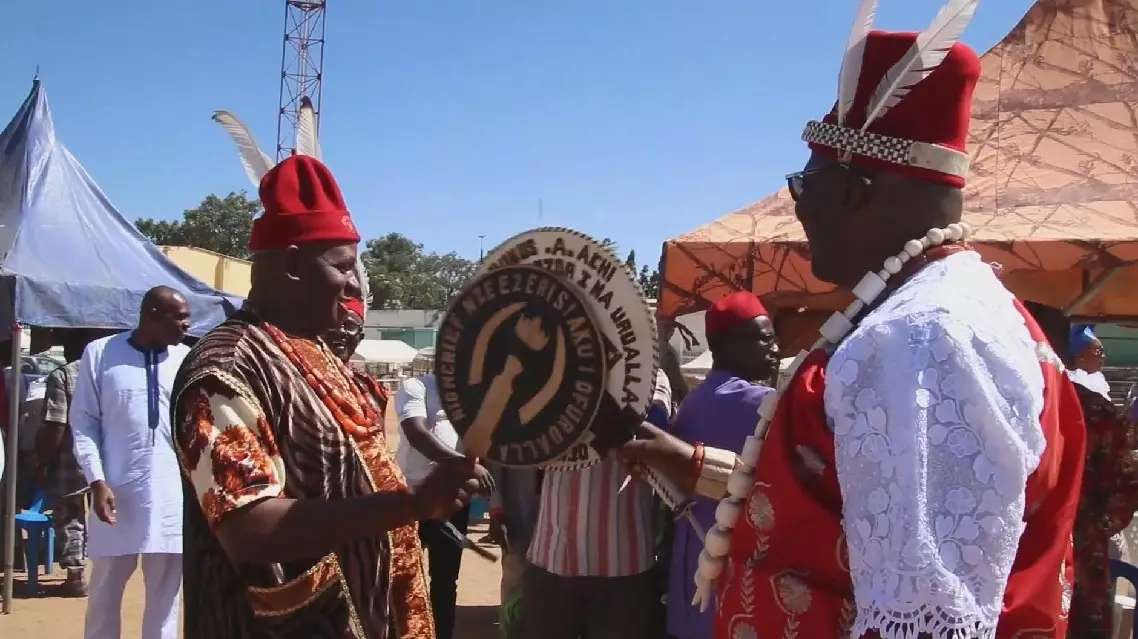
Nigerian city holds annual celebration of Igbo Day to honor local tradition