China's e-commerce logistics is rapidly expanding to the country's rural areas, bringing convenience to local residents while helping farmers explore consumer markets for agriculture products nationwide.
The rapid development of e-commerce logistic in rural areas has driven agricultural product consumption and boosted local residents' income.
In Hualin Village, southwest China's Sichuan Province, a newly established e-commerce express delivery station brings villagers convenient online shopping experience. "Nowadays, e-commerce logistics is so convenient, making it the same living in rural and urban areas. It is very convenient for us to buy things we need. We can buy it with just one click on our mobile phone, and it will be delivered to our homes very quickly," said Liu Zhuangkui, a villager. The e-commerce delivery station serves as a platform connecting Hualin Village to the market outside.
This year, the village has started to use passenger mini-buses to deliver parcels while transporting commuters, making it easier to accurately deliver packages to buyers in rural areas.
"With passenger mini-buses being used to deliver goods, villagers can receive express deliveries in a timely manner, and sell their agricultural products quickly. It not only brings villagers convenience, but also reduces labor and transportation costs," said Liu Wenming, the person in charge of the e-commerce delivery station in Hualin Village.
In Yougang Village, central China's Hunan Province, village officials and villagers work together every day to promote local specialties like radish strips and cured meat via live-streaming.
During this year's "Double 11" online shopping festival, Chongyang Village, located in east China's Zhejiang Province, saw up to 5,000 parcels sending out in a single day thanks to live-streaming, which makes their local agricultural products more popular.
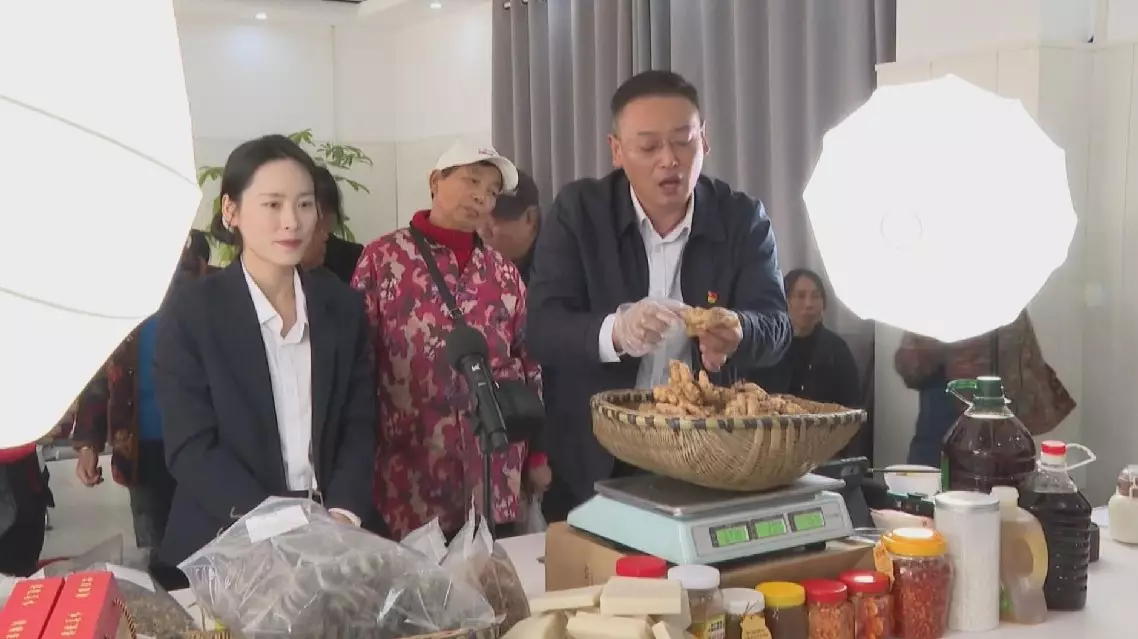
Thriving e-commerce logistics transforms rural life in China
Farmers in Gaza have been forced to find innovative ways to keep their livelihoods ticking over following the devastating conflict, with many now growing vegetables inside recycled tin cans after losing their land during the war.
Inside temporary greenhouses in southern Gaza, Palestinian farmers are growing mint and vegetables inside empty food cans recycled from aid supplies, after suffering severe shortages of essential agricultural materials.
Local farmers say they have been searching for simple alternatives to continue farming amid the widespread destruction, with many seeing their land and crop fields decimated.
"The idea came from the shortage of nylon in Gaza. We started using empty vegetable cans left behind by charity kitchens. We use them as an alternative to nylon and plant inside them," said Mohammad Zaarab, a Palestinian farmer.
Israel's designation of what Palestinians call the 'yellow zone' has swallowed up most of Gaza's available farmland, reducing usable agricultural land to only around six percent, while farmers continue to face the risk of Israeli fire during their work.
"We are exposed to gunfire in this area. Whenever they shoot at us, we hide until the firing stops. We work in fear and risk our lives while farming," said Shadi Zaarab, another farmer.
According to the United Nations, agriculture made up around 10 percent of Gaza's economy before the war, with more than 560,000 Palestinians relying on farming, livestock, or fishing for their livelihoods.
Gaza's Ministry of Agriculture says reusing empty food cans has become one of the few remaining ways for farmers to continue growing and providing food after the war that began in 2023 devastated much of the agricultural sector.
"Since October 7 [2023], about 86 percent of Gaza's agricultural land has been destroyed by the [Israeli] occupation. Farmers have turned to alternatives, especially for growing aromatic plants that Gaza's farmers traditionally relied on for production," said Ali Abu Amer, director of the Khan Younis Governorate under Palestine's Ministry of Agriculture.
The recycled can practice adopted by farmers also has some positive knock-on effect, as collecting and preparing empty food cans has also created limited work opportunities for unemployed youth amid the Israeli blockade.
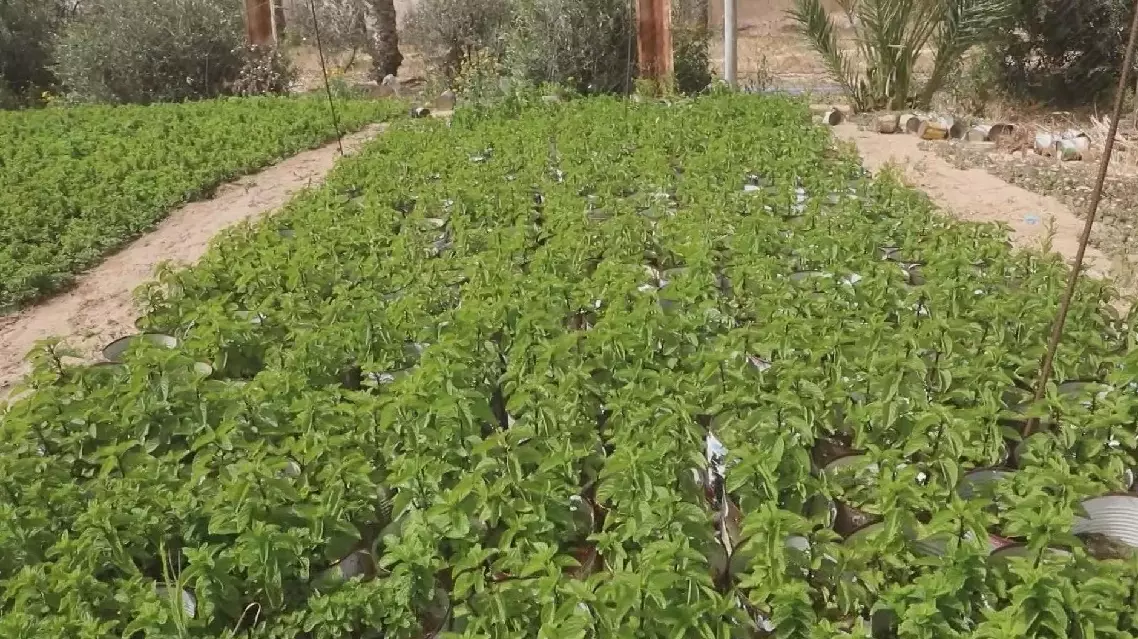
Gaza farmers turn to growing vegetables in recycled tin cans after losing land
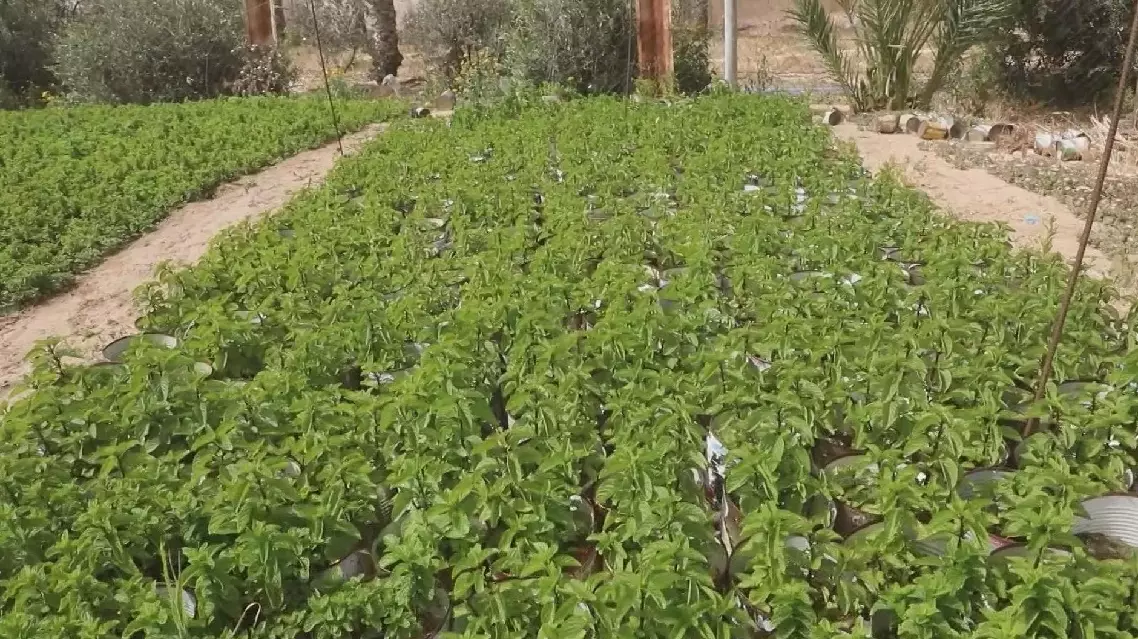
Gaza farmers turn to growing vegetables in recycled tin cans after losing land