A recent paper by Japanese historian Tokushi Kasahara has revealed previously unknown materials related to the Nanjing Massacre, including historical photographs that serve as undeniable evidence of the atrocities committed by Japanese soldiers during their invasion of China.
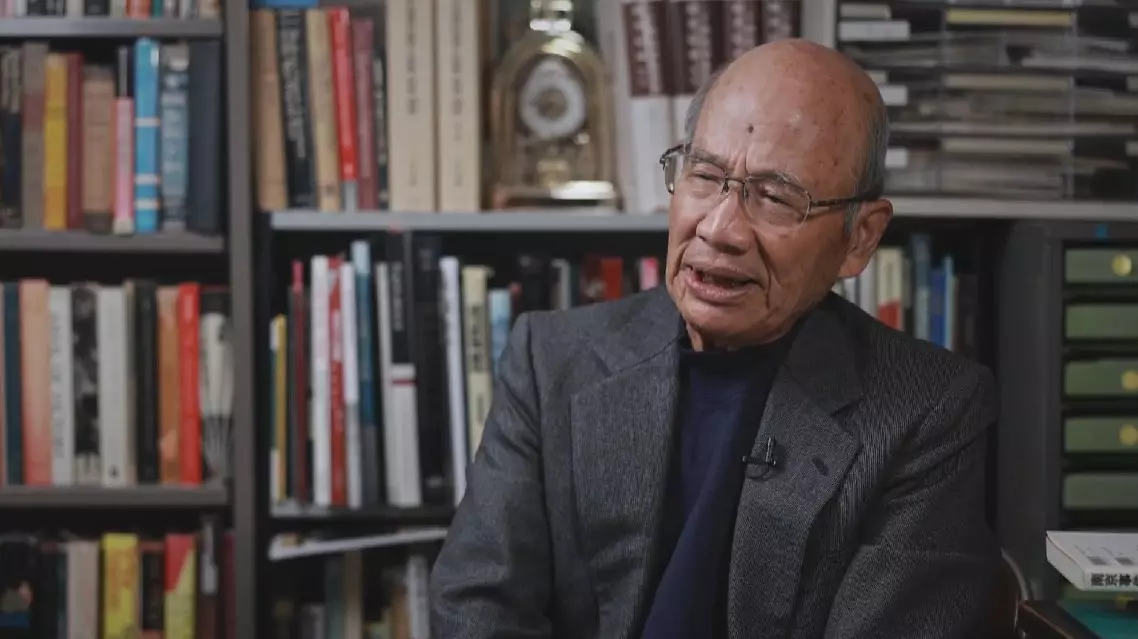
Ahead of the 11th National Memorial Day for the Victims of the Nanjing Massacre, which will be observed on December 13, a China Media Group (CMG) reporter visited Kasahara's home in Yamanashi Prefecture, Japan.
His paper, based on the wartime diary and recollections of a Japanese army artilleryman, was recently translated and published in the Journal of Japanese Invasion of China and Nanjing Massacre, a Chinese academic publication. The paper has attracted widespread attention in China, as it introduces previously unseen historical materials.
The paper's creation was prompted by a letter Kasahara received from Hajime Nagai, whose father, Ninsayu Nagai, was a soldier in the Imperial Japanese Army during World War II.
Ninsayu Nagai was drafted on Sept 13, 1937, and participated in the invasion of Shanghai before advancing with his unit toward Nanjing. After the Japanese army captured Nanjing on Dec 13, 1937, he personally witnessed the horrific massacre of prisoners of war.
Upon returning to Japan after the war, he secretly kept photographs of the massacre and documented his experiences in a detailed memoir based on his wartime diary. These materials were later passed on to his son who sent them to Kasahara for further research.
In his memoir, Ninsayu Nagai described the massacre: a platoon of infantry was assigned to disarm 15,000 to 20,000 prisoners of war. There were so many prisoners that the artillery commander suggested "disposing of them appropriately -- just take a few, and you can do whatever you want with the rest".
The memoir further details brutal scenes: one military doctor, with poor skills, bent his sword while beheading prisoners and could not sheathe it. Some units gathered prisoners at a corner of the city wall, surrounded them with barbed wire, and then shot them with machine guns. Afterward, they doused the bodies with gasoline and set them on fire.
Ninsayu Nagai also recounted the gruesome sight of corpses floating in the Yangtze River, which were still there when they crossed the river for the Battle of Xuzhou.
The letter from Hajime Nagai included six photocopied photographs, three of which depicted scenes of the massacre. Each photo was annotated by his father with descriptions of what was captured.
"This photo shows a Japanese soldier cutting off the head of a Chinese prisoner, with the flesh falling onto his shoulder, while another soldier proudly displays his sword, showing that he too had killed. In another photo, corpses are surrounded by Japanese soldiers. The back of the photo is labeled 'Nanjing', with the date marking it as 1937. Chinese soldiers were herded to a corner of the city wall, surrounded by barbed wire, and then shot by machine guns and other weapons. These photos were taken shortly afterward," Kasahara explained the photos to the reporter.
After receiving the letter, Kasahara contacted Hajime Nagai and visited his home to authenticate the materials, which included military documents, a wartime diary, and a photo album.
"The photographs clearly indicate the time, location, and photographer, making them irrefutable evidence of the Nanjing Massacre," Kasahara affirmed.
When asked about the motivation behind Hajime Nagai's decision to bring forth this evidence, Kasahara said, "His father wanted the world to know about the crimes he had witnessed, which is why he kept these records. The facts are undeniable, and ignorance is not an option. War is about killing and destruction, and reflection on Japan's wartime aggression was his driving force."
Kasahara has dedicated his career to studying modern Chinese history and East Asian history. He has been actively involved in research on the Nanjing Massacre and has written more than a dozen books on the subject, including One Hundred Days in the Nanjing Refugee Zone, The Nanjing Incident, and The 'Hundred Man Killing Contest' and the Nanjing Massacre.
Kasahara's work continues to shed light on the atrocities committed during the Nanjing Massacre, ensuring that the events are not forgotten and that the historical record remains accurate for future generations.
Japanese historian presents new evidence of Nanjing Massacre