The Yue Opera, a traditional Chinese opera originating from east China's Zhejiang Province, is expected to attract more young audience, said an official in charge of the province's culture promotion work as he cited the warm response to an innovative play adapted from a well-known Chinese martial arts film.
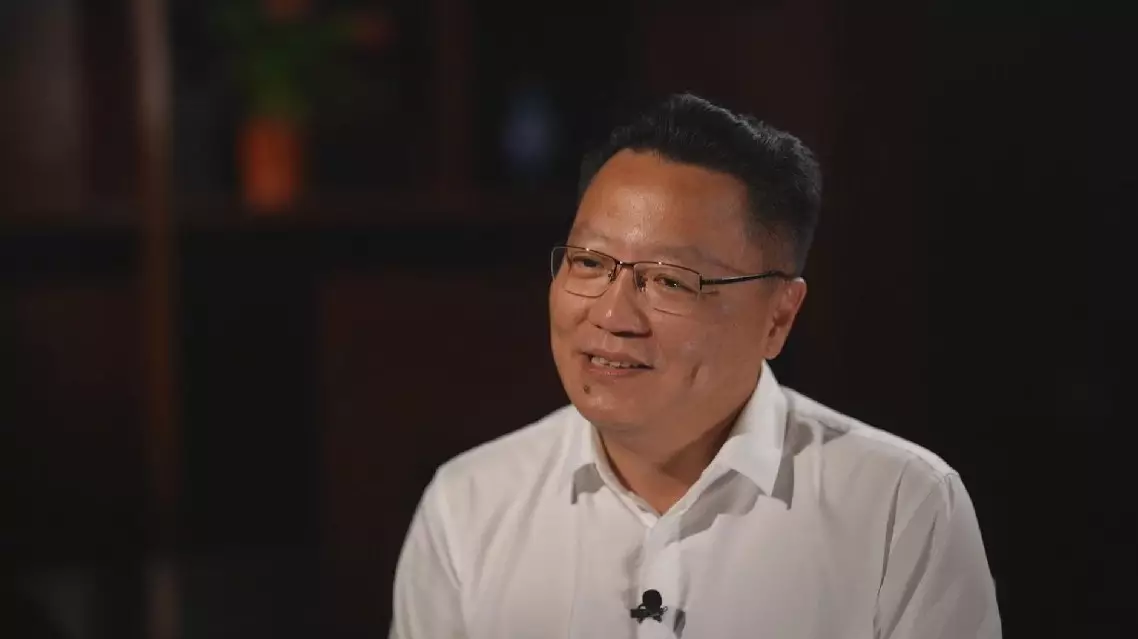
Chen Guangsheng, director of the Department of Culture, Radio, Television and Tourism of Zhejiang Province, made the remarks in a recent interview with China Global Television Network (CGTN), saying that the success of the play "New Dragon Gate Inn" can be attributed to its integration of tradition and innovation.
"I think the high popularity of Yue Opera 'New Dragon Gate Inn' can be contributed to innovation. It is actually an open trick. The rhythmic characteristics of the Yue Opera helps unleash the dramatic tension of the play, which makes it more acceptable to and welcomed by young audience," said Chen.
The "New Dragon Gate Inn" Yue Opera made a hit among China’s youth last year. Its story is set against the backdrop of the Ming Dynasty (1368-1644), and tells the tale of martial arts heroes encountering skilled agents of the traitors at the Dragon Gate Inn located in a vast desert.
The play has two"post-90s born" actors play the leading roles, whose brilliant performances attracted a new generation of audiences with some of them even arriving hours in advance to purchase limited signed souvenir brochures.
"For many years, the Yue Opera attracted more aged audiences than young ones. But this time, most of the audience of the 'New Dragon Gate Inn' and the youth edition of 'The Butterfly Lovers', which came later, are in their 20s or 30s," said Chen.
The young audiences' favor for "New Dragon Gate Inn" proves that the Yue Opera, as a traditional theatrical form, has a great potential to innovate itself and thus attract even more youth into theater, Chen said.
"The 'New Dragon Gate Inn' attracts the young audience while keeping the opera's traditions, which I think is really important. It proves that as long as we make changes to attract young audience by meeting their taste, the Yue Opera will embrace a great market prospect," said Chen.
Innovation makes traditional Yue Opera more appealing to young people: official
Mongolian President Ukhnaa Khurelsukh met with Wang Yi, a member of the Political Bureau of the Communist Party of China Central Committee and Chinese foreign minister, in Ulan Bator on Saturday.
During the meeting, Khurelsukh said the Mongolia-China relationship has become a model for inter-state relations in the region.
The two countries have consistently respected each other's independence, sovereignty and territorial integrity, while deepening mutually beneficial cooperation across various sectors, he said, noting that bilateral trade is expected to reach 20 billion U.S. dollars this year.
Describing China as Mongolia's good neighbor, Khurelsukh said that developing friendly relations with China is a top priority of Mongolia's foreign policy.
Khurelsukh said Mongolia is committed to the one-China principle, regarding Taiwan as an inalienable part of China's territory, and opposes any form of "Taiwan independence" activities. It also considers matters related to Hong Kong, Xizang and Xinjiang as China's internal affairs. Mongolia will not do anything that harms China's interests, regardless of its relations with other countries.
He also noted that Mongolia is willing to strengthen cooperation with China in regional and international affairs.
For his part, Wang said China has always put China-Mongolia relations at an important place in its neighborhood diplomacy, noting that China has both the will and the capability to be a neighbor that Mongolia can rely on, a trustworthy friend, and a partner in accelerating its development.
Wang reaffirmed China's respect for Mongolia's independence, sovereignty and territorial integrity, as well as the development path that Mongolia has chosen for itself.
He expressed readiness to work more closely with Mongolia to align development strategies, tap into the full potential of bilateral cooperation, advance existing collaboration in areas such as connectivity, energy and mineral resources, trade and investment, and create new growth drivers for cooperation in key minerals, green development, the digital economy, and other emerging fields.
During his three-day visit, Wang is also scheduled to meet with Mongolian Prime Minister Nyam-Osor Uchral and hold talks with Foreign Minister Batmunkh Battsetseg.
Mongolian president meets Chinese FM