The attempt by U.S. president-elect Donald Trump to impose heavier tariffs on Chinese commodities would not have a significant impact on the Chinese economy, but rather boost its scientific research and hinder the global economic influence of the U.S. itself, said a Nobel Prize-winning economist.
Joseph Stiglitz, the Nobel Memorial Prize in Economic Sciences laureate, shared his thoughts on Trump's influence over Chinese and U.S. economies, pointing out that despite the new U.S. leader's harsher approach, the country to be most affected by protectionist policies would be the United States.
"Most people think that they probably will be more effective than they were previously. He's threatened higher tariffs, and the WTO is much weaker than it was eight years ago. Trump has said he loves tariffs. Americans are worried that it will be a source of an enormous amount of corruption because he will give exemptions to the tariffs for people who give campaign contributions or where there are certain very adverse impacts on the U.S. economy," he said.
In contrast, China, vowing to further its opening up under the rules-based international order, is still going to benefit by exploring deeper economic ties with developing countries.
"China, I think, is appropriately saying that it's committed to a rules-based system, even if the United States isn't. China has talked about unilateral opening and saying 'We're making our economy even more open.' I think part of that strategy, which I think is likely to be an effective strategy, is in terms of expanding trade with the third world, which is growing and is becoming increasingly important. It's now at least 40 percent of global GDP," said Stiglitz.
While the U.S. attempts to contain China's scientific development, marked by high-rise tariffs and illicit sanctions on Chinese tech companies, this will only prompt China to invest more in science and technology.
"From the people that I have talked to, what they say is that it has stimulated China to work harder, to catch up faster. And that's what you would expect the effect of those actions to be. China realizes it has to be more self-reliant. Therefore, you might say there's a race, and a race to catch up very quickly," said Stiglitz.
And with its large domestic market and national-level dedication, China has been rapidly catching up.
"China has some big advantages that it has more engineers; it has a bigger market domestically and also the chips that you put in manufactured goods that you export around the world. And in many areas, the advantages of coordination are significant," said Stiglitz.
Stiglitz also warned that the influence of U.S. tariffs and sanctions targeting China might have spillover effects, pushing developing countries to choose sides. And China, with its large-scale production advantage, would be the more alluring choice.
"I think that these policies have not been thought out as well as they might have. Where they are having an effect that I find particularly troublesome is in the third world where some countries feel like they have to make a choice of one system or another. They don't want to make a choice. In other cases, they're making a choice for the products that look the cheapest and the most affordable for them. And that's Chinese goods. We're excluding ourselves from that by being as aggressive in our restrictions," he said.
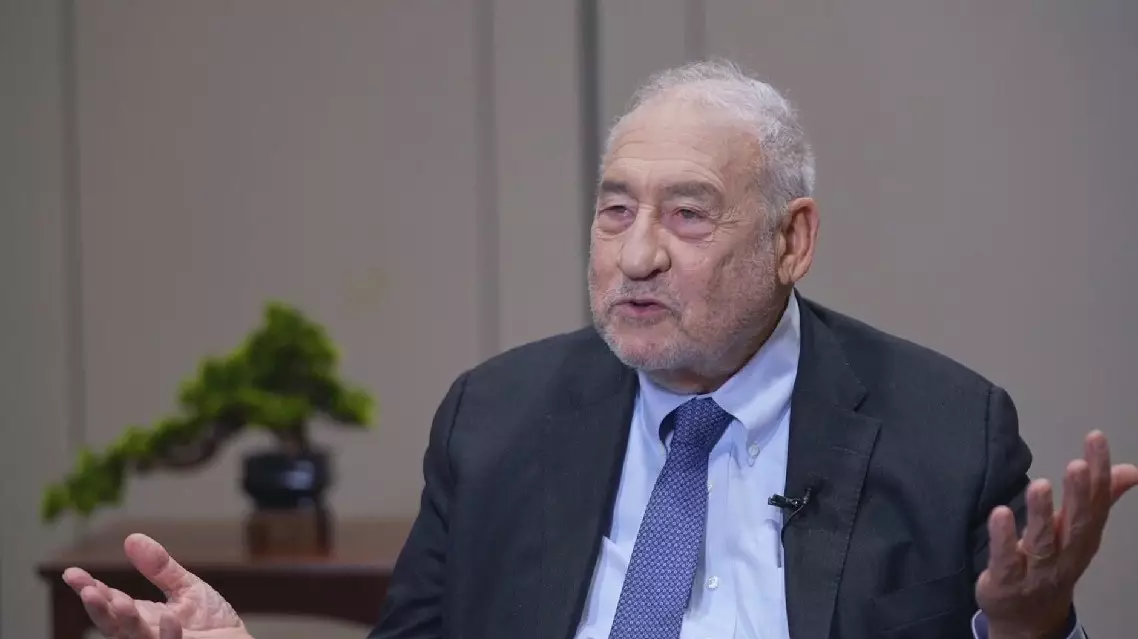
US tariffs, sanctions on China might backfire: Nobel Laureate