TOKYO--(BUSINESS WIRE)--Dec 11, 2024--
The “TOKYO NIGHTTIME PROJECT” has been launched in the Nishi-Shinjuku area of Shinjuku-ku, Tokyo, with the aim of revitalizing night tourism. The project, by collaborating with organizations in the surrounding area, enlivens nighttime in Nishi-Shinjuku, an area where tradition and innovation intersect, with light displays and other activities to create a lively atmosphere for visitors.
Click to Gallery
At a food truck (Photo: Business Wire)
The lighting ceremony (Photo: Business Wire)
The Illuminations (Photo: Business Wire)
This press release features multimedia. View the full release here: https://www.businesswire.com/news/home/20241203634601/en/
"Nishi-Shinjuku Illumination Market” started on November 28, 2024. On Chuo-dori Avenue along the Tokyo Metropolitan Government Building, approximately 200,000 champagne gold LED lights illuminate the street for as long as 200 meters, creating a fantastic night scene, a new illumination spot in Tokyo.
At the lighting ceremony, Judoka Hifumi Abe and Uta Abe, both from the Park24 club, appeared as guests. They pressed the light button following the countdown, and the street was enveloped in glittering champagne gold lights.
TOKYO NIGHTTIME PROJECT Overview
The original source-language text of this announcement is the official, authoritative version. Translations are provided as an accommodation only, and should be cross-referenced with the source-language text, which is the only version of the text intended to have legal effect.


At a food truck (Photo: Business Wire)

The lighting ceremony (Photo: Business Wire)
The Illuminations (Photo: Business Wire)
ISLAMABAD (AP) — President Donald Trump posted Sunday on social media that the U.S. Navy would “immediately” begin a blockade to stop ships from entering or leaving the Strait of Hormuz.
After U.S. officials ended peace talks with Iran in Pakistan, Trump sought to exert more strategic control over the waterway responsible for the transportation of 20% of global oil supplies — hoping to takeaway Iran’s key source of economic leverage in the war.
“Effective immediately, the United States Navy, the Finest in the World, will begin the process of BLOCKADING any and all Ships trying to enter, or leave, the Strait of Hormuz,” Trump posted.
The president added that he has “also instructed our Navy to seek and interdict every vessel in International Waters that has paid a toll to Iran. No one who pays an illegal toll will have safe passage on the high seas.”
The president stressed that Iran’s nuclear ambitions were at the core of the failure to end the war and that the U.S. was prepared to finish the war.
“(A)t an appropriate moment, we are fully ‘LOCKED AND LOADED,’ and our Military will finish up the little that is left of Iran!” Trump posted.
THIS IS A BREAKING NEWS UPDATE. AP’s earlier story follows below.
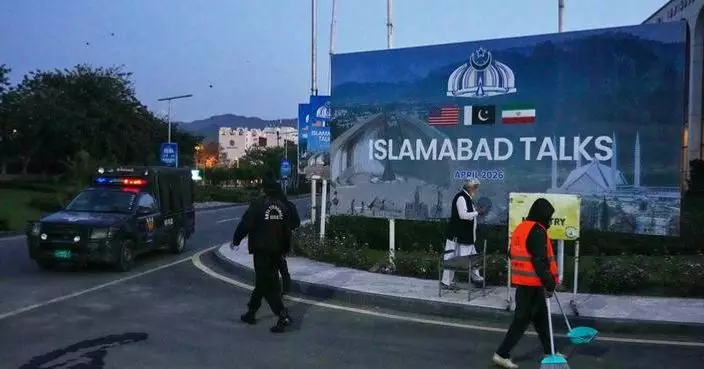
ISLAMABAD (AP) — The United States and Iran ended face-to-face talks on Sunday without an agreement, leaving a fragile two-week ceasefire in doubt.
U.S. officials said the negotiations collapsed over what they described as Iran’s refusal to commit to abandoning a path to a nuclear weapon, while Iranian officials blamed the U.S. for the breakdown of the talks without specifying the sticking points.
Neither side indicated what will happen after the 14-day ceasefire expires on April 22. Pakistani mediators urged all parties to maintain it. Both said their positions were clear and put the onus on the other side, underscoring how little the gap had narrowed throughout the talks.
“We need to see an affirmative commitment that they will not seek a nuclear weapon, and they will not seek the tools that would enable them to quickly achieve a nuclear weapon,” Vice President JD Vance said after the 21-hour-long talks.
Iran’s parliament speaker Mohammad Bagher Qalibaf, who led Iran in the negotiations, said it was time for the United States “to decide whether it can gain our trust or not.”
He did not mention the core disputes in a series of social media posts, though Iranian officials earlier said the talks fell apart over two or three key issues, blaming what they called U.S. overreach.
Iran has long denied seeking nuclear weapons but has insisted on its right to a civilian nuclear program. It has offered “affirmative commitments” in the past in writing, including in the landmark 2015 nuclear deal. Experts say its stockpile of enriched uranium, though not weapons-grade, is only a short technical step away.
Since the U.S. and Israel launched the war on Feb. 28, it has killed at least 3,000 people in Iran, 2,020 in Lebanon, 23 in Israel and more than a dozen in Gulf Arab states, and caused lasting damage to infrastructure in half a dozen Middle Eastern countries. Iran’s grip on the Strait of Hormuz has largely cut off the Persian Gulf and its oil and gas exports from the global economy, sending energy prices soaring.
Pakistani Foreign Minister Ishaq Dar said his country will try to facilitate a new dialogue between Iran and the U.S. in the coming days.
“It is imperative that the parties continue to uphold their commitment to cease fire,” Dar said.
The deadlock — and Vance’s take-it-or-leave-it proposal that Iran end its nuclear program — mirrored February’s nuclear talks in Switzerland. Though President Donald Trump has said the subsequent war was meant to compel Iran’s leaders to abandon nuclear ambitions, each side's positions appeared unchanged in negotiations following six weeks of fighting.
An Iranian diplomatic official, speaking on the condition of anonymity because of the sensitivity of the closed-door talks, denied that negotiations had failed over Iran's nuclear ambitions.
“Iran is not seeking to acquire nuclear weapons, but it has the right to nuclear energy for peaceful purposes,” they said, reiterating Iran's longstanding negotiating position.
There was no word on whether they would resume, though Iran said it was open to continuing the dialogue, Iran’s state-run IRNA news agency reported.
“We have never sought war. But if they try to win what they failed to win on the battlefield through talks, that’s absolutely unacceptable,” 60-year-old Mohammad Bagher Karami said in downtown Tehran.
The United States and Iran entered talks with sharply different proposals and contrasting assumptions about their leverage to end the war. Before negotiations began, the ceasefire was already threatened by deep disagreements and Israel’s continued attacks against the Iranian-backed Hezbollah in Lebanon.
Iran’s 10-point proposal ahead of the talks called for a guaranteed end to the war and sought control over the Strait of Hormuz. It included ending fighting against Iran’s “regional allies,” explicitly calling for a halt to Israeli strikes on Hezbollah.
Pakistani officials told The Associated Press in March that the U.S. 15-point proposal included monitoring mechanisms and a rollback of Iran’s nuclear program. Speaking on condition of anonymity as they weren’t authorized to discuss details, they said it also covered reopening the Strait of Hormuz.
Indeed, Iran’s closure of the strait has proved its biggest strategic advantage in the war. Around a fifth of the world’s traded oil had typically passed through on over 100 ships a day.
During the talks, the U.S. military said two destroyers transited the critical waterway ahead of mine-clearing work, a first since the war began. Iran’s state media, however, reported the country's joint military command denied that.
“We’re sweeping the strait. Whether we make a deal or not makes no difference to me,” Trump said as talks extended into early Sunday morning.
The impasse raises new questions about fighting in Lebanon. Israel has pressed ahead with strikes since the ceasefire was announced, saying the agreement did not apply there. Iran and Pakistan claimed otherwise.
Lebanon’s state-run National News Agency reported six people were killed Sunday morning in an Israeli strike in Maaroub, a village near the southern coastal city of Tyre. Though Israel’s strikes over Beirut have calmed in recent days, its attacks on southern Lebanon have intensified alongside a ground invasion it renewed after Hezbollah launched rockets toward Israel in the opening days of the Iran war.
Negotiations between Israel and Lebanon are expected to begin Tuesday in Washington, Lebanese President Joseph Aoun’s office has said, after Israel’s surprise announcement authorizing talks despite the lack of official relations between the countries. Protests erupted in Beirut on Saturday over the planned negotiations.
Israel wants Lebanon's government to assume responsibility for disarming Hezbollah, much like was envisaged in a November 2024 ceasefire. But the militant group has survived efforts to curb its strength for decades.
The day the Iran ceasefire deal was announced, Israel pounded Beirut with airstrikes, killing more than 300 people in the deadliest day in Lebanon since the war began, according to the country's Health Ministry.
Metz reported from Ramallah, West Bank, and Magdy from Cairo. E. Eduardo Castillo in Beijing, Collin Binkley and Ben Finley in Washington, Kareem Chehayeb in Beirut and Ghaya Ben MBarek in Tunis contributed.
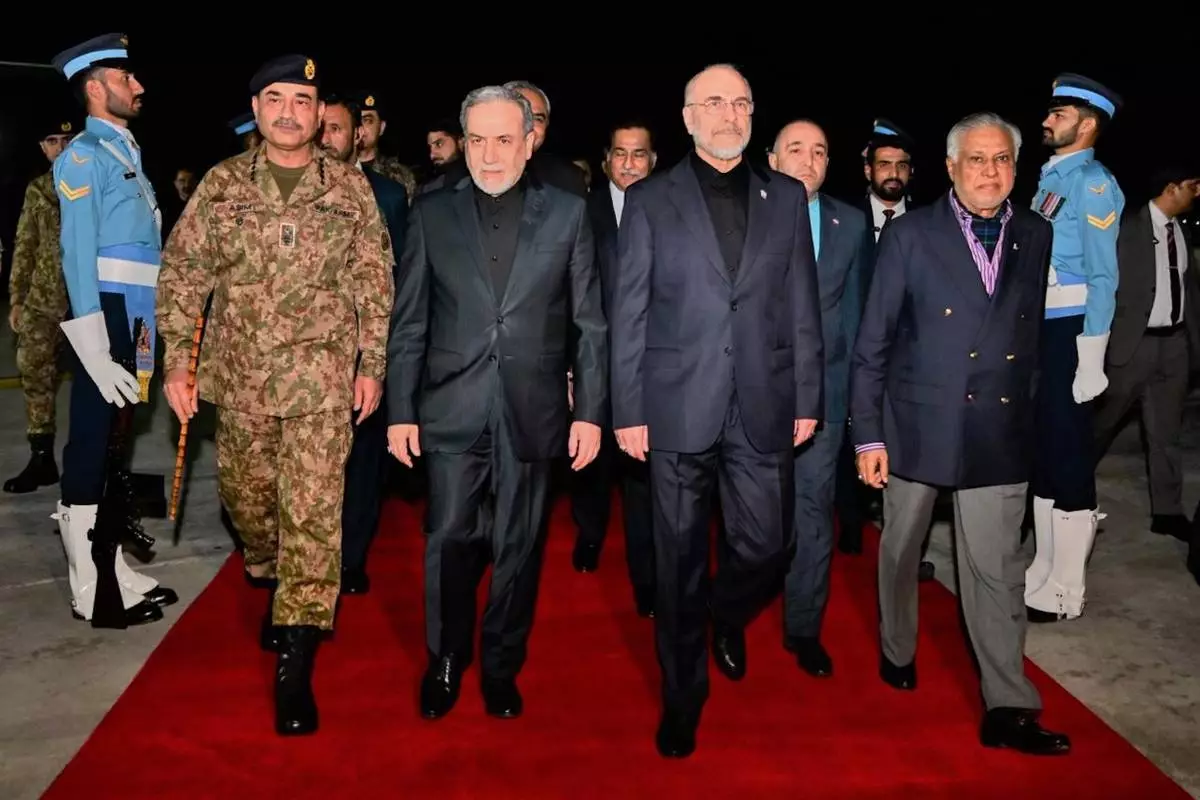
In this photo released by the Pakistan Foreign Ministry, Iran's Parliament Speaker Mohammad Bagher Qalibaf, center right, and Iran's Foreign Minister Abbas Araghchi, center left, are greeted by Pakistan Foreign Minister Ishaq Dar, right, and Army Chief Field Marshal Gen. Asim Munir, left, upon their arrival at Nur Khan airbase in Rawalpindi, Pakistan, Saturday, April 11, 2026. (Pakistan Ministry of Foreign Affairs via AP)
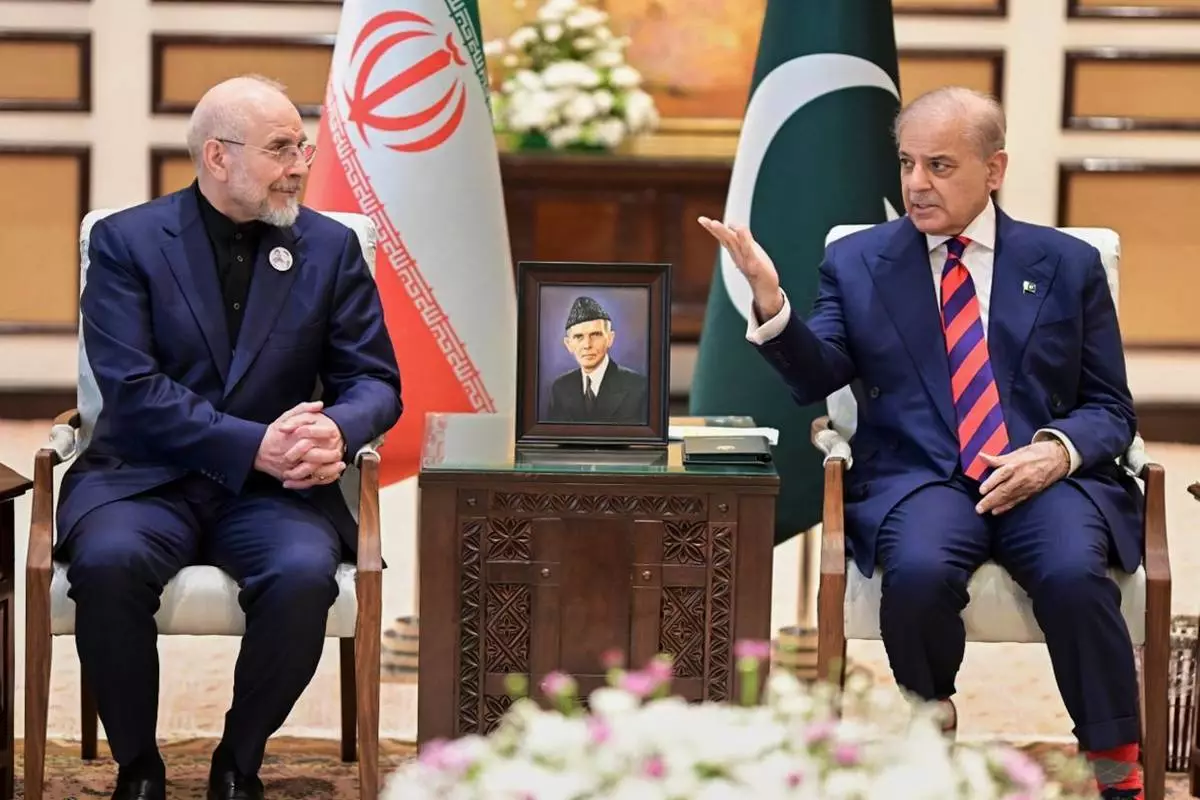
In this photo released by the Pakistan Prime Minister Office, Iran's Parliament Speaker Mohammad Bagher Ghalibaf, left, meets with hand with Pakistani Prime Minister Shehbaz Sharif, in Islamabad, Pakistan, Saturday, April 11, 2026 (Pakistan Prime Minister Office via AP)
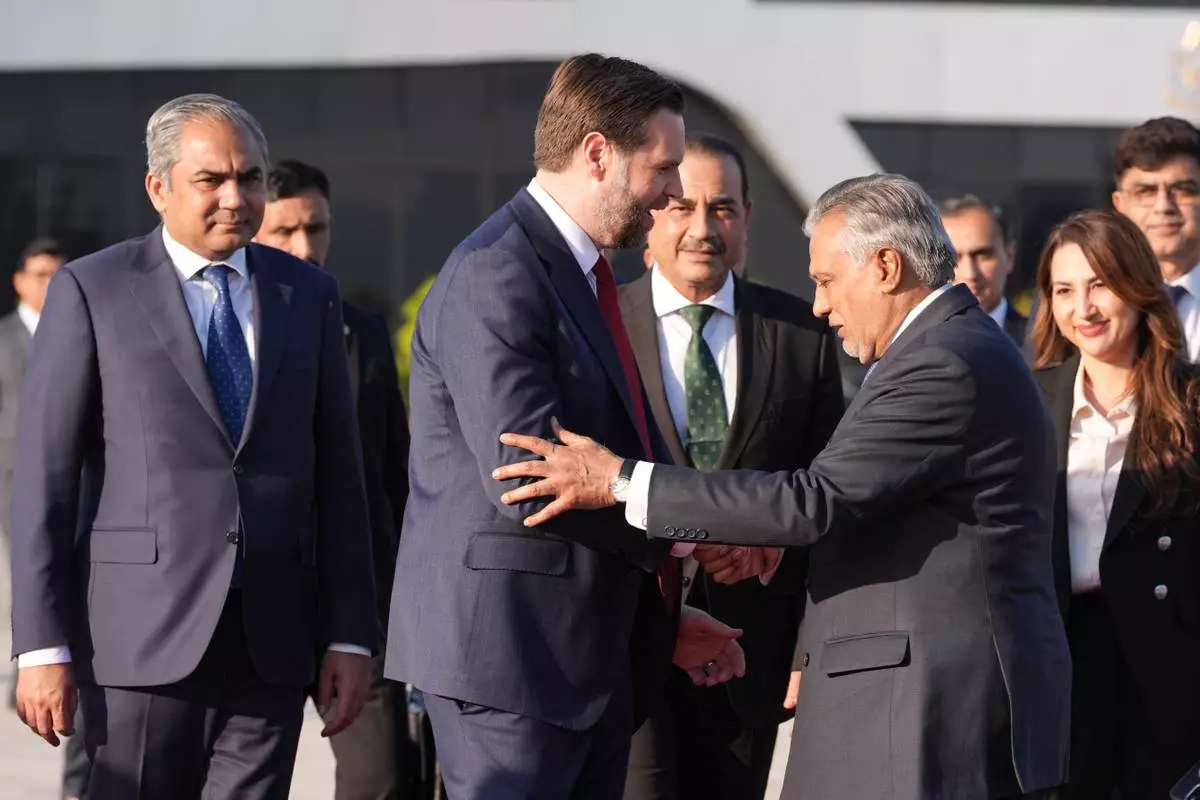
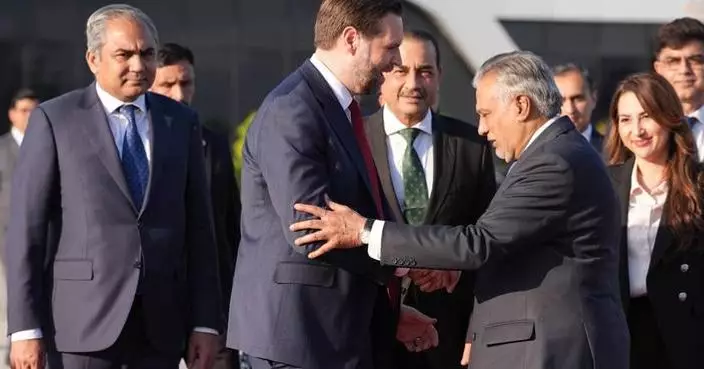
Vice President JD Vance, second left, shakes hands with Pakistani Deputy Prime Minister and Foreign Minister Mohammad Ishaq Dar, as Pakistan's Interior Minister Mohsin Naqvi, left, Pakistan's Chief of Defence Forces Chief of Army Staff Field Marshall Asim Munir, third left, and Charge d'Affaires of the U.S. Embassy in Islamabad Natalie A. Baker, right, look on, as he prepares to board Air Force Two after attending talks on Iran in Islamabad, Pakistan, Sunday, April 12, 2026. (AP Photo/Jacquelyn Martin, Pool)
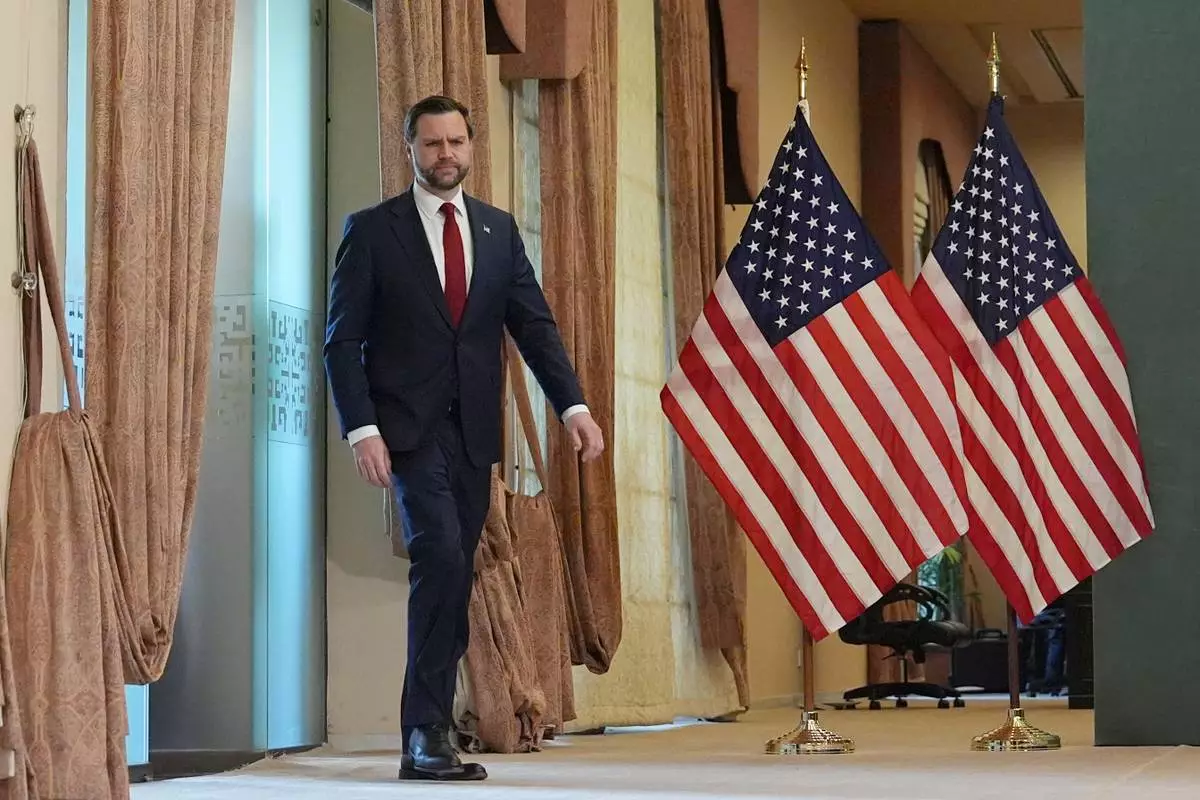
Vice President JD Vance arrives for news conference after meeting with representatives from Pakistan and Iran, Sunday, April 12, 2026, in Islamabad, Pakistan. (AP Photo/Jacquelyn Martin, Pool)
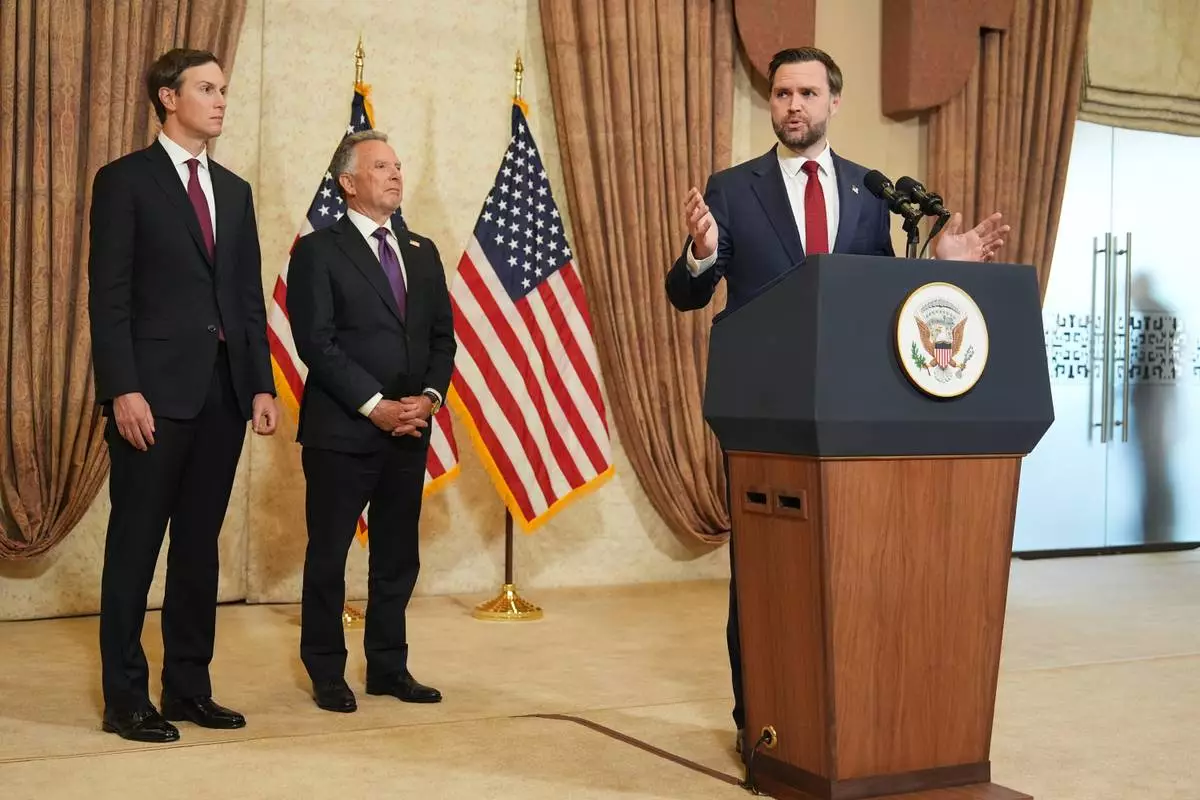
Vice President JD Vance, right, speaks during a news conference after meeting with representatives from Pakistan and Iran as Jared Kushner, left, and Steve Witkoff, Special Envoy for Peace Missions listen, on Sunday, April 12, 2026, in Islamabad, Pakistan. (AP Photo/Jacquelyn Martin, Pool)