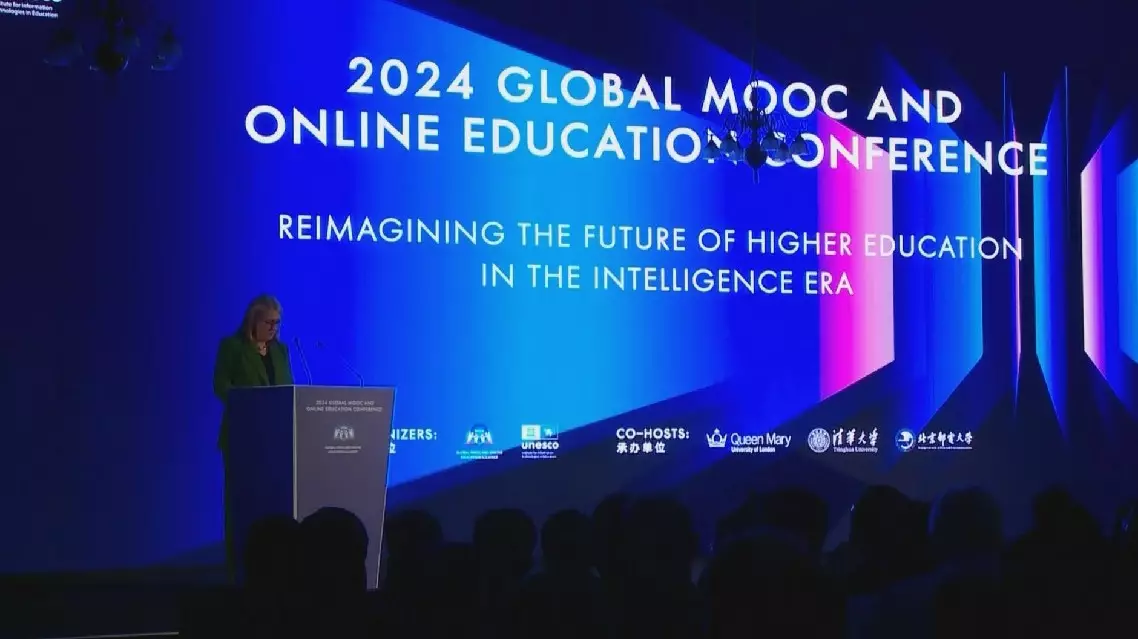
An international conference on online education and massive open online courses (MOOC) opened in London on Thursday, drawing hundreds of educational professionals from across the globe to discuss the transformative potential of online learning and artificial intelligence (AI) in shaping the future of higher education.
Themed "Reimagining the Future of Higher Education in the Intelligence Era," the two-day 2024 Global MOOC and Online Education Conference (GMC), co-organized by World MOOC and Online Education Alliance and UNESCO Institute for Information Technologies in Education, invited educators, experts and policymakers from 135 universities, online education platforms, international organizations and government agencies across 28 countries and regions shared their insights.
Apart from rolling out the concept of "Year of Smart Education" for the first time, the GMC this year also saw the publication of two reports on the digital development of global higher education, highlighting how AI is accelerating the onset of a new era in smart education.
"The most important highlight of the reports is the proposal of the 'Year of Smart Education' concept. The educational scenario is no longer just between teachers and students. With the introduction of machines, a third role has entered, introducing such a scenario that features teachers, machines, and students. This is a change. So, we think that in the future, personalized education at scale is what the AI era may create to at last promote the comprehensive and personalized free development of individuals," said Yang Zongkai, president of the Wuhan University of Technology, and also, an attendee of the conference.
Launched and led by China, the World MOOC and Online Education Alliance is the first international multilateral organization in the field of higher education digitalization. Comprising 16 world-leading universities and seven online education institutions from 16 countries across six continents, the alliance has become a pivotal platform for countries to share quality resources, exchange development experiences, and build international consensus.
With the adoption of advanced AI technology, MOOC has been providing learners with more personalized and intelligent learning experiences, including intelligent recommendation systems that suggest suitable courses and resources to learners, as well as virtual reality technologies that offer immersive learning environments.
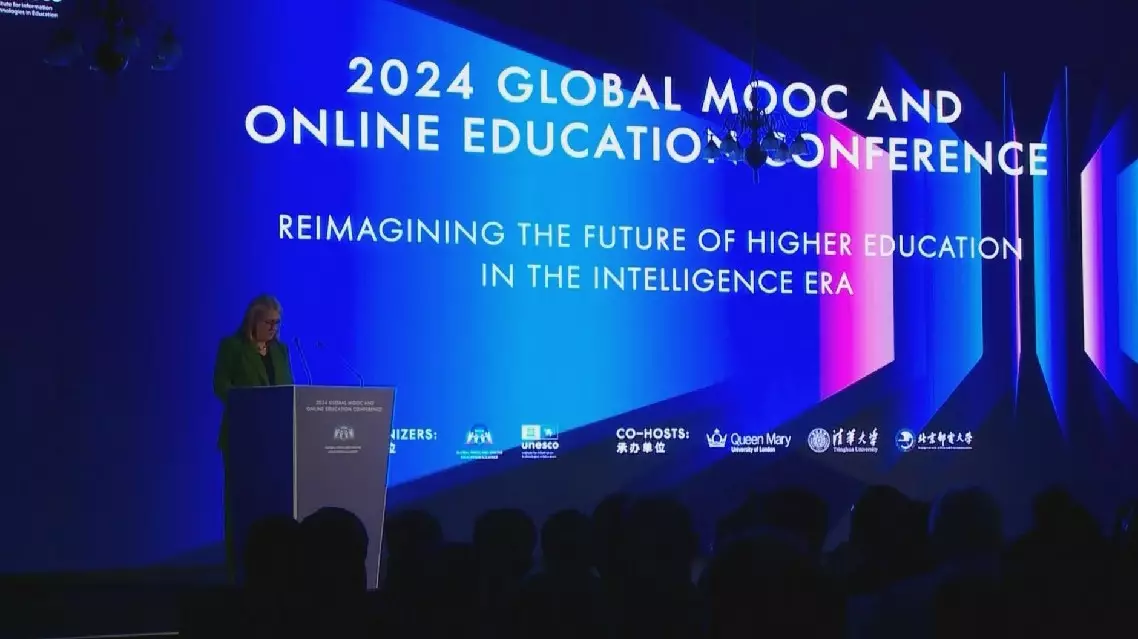
Int'l online education conference explores AI's role in future higher education
Int'l online education conference explores AI's role in future higher education