A total of 3.24 million housing units had been successfully delivered across China by the end of November, further boosting homebuyers' confidence and improving market expectations, Vice Minister of Housing and Urban-Rural Development Dong Jianguo said on Saturday.
This year, the Ministry of Housing and Urban-Rural Development, together with the National Financial Regulatory Administration, established a coordination mechanism for real estate financing.
This initiative aimed to ensure that compliant real estate projects receive necessary funding, with approved loans disbursed promptly.
As of the end of November, the amount of loans approved for projects on the "white list" had reached 3.6 trillion yuan (about 494.64 billion U.S. dollars).
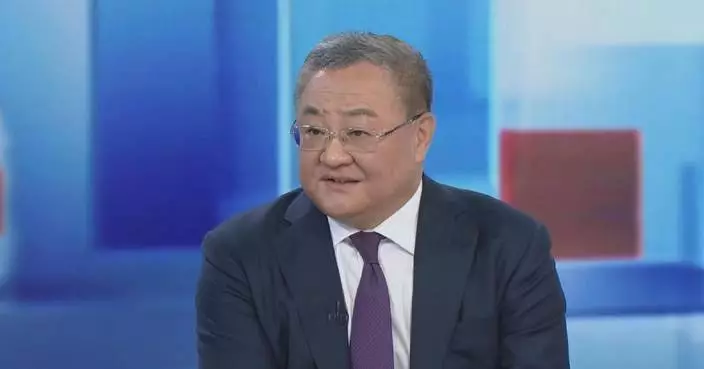
Speaking at the Annual Conference on China's Economy hosted by the China Center for International Economic Exchanges (CCIEE), a public policy think tank based in Beijing, Dong said these measures have reversed the downward trend of the real estate sector.
"A series of policies and measures have effectively boosted confidence in the property market, leading to a positive momentum with signs of stabilization. According to the Ministry of Housing and Urban-Rural Development's real estate market monitoring system, in October and November, the nationwide transaction area of newly built commercial housing achieved consecutive month-on-month and year-on-year growth, with first-tier cities driving sales growth in second- and third-tier cities," said Dong.
Dong emphasized that the positive changes in the housing market since the beginning of the fourth quarter demonstrate the effectiveness of the host of incremental policies that have been taken.
Looking ahead, Dong said the ministry will align its efforts with the directives of the recently concluded annual Central Economic Work Conference to further stabilize and improve the real estate market.
"On the one hand, we will prioritize stimulating demand by implementing city-specific policies, advancing the renovation of urban villages and deteriorating urban housing, and fully tapping into the potential of both rigid and improved housing needs. On the other hand, we will focus on controlling new developments, optimizing existing housing stock, and enhancing quality. Additional efforts will include responsibly managing new land supply, promoting urban renewal, and supporting real estate enterprises in revitalizing existing land and property assets to accelerate their transformation to sustainable development," said Dong.
The annual Central Economic Work Conference was held in Beijing from Wednesday to Thursday, with Chinese leaders deciding priorities for economic work in 2025.
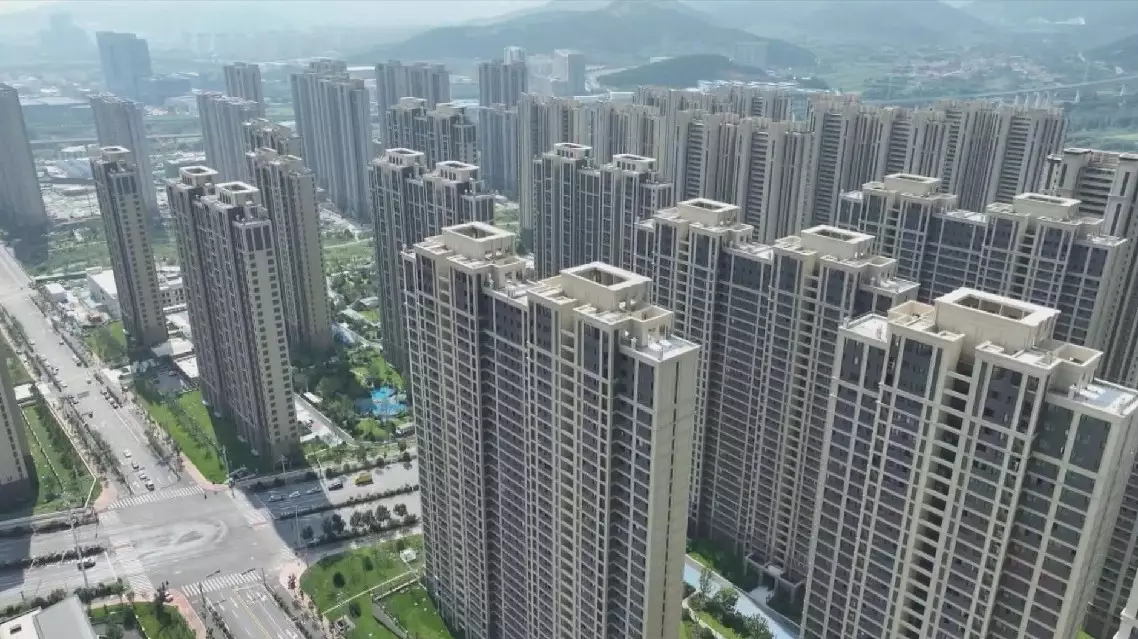
China delivers 3.24 mln housing units to buyers by Nov: vice minister
China's first two-tonne-class tethered balloon entered trial operation in a major power transmission project on Monday, providing a brand-new solution for transportation in power grid construction projects in high-altitude and ecologically sensitive areas, according to the State Grid.
The project is a massive ultra-high voltage (UHV) power transmission line that will carry clean energy from Xizang Autonomous Region in southwest China across thousands of kilometers to the Guangdong-Hong Kong-Macao Greater Bay Area in south China.
At the construction site, a large balloon with a diameter of 25 meters and a volume of 8,000 cubic meters slowly rose into the air.
As multiple mooring lines were simultaneously extended and retracted, the heavy construction materials suspended beneath the balloon were lifted off the ground and moved smoothly along a predetermined route toward the mountainous work site.
"This is our newly developed load-bearing tethered balloon. We have just completed a maximum load test of two tonnes at an altitude of 4,000 meters. Next, we will conduct a hoisting operation for power supply materials over a straight-line distance of 500 meters and a vertical drop of 120 meters," said Qin Jian, researcher at the Transmission and Transformation Engineering Technology Research Institute of the State Grid Electric Power Engineering Research Institute.
A heavy-lift tethered balloon involves launching a helium-filled balloon into the air and connecting it to the ground with one or several cables.
By adjusting the cable, the balloon's altitude and horizontal position are controlled to facilitate the transport of materials at high altitudes.
The balloon can travel up to 800 meters and carry a maximum load of two tonnes, with a positional accuracy of within 0.5 meters.
As the construction of new power grids is extending more rapidly into high-altitude, remote mountainous and ecologically sensitive areas, the transportation of materials for transmission projects has become a major challenge constraining construction progress.
Traditional road construction for transportation have long cycles and significant ecological disruption, while drones, though agile and flexible, face limitations in scenarios requiring heavy loads or prolonged continuous transport.
Tethered balloon transport technology effectively overcomes these difficulties.
"The construction section where this technology is applied is located in an uninhabited mountainous area at an altitude of over 4,000 meters. Many tower sites are situated on steep ridges inaccessible by road, making this the section with the highest altitude, most treacherous terrain and most challenging operations in the entire project. The two-tonne tethered balloon is better suited to high-altitude conditions characterized by thin air and strong winds, and its load capacity and stability can better meet transportation requirements," said Feng Tao, project manager of the State Grid Henan Power Transmission and Transformation Company.
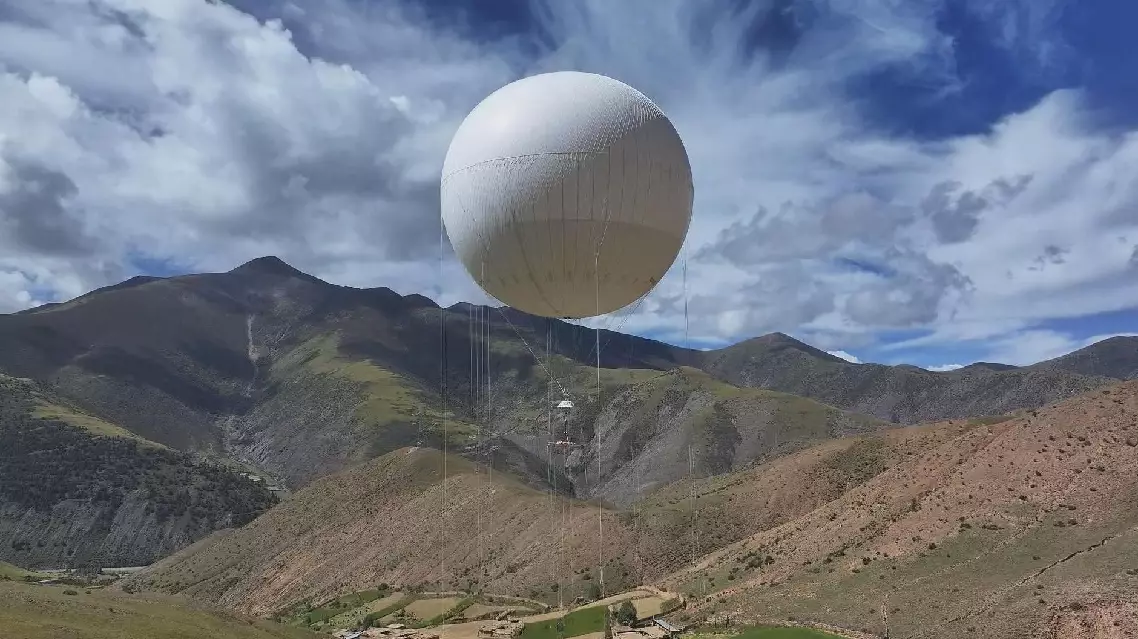
China puts first 2-tonne tethered balloon into operation