China's Macao Special Administrative Region, as a vibrant melting pot of diverse cultures, has lured a new generation of Portuguese-speaking students from Europe, Africa and North America to study here, exploring and absorbing its colorful cultural nourishment while pursuing their long-cherished dreams in academic and career establishment.
As a Sino-Portuguese platform, Macao catalyzes exchanges and cooperation in economy and university education. The Macao Polytechnic University's Faculty of Languages and Translation is now a bustling hub for students from Portugal, Cape Verde, Mozambique, and Guinea-Bissau, all eager to immerse themselves in the Chinese language and culture.
For instance, 21-year-old Paulo dos Santos from Cape Verde has deep affection for Chinese culture and language, and he started Mandarin study in local high school.
"When I was in 11th grade in Cape Verde, there were Chinese classes. Then I chose and I started learning, and then I didn't stop. I think Chinese is the most spoken language in the world, so when I had a chance to study Chinese, I didn't think twice. Here you have all environment to study. The teachers are great. For me, it is one of the best places to study," he said.
Cumba Fati from Guinea-Bissau, mirrors this sentiment. She feels fortunate to be part of this vibrant academic community as the interest in China is on the rise among young people.
"Here in Macao, I can see the teachers, their dedication to do their work. They give us all the support to study here. So it is a good opportunity to come here to study," she said.
Meanwhile, Joao Henrique Oliveira from Portugal has discovered a different facet of the educational experience.
"One of the things I appreciate about the Chinese education is that they are very well organized. There are many facilities the students can use. I think the environment here is very good," he said.
It's not just academics that are capturing these students' hearts. Macao, with its pluralistic cultures, offers an allure that goes beyond the classroom.
"Macao is a really beautiful place. You can see a lot of cultures here. I have a lot of Chinese friends that we play basketball together," said Paulo dos Santos. "I think what impressed me was the culture, like dragon dance, lion dance, Chinese foods. They are all very intriguing to me. They hold the Macao Grand Prix every year. They have the Lusofonia Festival. I think Macao embraces other cultures," said Joao Henrique Oliveira.
As graduation approaches, these students are beginning to map out their futures, hoping to tie up their career and academic pursuits with China. Cumba Fati plans to further her studies on the mainland.
"My plan is to continue study in mainland China. I have the plan for future in my country to help us to build one Institute of Confucius to bring Chinese culture to there," she said.
"I'm planning to have my master's degree. I would like to go 'Guojiguanxi' (Chinese term for 'international relations'). My country and China have a good relationship, because since we are after our independence, China is one of the countries that help us the most. I need to do my part for this relationship," said Paulo dos Santos.
Reflecting on their transformative journeys, these students agree that their time in Macao has been nothing short of life-changing.
"I can say that Macao changes me. Being here made me a better person. A lot of first experience in my life was here," said Paulo dos Santos.
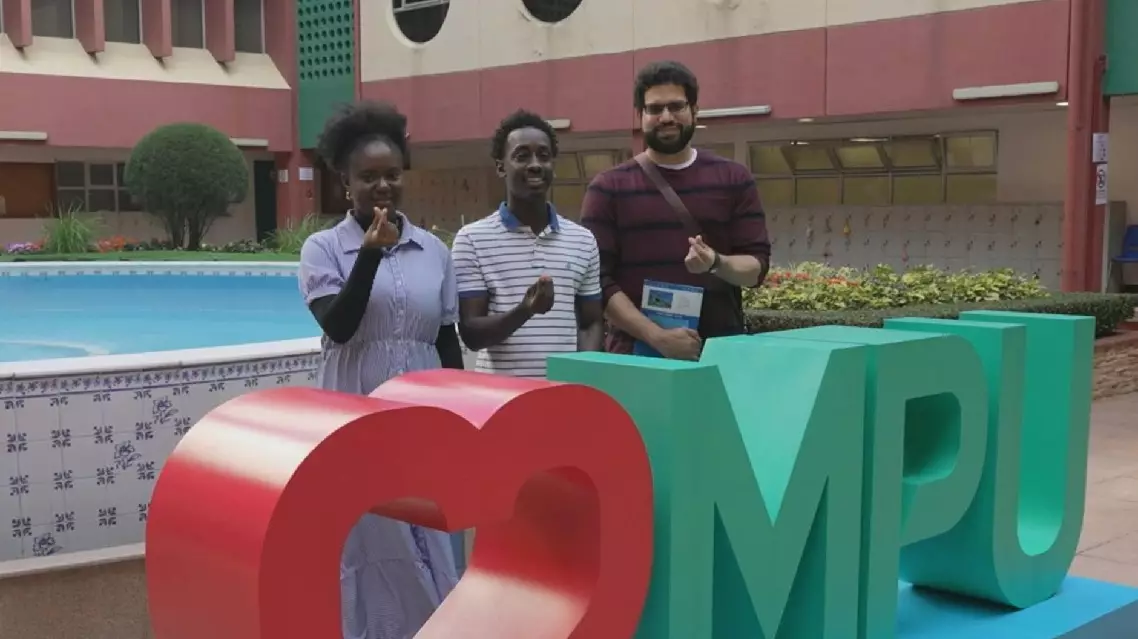
Portuguese-speaking students enjoy diverse culture in Macao