A total of 350 Chinese peacekeepers of the 10th Chinese Peacekeeping Infantry Battalion to the United Nations Mission in South Sudan (UNMISS) arrived at an airport in north China's Shijiazhuang on Saturday morning after completing their 12-month-long peacekeeping mission.
Members of the 10th Chinese peacekeeping infantry battalion to South Sudan (Juba) are mainly selected from a brigade of the 81st Group Army under the PLA Central Theater Command.
The contingent comprising 700 members set off from China in two batches to carry out the 12-month peacekeeping mission in South Sudan (Juba) last December. Their tasks in the mission area included armed escort, security patrol, conflict isolation and humanitarian relief.
The Chinese peacekeepers have completed more than 200 UNMISS authorized tasks, fulfilling their peacekeeping mission with fine style of work when facing complicated and turbulent situation.
During the past year, the Chinese peacekeepers visited local villages, schools and orphanages for a dozen of times, donating over 5,000 pieces of supplies in total and offering free medical consultations and treatment to local people, which demonstrates China’s role as a responsible major country in the world. All the 700 Chinese peacekeepers were awarded the United Nations Peace Medal of Honor for their unremitting dedication.
"During the peacekeeping mission, we have always taken the peacekeeping operations as political tests for our loyalty and obedience to the Party and capabilities to fulfill duties. We will continue to maintain our fine style of work in the peacekeeping mission after we return to China and make greater achievements in daily training," said Gao Zongliang from the contingent.
According to the schedule, rest of peacekeepers of the 10th Chinese Peacekeeping Infantry Battalion will return to China in late December.
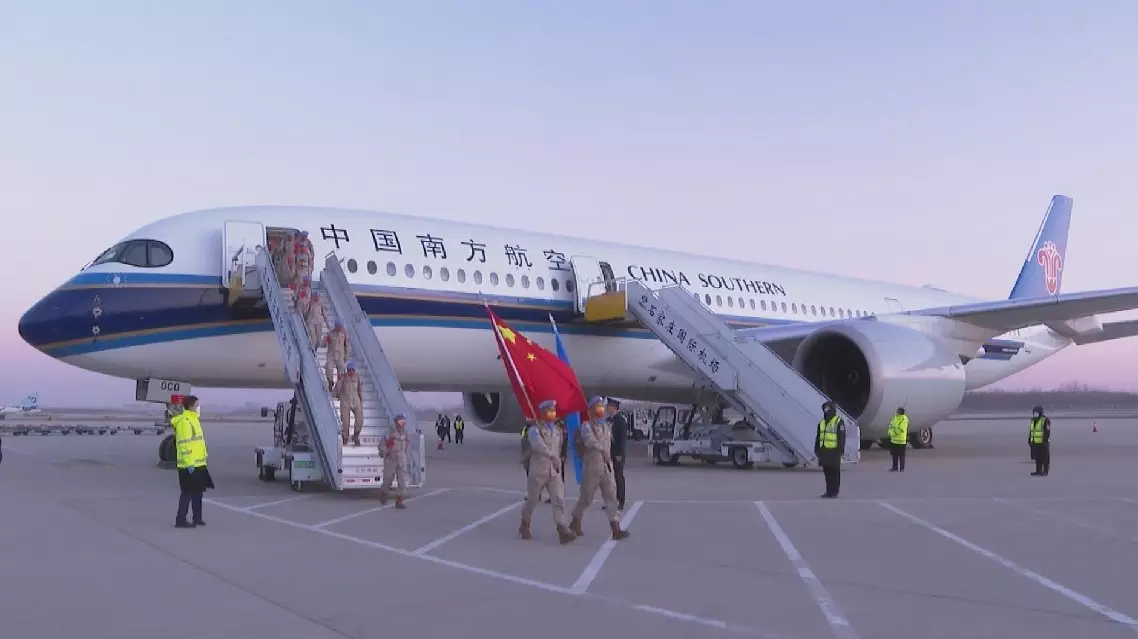
350 Chinese peacekeepers return from South Sudan
Artists from the Chinese mainland and the Taiwan region gathered for a recent concert, performing beloved songs that celebrate reunion and evoke shared cultural memories and deep emotional bonds among compatriots on both sides of the Taiwan Strait.
Produced by China Media Group (CMG), the event was held in celebration of the traditional Mid-Autumn Festival and brought together more than 400 participants from both sides of the Strait. It was broadcast on September 29 via CMG's variety channel, radio stations and multiple digital platforms.
The performances highlighted a blend of traditional arts and contemporary creativity.
The ballet piece "Dunhuang Flying Apsaras" introduced audiences from Taiwan to Dunhuang's rich artistic heritage. Drawing inspiration from the ancient Dunhuang frescoes, the dancers brought the flowing lines and artistic spirit of the millennium-old artworks to life through graceful, dynamic movements on pointe.
Using family letters exchanged across the Strait as a narrative thread, the theatrical piece "Tea Thoughts in Moonlight" explored the longing and emotional bonds shared by families across generations.
Four young musicians from the Chinese mainland, Taiwan region, Hong Kong Special Administrative Region and Macao Special Administrative Region joined forces to perform "Autumn Reflections", blending folk songs and classic melodies from different regions. The performance conveyed the younger generation's hopes for closer bonds, mutual understanding and a shared future.
Online singer-songwriter Wang Bo performed his original pop song "Happy Pony", an upbeat tune encouraging young people on both sides of the Taiwan Strait to embrace life with confidence and courage.
The event went beyond a traditional stage performance, serving as a heartfelt cultural exchange that fostered deeper bonds and encouraged closer ties between compatriots on both sides of the Strait.

Mainland, Taiwan artists unite through music, bridging hearts across Strait