China's real estate industry is seeing an uptick thanks to a slew of policy adjustments, and experts anticipate a country-wide market revival next year.
In Beijing, Ms. Hu, who recently bought a resale home, said that this year, favorable policies such as down payment and interest rate reductions made her want to buy a home. After the deed tax is lowered, she finally decided to acquire a property.
"The tax was 210,000 yuan (about 28,861.62 U.S. dollars). Now we can enjoy a deed tax at a rate of 1 percent. The tax is much lower. We thought it was the right time, so we immediately made up our minds to buy the home," she said.
"From December 1 to 10, a total of 13,000 homebuyers in Beijing enjoyed a lowered deed tax in accordance with the law, with a total deed tax exemption of 670 million yuan," said Gao Yuan, director of the property and behavior tax division at the Beijing Municipal Tax Service under the State Taxation Administration.
In Wuhan City of central China's Hubei Province, Mr. Yang, who plans to buy a home through a syndicated loan, was pleasantly surprised to find that the amount of housing provident fund loan limit has been raised.
"This year, the personal housing provident fund (loan limit) in Wuhan has increased from 900,000 yuan to 1.2 million yuan. Basically, the commercial loan I need to bear for buying a home is much lower," he said.
In the fourth quarter of this year, a new deed tax subsidy policy was effective in Wuhan, allowing first-home buyers to receive a full deed tax subsidy and the second-home buyers to receive a 50-percent subsidy.
"The policy is effective from October 1 to December 31. So at this point, customers are actually beginning to feel nervous that the policy is about to end. You can see that our sales center is bustling today. On a typical weekend, the center receives 70 to 80 groups of visitors on a single day. Today, there should be about 100 groups," said Fang Hui, marketing manager of a property project.
In south China's Guangdong Province, Guangzhou City raised housing provident fund loan limit twice this year. For buyers who purchase newly-built green homes and families with many children, the loan limit can be further increased.
In addition, depositors can withdraw the balance of the provident fund for the down payment of a home.
These policies mean good news for Mr. Guo and Ms. Chen, a couple who are considering using a syndicated loan to purchase a home in the city.
"Despite the down payment, we two can repay the remaining mortgage with our housing provident fund (monthly contributions)," said Guo.
"After two policy adjustments, a total of 18,000 families in Guangzhou, or about 68 percent of loan applicants, have benefited from the policy, with a loan of about 22 billion yuan," said Zeng Xiantai, deputy director of the Guangzhou Housing Provident Fund Management Center. The implementation of the series of policies has boosted housing demand.
In response to housing inventory, the recently-concluded Central Economic Work Conference, where Chinese leaders decided priorities for the economic work in 2025, called for efforts to reasonably control the supply of newly added real estate land, revitalize existing land and commercial and office buildings, and promote the disposal of existing housing inventory.
"I think what is worth noting about the Central Economic Work Conference is that it has significantly strengthened the regulation of the supply side of the real estate market, attaching equal importance to controlling the increase (in housing supply) and revitalizing and disposing of the stock, and for the first time attention is given to the revitalization of commercial and office buildings. This is expected to help deal with excessive real estate supply in some cities, especially third- and fourth-tier cities, and provide a systematic solution to this challenge. This will help stabilize the real estate market across the country," said Wu Jing, director of the real estate research center at Tsinghua University.
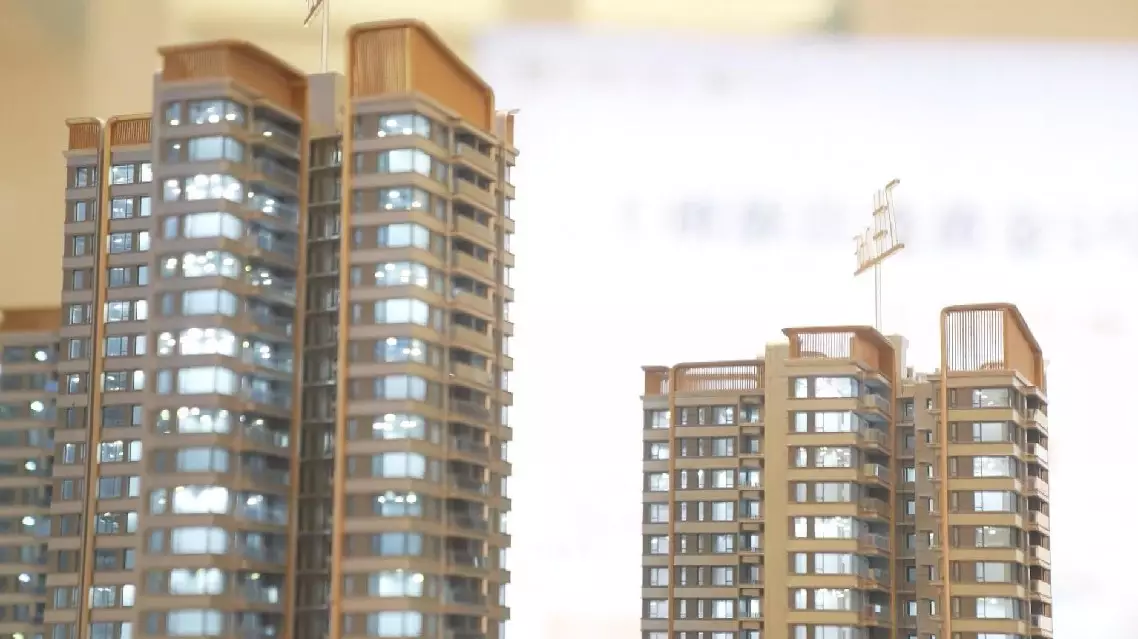
China's real estate market rebounding following optimized policies