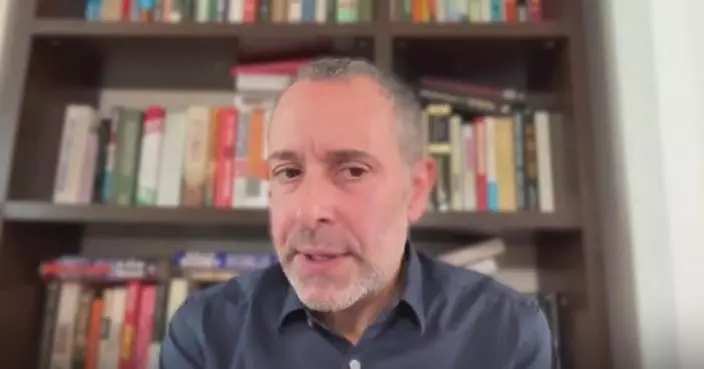
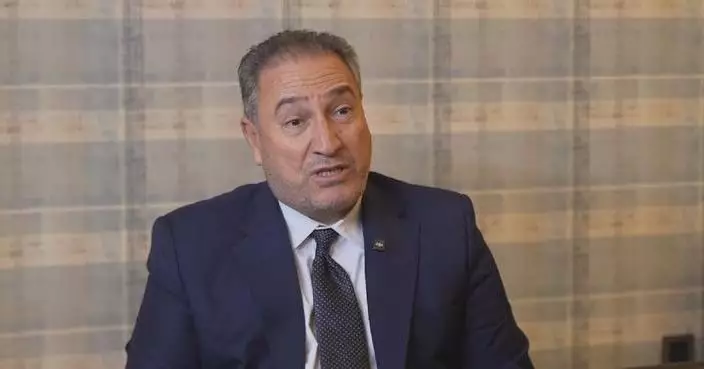
With Macao acting as a bridge, China and Portuguese-speaking countries will achieve prosperity and harmony through cooperation in the future, said Danilo Afonso Henriques, Deputy Secretary-General of the Permanent Secretariat of Forum Macao.
Forum Macao, or the Forum for Economic and Trade Cooperation between China and Portuguese-speaking Countries (Macao), was initiated and established by the Chinese government in October 2003.
Nine Portuguese-speaking countries, namely Angola, Brazil, Cape Verde, Guinea-Bissau, Equatorial Guinea, Mozambique, Portugal, Sao Tome and Principe, and East Timor, have participated in the forum.
Having been working at the permanent secretariat in Macao since 2014, Henriques noted that the forum has reached all countries in the world where Portuguese is the official language, and that over the past two decades, the cooperation between China and Portuguese-speaking countries has expanded from just economic and trade cooperation to many more fields such as finance, science and technology, culture and education, and health.
"It's been 20 years, two decades. We've seen not only the cooperation grow in terms of, we now have all the Portuguese-speaking countries in the last few years. It gives Macao great visibility on the international stage, so it's advantageous to both sides' know-how. So the development in China and then the breakneck speed of technology advancements now. It creates enormous advantage for Macao. It brings new dynamism to this platform," Henriques said. Henriques said that in recent years, the development of the Guangdong-Hong Kong-Macao Greater Bay Area city cluster in south China and the Guangdong-Macao In-depth Cooperation Zone in Hengqin, Zhuhai of Guangdong Province neighboring Macao have created new opportunities in Macao and helped it attract more and more investors from Portuguese-speaking countries.
"This year, they are very interested as investment authorities to look at Hengqin, the deep cooperation zone next door, and to see what's being established there. Increasingly, we're finding that the interest is technology based. So this year, we ran a colloquy training course for a couple of weeks. All the Portuguese-speaking countries sent their representatives here, and we sent them to the Greater Bay Area, to Shenzhen, and they were in Guangzhou, and they were hugely impressed by the leaps and bounds that have occurred in terms of technology, AI and what's that doing in different sectors," Henriques said.
This year marks the 25th anniversary of Macao's return to the motherland and the establishment of the Macao Special Administrative Region.
As a witness of the rapid development in Macao over the past 10 years, Henriques spoke highly of the diverse and harmonious society there.
"I've been living in Macao for ten years and I witnessed that first hand, the 'one China, two systems' implementation here in Macao. You see that working very successfully. This is a thriving economy with all of the infrastructure that's required for a society to prosper, with an education system, health services. And you see a lot the dynamism of the young people here in Macao. The diversification of the economy has brought different talents from across the world, from overseas. Integration, cohesion, harmony of mutual respect, of appreciation for each other's cultures. So, it's a very harmonious society to live in," Henriques said.
Looking forward, Henriques said he believes that with Macao serving as the bridge, the cooperation China and Portuguese-speaking countries will further deepen and the two sides will walk hand-in-hand toward a bright future.
"So for the future, I think things will prosper, will grow, will diversify even more. We're reaching more and more areas of engagement, more and more areas of cooperation. I think, Macao acting as a bridge, working together, we can all work for the future prosperity and harmony between China and all of the Portuguese-speaking countries," he said.
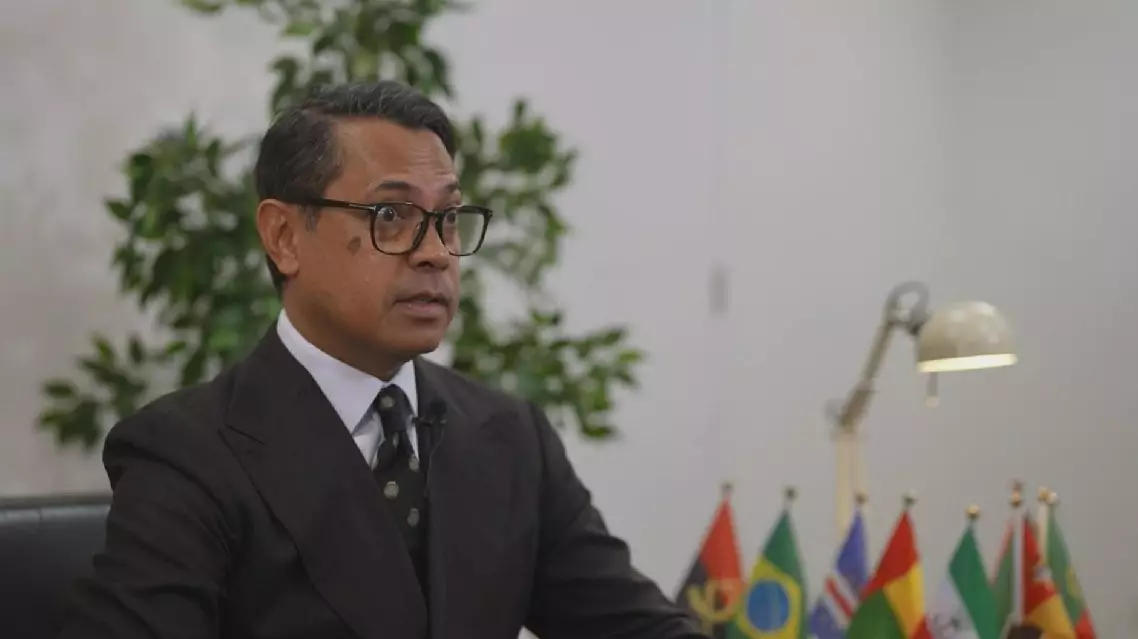
Macao bridges promising ties between China, Portuguese-speaking countries
Chinese Foreign Minister Wang Yi said on Tuesday that mediation efforts of the Pakistani side regarding the Middle East tensions are in the common interests of all parties.
Wang, also a member of the Political Bureau of the Communist Party of China Central Committee, made the remarks in his talks with Pakistani Deputy Prime Minister and Foreign Minister Mohammad Ishaq Dar in Beijing.
During their talks, the two sides exchanged views on current international issues and regional conflicts.
Wang welcomed the visit of the Pakistani side to Beijing for discussion on easing tensions in the Middle East, just after its holding of a quadrilateral foreign ministers' meeting in Islamabad.
He said China supports and looks forward to Pakistan playing a unique and important role in easing the situation and resuming peace talks. This process is no easy task, and Pakistan's mediation efforts are in line with the common interests of all parties, Wang added.
He noted China is willing to make joint efforts with Pakistan to end the hostilities as soon as possible, create opportunities for peace and open the window for peace talks.
On bilateral ties, Wang said this year marks the 75th anniversary of the establishment of diplomatic relations between China and Pakistan, calling on both sides to implement the important consensus reached by the leaders of the two countries and constantly advance the building of a China-Pakistan community with a shared future.
For his part, Dar said the Pakistan-China friendship is precious and deeply rooted in people's hearts, adding that Pakistan is willing to work with China to promote the continuous development of the all-weather strategic cooperative partnership between the two countries.
Dar thanked China for supporting Pakistan's mediation of the situation in Iran, adding that the current conflict has disrupted international energy supplies and caused heavy damage to developing countries.
Noting that solutions can only be found through negotiation, Dar said Pakistan is willing to strengthen communication and coordination with China to push all parties to start peace talks as soon as possible and restore regional peace.
The two sides also put forward a five-point initiative for restoring peace and stability in the Gulf and the Middle East region:
I. Immediate cessation of hostilities: China and Pakistan call for immediate cessation of hostilities and utmost efforts to prevent the conflict from spreading. Humanitarian assistance must be allowed to all war-affected areas.
II. Start of peace talks as soon as possible. Sovereignty, territorial integrity, national independence and security of Iran and the Gulf states should be safeguarded. Dialogue and diplomacy is the only viable option to resolve conflicts. China and Pakistan support the relevant parties in initiating talks, with all parties committing to peaceful resolution of disputes, and refraining from the use or the threat of use of force during peace talks.
III. Security of nonmilitary targets. The principle of protecting civilians in military conflict should be observed. China and Pakistan call on parties to the conflict to immediately stop attacks on civilians and nonmilitary targets, and fully adhere to International Humanitarian Law, and stop attacking important infrastructure, including energy, desalination and power facilities, and peaceful nuclear infrastructure, such as nuclear power plants.
IV. Security of shipping lanes. The Strait of Hormuz, together with its adjacent waters, is an important global shipping route for goods and energy. China and Pakistan call on the parties to protect the security of ships and crew members stranded in the Strait of Hormuz, allow the early and safe passage of civilian and commercial ships, and restore normal passage through the Strait as soon as possible.
V. Primacy of the United Nations Charter. China and Pakistan call for efforts to practice true multilateralism, to jointly strengthen the primacy of the United Nations, and to support the conclusion of an agreement for establishing a comprehensive peace framework and realizing lasting peace based on the purposes and principles of the UN Charter and international law.
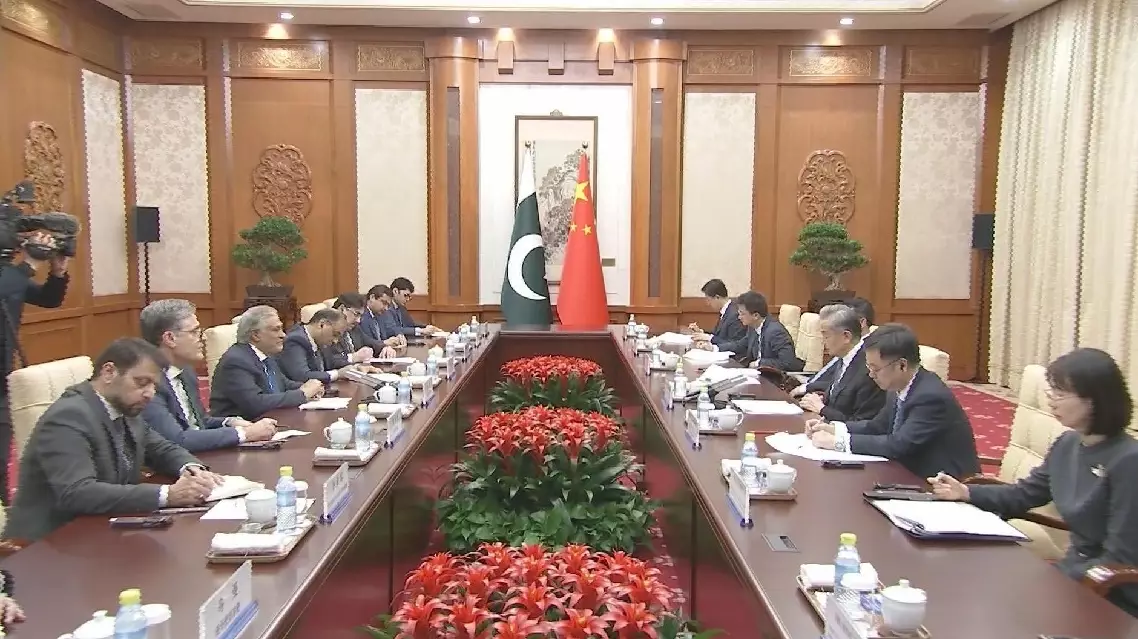
Pakistan's mediation efforts in common interests of all parties: Chinese FM