A colorful head of a terracotta warrior depicting a military officer was unearthed Wednesday in Xi'an City, northwest China's Shannxi Province, marking a rarity of the half-century unearthing of the tomb of Emperor Qinshihuang.
The unearthed terracotta figure was found with several parts of its body broken off, but its colors remained fresh under the protection of silt.
The head of the figure is now under repair after being put into a humidity control box, which helped it gradually adapt to the outside environment.
It was well preserved with the painted face remaining pink, the most typical face color of terracotta warriors, and the black and the white parts of its eyes remaining fresh.
The archeologists cleaned the sands off the terracotta warrior's head and sprayed solution onto its surface to prevent the painted portion from further peeling off.
The terracotta figure was found wearing a headpiece consisting of two small planks, signaling its identity as a middle ranking officer, but its exact identity remains unclear until more relics being unearthed to support the assumption.

Rare terracotta warrior head unearthed from tomb of Emperor Qinshihuang
China released the outline of its 15th Five-Year Plan on Friday, highlighting digital intelligence development and high-quality population development as vital drivers of economic and social progress.
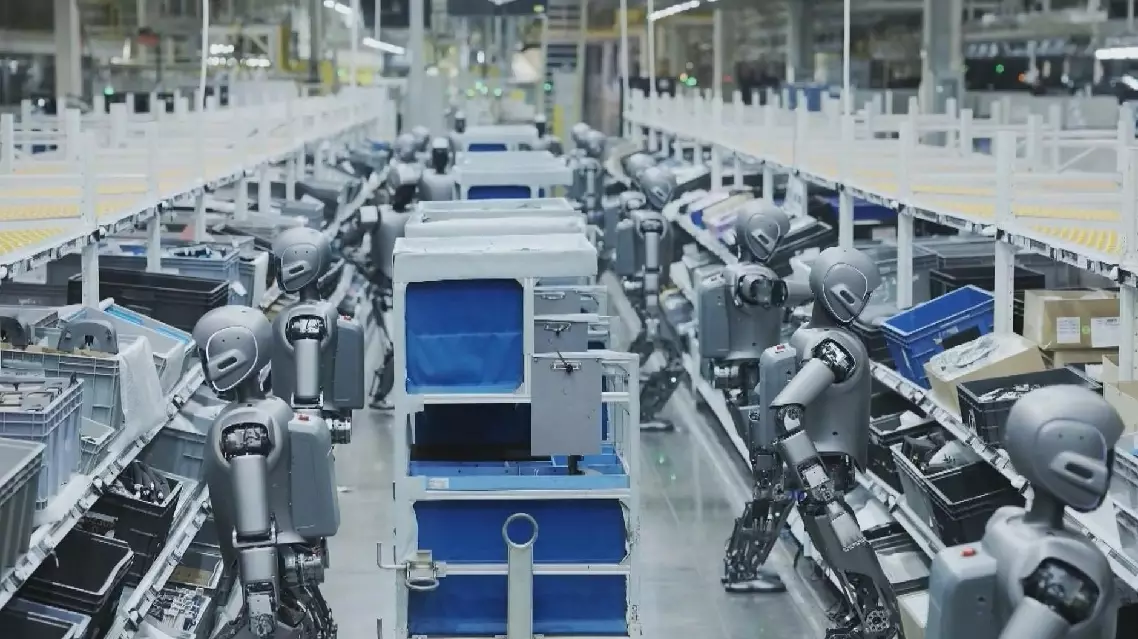
Including dedicated sections on the two themes, the plan calls for greater efforts to facilitate AI applications and establish life cycle care to safeguard the people's right to development.
Compared with the 14th Five-Year Plan, which focused on accelerating digitalization, the new concept of "digital intelligence development" places greater emphasis on the integration of artificial intelligence with the real economy, according to a macro economy expert.
"While the previous five-year plan caught the wave of digitalization, the new plan is embracing a new wave. As we all know, the new round of science and technology revolution, featuring the rapid development of AI, is thriving. The 15th five-year plan elaborates in a separate chapter how China can respond to the new trend of science and technology and industrial development. Compared with the previous plan, which emphasized 'digital economy,' the new plan highlights 'new intelligent economic forms,' which requires AI to be integrated into all aspects of economic development and to better empower growth. This will be an important direction for the future," said Dong Yu, Executive Deputy Director of the China Institute for Development Planning at Tsinghua University.
The plan also places new emphasis on high-quality population development, dedicating a separate section to supporting policies throughout the life cycle of its citizens based on China's long-term demographic trends.
"The role of human factors in China's development is becoming increasingly prominent. Economic work now places greater emphasis on combining investment in physical assets with investment in people. By dedicating a separate chapter to population issues, the plan is not focusing solely on birth rates. More importantly, it aims to build a full-chain support system covering needs from birth to growth to elderly care. The tasks laid out in the plan will match these needs, ensuring that the principle of putting people first is reflected across every stage of human development," said Dong.
China’s 15th five-year plan underscores digital intelligence, high-quality population development