Skip to Content Facebook Feature Image

China's Greater Bay Area logs 22.4-pct increase in foreign trade in Jan-Feb

China

China

China

China's Greater Bay Area logs 22.4-pct increase in foreign trade in Jan-Feb

2026-03-14 15:49 Last Updated At:03-16 13:15

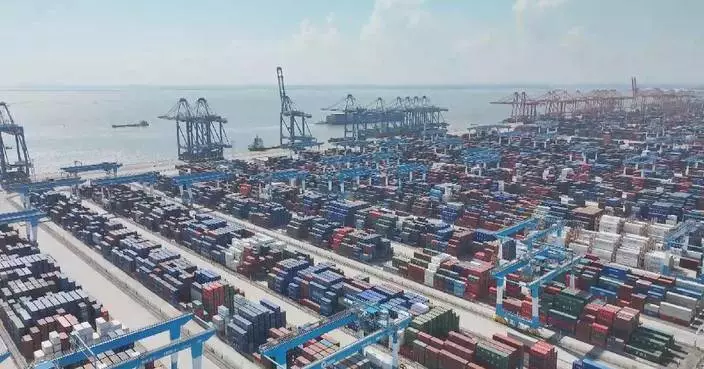
South China's Guangdong-Hong Kong-Macao Greater Bay Area (GBA) recorded a total import and export value of 1.57 trillion yuan (about 227.65 billion U.S. dollars) in the first two months of this year, marking a year-on-year surge of 22.4 percent, according to the Guangdong branch of the General Administration of Customs of China (GACC).

The pace of increase is 4.1 percentage points faster than the national import and export growth rate, said the customs.

It added that the GBA's import and export value accounts for 20.4 percent of the national total foreign trade value and contributes 24.1 percent to the national foreign trade growth.

The GBA brings the Hong Kong and Macao special administrative regions together with nine mainland cities in the economic powerhouse of Guangdong, including Guangzhou, Shenzhen and Dongguan.

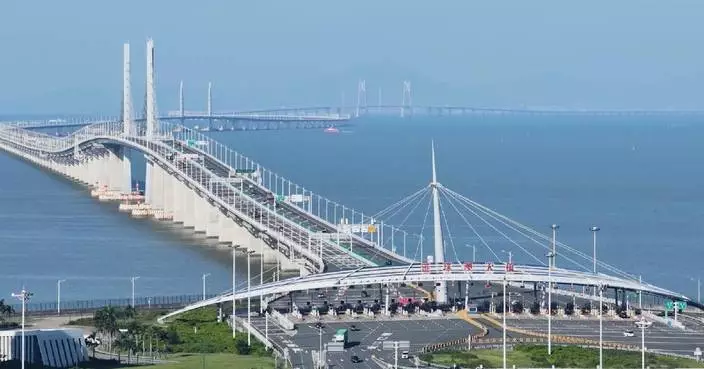
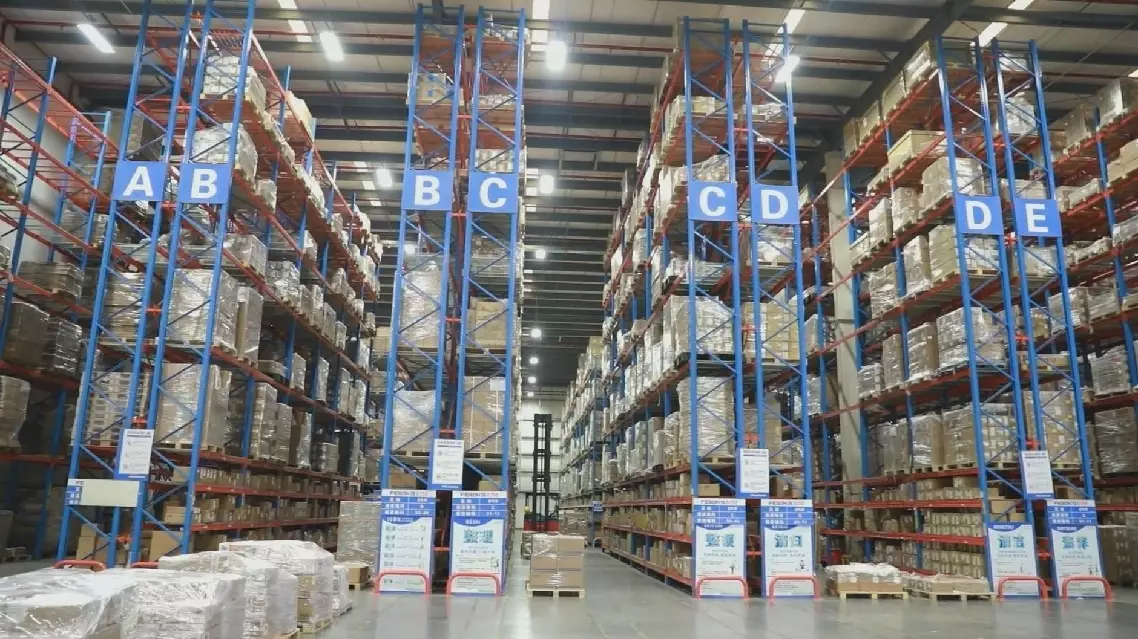
The area's strong foreign trade is partly attributed to its efficient logistics network.

The Hong Kong International Airport (HKIA) Dongguan Logistics Park, as a major international air cargo gateway of the GBA, has been offering sea-air intermodal transshipment services.

"The HKIA Dongguan Logistics Park has connected with Hong Kong International Airport's 220 global destinations. The time from export goods arriving at the park to being loaded onto a plane at the Hong Kong airport has been stably reduced to within 14 hours, which has greatly improved the efficiency of the goods made in the Greater Bay Area going global," said Xue Zhenghao, operations manager of Dongguan Port International Air Freight.

The integration of the Greater Bay Area's manufacturing sector with Hong Kong's air logistics has brought tremendous momentum to the logistic park's development.

Its import and export business has been growing rapidly, with structure constantly optimized and upgraded.

In the first two months of this year, it reported over 74 percent in the import and export share of high-end manufacturing products such as integrated circuits and displays.

"In the first two months of this year, the import and export value of the logistics park reached 6 billion yuan, a year-on-year increase of 2.2 times, getting off to a good start. This year, 329 enterprises have conducted import and export business at the park, doubling the number compared to last year. An increasing number of high-value-added products has been sent to the park for distribution," said Yang Zhe, inspection section chief of the bonded logistics center of Shatian Customs under the Huangpu Customs in Guangdong.
China's Greater Bay Area logs 22.4-pct increase in foreign trade in Jan-Feb


China's Greater Bay Area logs 22.4-pct increase in foreign trade in Jan-Feb
China's 16th Arctic Ocean expedition achieved the country's first video call spanning the North and South Poles on September 25, coinciding with the Mid-Autumn Festival, using a domestically developed satellite system with a delay of no more than one second.

The expedition deployed four vessels -- Xuelong, Xuelong 2, Jidi, and Tansuo 3 -- to study extreme environmental changes in the Arctic amid accelerating global warming. On September 29, China's research icebreakers Xuelong and Xuelong 2 returned to Shanghai after completing their missions, while Jidi and Tansuo 3 continue their expedition tasks and are expected to return in mid-October following a three-month journey.

The expedition team held a satellite video conversation with China's Antarctic Qinling Station, extending festive greetings to their polar scientific research counterparts and testing a large-scale constellation designed to provide global broadband internet and support integrated space-Earth 6G networks.

"This is the first time that China has used a domestically developed communications satellite system to make a video call across the largest latitude span," said Liu Feng, a senior engineer at the National Marine Data and Information Service.

The around-13,000-satellite GW constellation, led by China Satellite Network Group (SatNet), is China's first mega low Earth orbit satellite internet project. During the polar test, the maximum uplink and downlink speed reached around 30 megabits per second, equivalent to taking about 10 minutes to download a 1GB file. The equipment can also be used for emergency rescue and maritime communications.

"During the test period, it also supported real-time communications among Xuelong, Jidi, Tansuo 3, the National Marine Data and Information Service and the Polar Research Center. After Jidi and Tansuo 3 entered ice zone operation areas, their communication could not be guaranteed. So file transfers and navigation logs had to be transmitted through the SatNet equipment," said Zhang Bin, an engineer at the National Marine Data and Information Service. The successful test of the domestically produced satellite communication equipment marks China's independent control over polar region communications. The equipment ensures that data remains within the country, effectively safeguarding data security.

China holds first video call between North, South Poles via homegrown satellite system

China holds first video call between North, South Poles via homegrown satellite system

Recommended Articles