A joint Chinese-Uzbek archaeological team has concluded their excavation of the renowned Mengchaktepa site, further confirming its pivotal role as a node on the Ancient Silk Road, a trade route once connecting China with the rest of the world.
Located on the northern bank of the Syr Darya River, the Mengchaktepa site, has been referred to as a "living fossil of the Silk Road," and has been the subject of joint studies between the Chinese and Uzbek experts since the joint project was launched in 2012.
Since September, the team has discovered six tombs and two building foundations, along with a trove of valuable artifacts, including silk fragments and pottery items. Among the most fascinating findings was a bronze mirror dating back to ancient China's Han Dynasty (202 BC -220 AD), which was found placed together with an eyebrow pencil and beads, indicating China’s wide cultural influence in Central Asia during those historic times.
Archaeologists also discovered a round, square-holed Chinese coin which was found lying among the skeletal remains on what would have been the chest area of a tomb's occupant. The clear traces of string binding suggest that it was valued more as an ornamental object rather than a form of currency.
"When used as a decoration, the coin's significance had gone far beyond its monetary value. It symbolizes a deep cultural recognition and directly shows the influence of Chinese culture in the region," said Liu Tao, the Chinese leader of the joint team.
The Fergana Basin where the Mengchaktepa site is situated served as a crucial hub along the Silk Road and a meeting point of Eastern and Western cultures. According to ancient Chinese records, the area was once home to the Dayuan Kingdom, renowned for its prized Ferghana horses.
During the excavation, China's advanced archaeological methodologies and technologies were applied for the first time in Uzbekistan, including the idea of extracting relics in intact soil blocks for laboratory cleaning and analysis.
The ongoing activity complements the work being carried out at the Mingtepe and Elatan archaeological sites, two other joint Chinese-Uzbek projects in the Fergana Basin. Together, they reveal a thousand-year long history of the Silk Road and the region's role in fostering cultural exchanges.
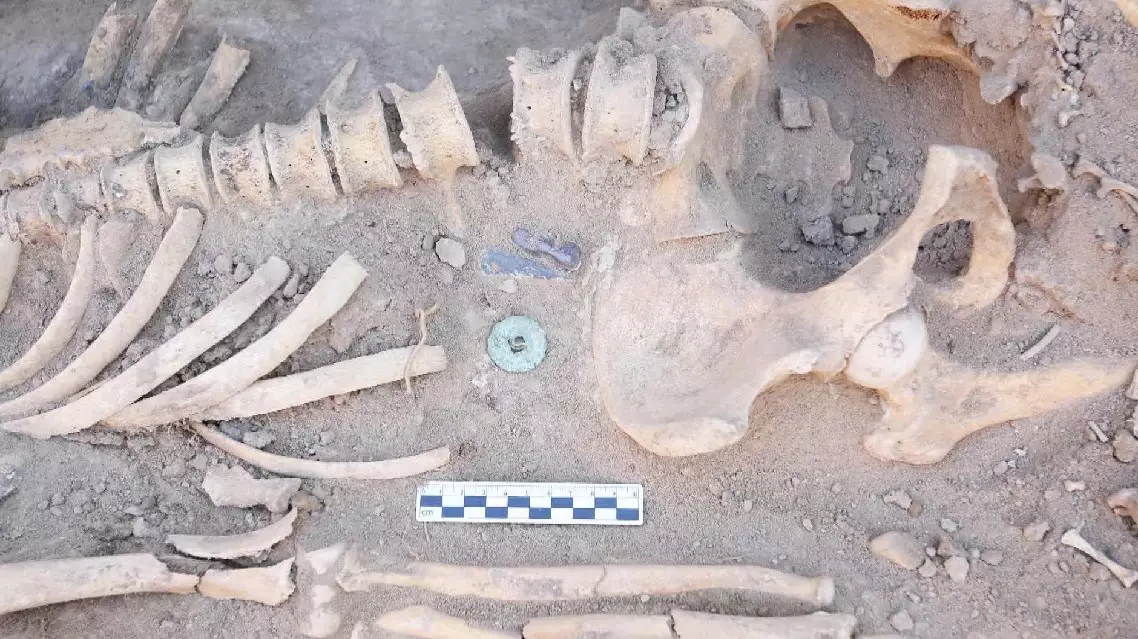
Uzbek-Chinese joint archaeological expedition unveils key Silk Road discoveries