Skip to Content Facebook Feature Image

Ecological protection efforts continue at Qianjiangyuan National Park

China

China

China

Ecological protection efforts continue at Qianjiangyuan National Park

2024-12-23 16:08 Last Updated At:18:47

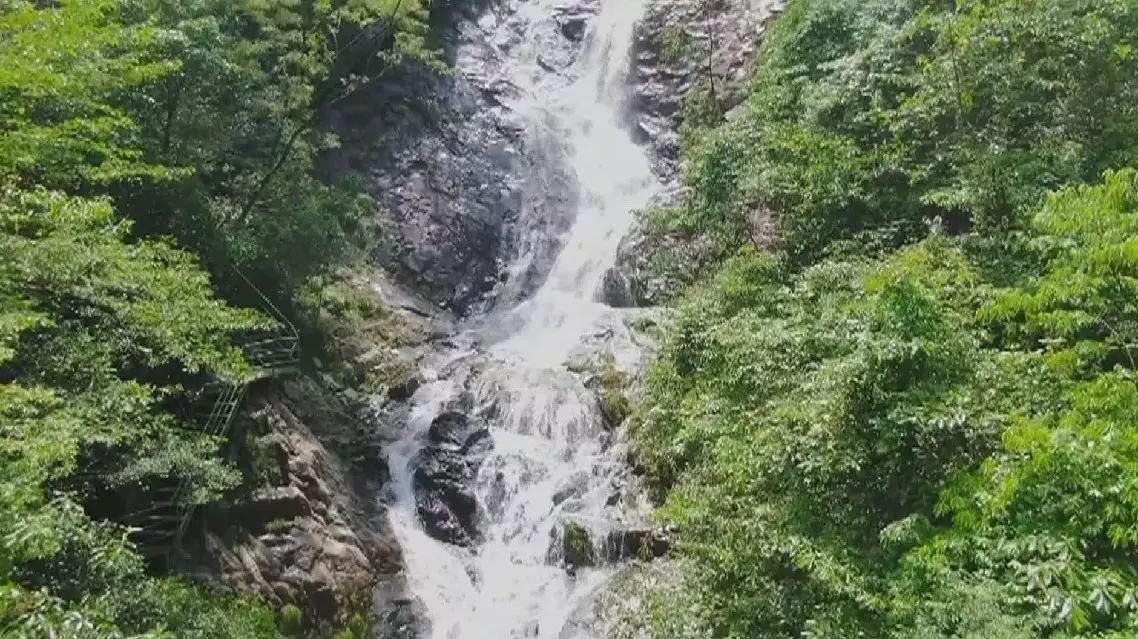
More efforts have been made at the Qiangjiangyuan National Park in the eastern province of Zhejiang to protect environment and enhance biological diversity.

Qianjiangyuan is the source of the Qiantang River, the "mother river" of Zhejiang Province which flows through China's most populated and industrialized regions.

The Qianjiangyuan National Park, situated in Kaihua County, Quzhou City in the province, covers an area of about 252 square kilometers. It is home to a large area of native evergreen broad-leaved vegetation typical of lowland mid-subtropical zones that is increasingly rare in other parts of the world. It was one of the first 10 pilot national parks created in 2016 to protect China's environment.

Ren Haibao, a dedicated biologist, has spent nearly two decades working in the subtropical evergreen broad-leaved forest of Kaihua County. He said the forest is a Chinese treasure.

"Every tree in this area has a unique ID, and we monitor their growth by measuring the growth ring every half year. Most primitive forests at low altitudes have already disappeared, but here at the Qianjinag Yuan National Park we still preserve this rare and continuous forest," said Ren, a scientist of the Chinese Academy of Sciences.

The fallen leaves and seeds of the forest are regularly collected and sent to the nearby observation and research station.

"The seeds help us understand why so many species in the forest coexist harmoniously. Biodiversity is the foundation of human existence and sustainable development. It is essential for food, materials, water and soil conservation, carbon storage and even medicine. If we want to live harmoniously with nature, we must preserve biodiversity," he said.

According to the latest research data, Qianjiangyuan is home to 2,234 species of higher plants, 449 species of large fungi, and 2,427 species of animals. It is a globally concentrated distribution area for the black muntjac and the Elliot's pheasant, two endangered species endemic in China that are under first-class state protection.

To protect the origin of the Qiantang River, the park established a monitoring center, utilizing satellites, drones, remote sensors, and other technologies to track climate changes, prevent disasters, and preserve biodiversity.

"Our remote cameras capture thousands of pictures of rare and wild animals every day. This is crucial for research and the protection of animals. We also provide residents with subsidies to discourage human intervention and protect the environment. And we have established a community to educate people about the importance of ecological protection," said Yu Shunhai, staff with the Qianjiangyuan National Park.
Ecological protection efforts continue at Qianjiangyuan National Park

Ecological protection efforts continue at Qianjiangyuan National Park
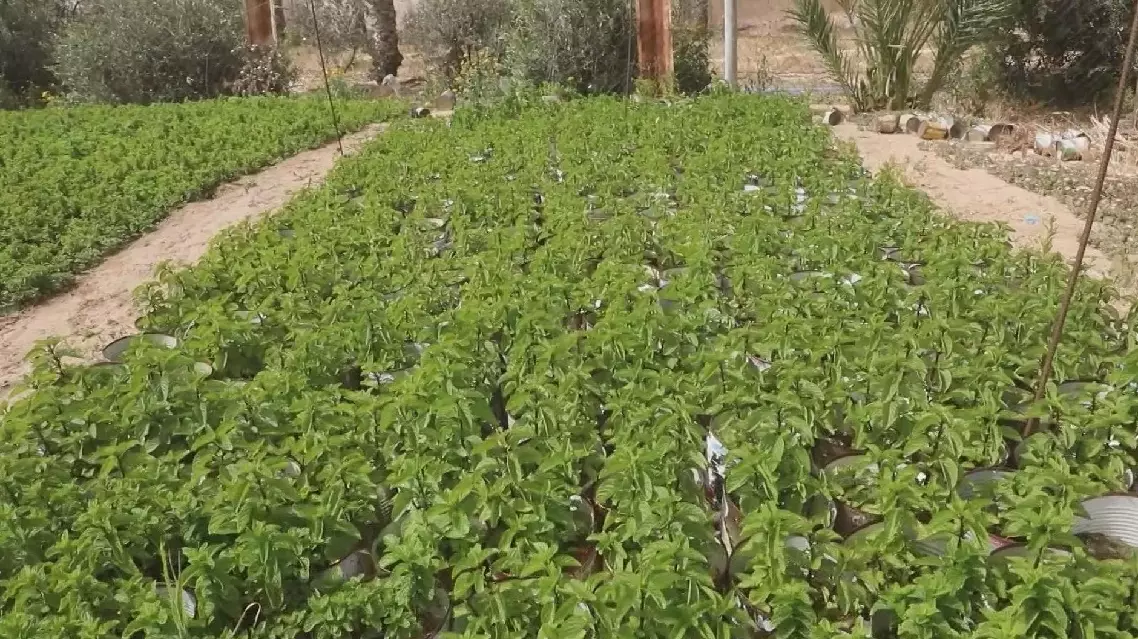
Farmers in Gaza have been forced to find innovative ways to keep their livelihoods ticking over following the devastating conflict, with many now growing vegetables inside recycled tin cans after losing their land during the war.

Inside temporary greenhouses in southern Gaza, Palestinian farmers are growing mint and vegetables inside empty food cans recycled from aid supplies, after suffering severe shortages of essential agricultural materials.

Local farmers say they have been searching for simple alternatives to continue farming amid the widespread destruction, with many seeing their land and crop fields decimated.

"The idea came from the shortage of nylon in Gaza. We started using empty vegetable cans left behind by charity kitchens. We use them as an alternative to nylon and plant inside them," said Mohammad Zaarab, a Palestinian farmer.

Israel's designation of what Palestinians call the 'yellow zone' has swallowed up most of Gaza's available farmland, reducing usable agricultural land to only around six percent, while farmers continue to face the risk of Israeli fire during their work.

"We are exposed to gunfire in this area. Whenever they shoot at us, we hide until the firing stops. We work in fear and risk our lives while farming," said Shadi Zaarab, another farmer.

According to the United Nations, agriculture made up around 10 percent of Gaza's economy before the war, with more than 560,000 Palestinians relying on farming, livestock, or fishing for their livelihoods.

Gaza's Ministry of Agriculture says reusing empty food cans has become one of the few remaining ways for farmers to continue growing and providing food after the war that began in 2023 devastated much of the agricultural sector.

"Since October 7 [2023], about 86 percent of Gaza's agricultural land has been destroyed by the [Israeli] occupation. Farmers have turned to alternatives, especially for growing aromatic plants that Gaza's farmers traditionally relied on for production," said Ali Abu Amer, director of the Khan Younis Governorate under Palestine's Ministry of Agriculture.

The recycled can practice adopted by farmers also has some positive knock-on effect, as collecting and preparing empty food cans has also created limited work opportunities for unemployed youth amid the Israeli blockade.

Gaza farmers turn to growing vegetables in recycled tin cans after losing land

Gaza farmers turn to growing vegetables in recycled tin cans after losing land

Recommended Articles