China's Jingdezhen, known as the Ceramic Capital, has connected the world through its exquisite craftsmanship of Chinese ceramics, which gained worldwide popularity dating back to the 16th century, according to Teresa Canepa, an international independent researcher and lecturer in Chinese export art.
In an interview with China Global Television (CGTN), Teresa emphasized that Jingdezhen has been a critical link between China and the world. She explained that since the 16th century, the exchange of craftsmanship and trade driven by Chinese ceramics has led to global admiration.
"They produced special orders for the European market. They produced special shapes for the Islamic market and special decorations, which actually were related to the customs that people had in the Middle East. So, these made Jingdezhen and Jingdezhen porcelain an important commodity and you would see that it was imitated all over the world, particularly the blue-and-white porcelain," said Teresa.
Reflecting on the journey of Chinese porcelain to the world, Teresa noted that when it first arrived in Europe, it was seen as a revolutionary new material, admired by all.
"In the Ming Dynasty, large quantities of porcelain were exported to Southeast Asia, to Japan, and to the Middle East. When the Portuguese began to trade directly with China in the early 16th Century, large quantities of porcelain were imported into Portugal and from there were distributed throughout Europe. When porcelain began to arrive in Europe, they admired this new material that it was much harder than anything they had. It had not only a practical aspect to it, but also a connotation of knowing about the world, of understanding what China was, and also the exoticism of owning these pieces that nobody else could own," said Teresa.
Chinese porcelain influenced the world, and vice versa. What's most important is that the craftsmen in Jingdezhen were able to adapt to and meet the demands of customers around the world, according to Teresa. "You see influences going from China to these countries, and from these countries going back to China. One of the important things of the porcelain potters and painters, particularly those of Jingdezhen, is that they adapted swiftly to the different requirements of their different customers in different parts of the world," said Teresa.
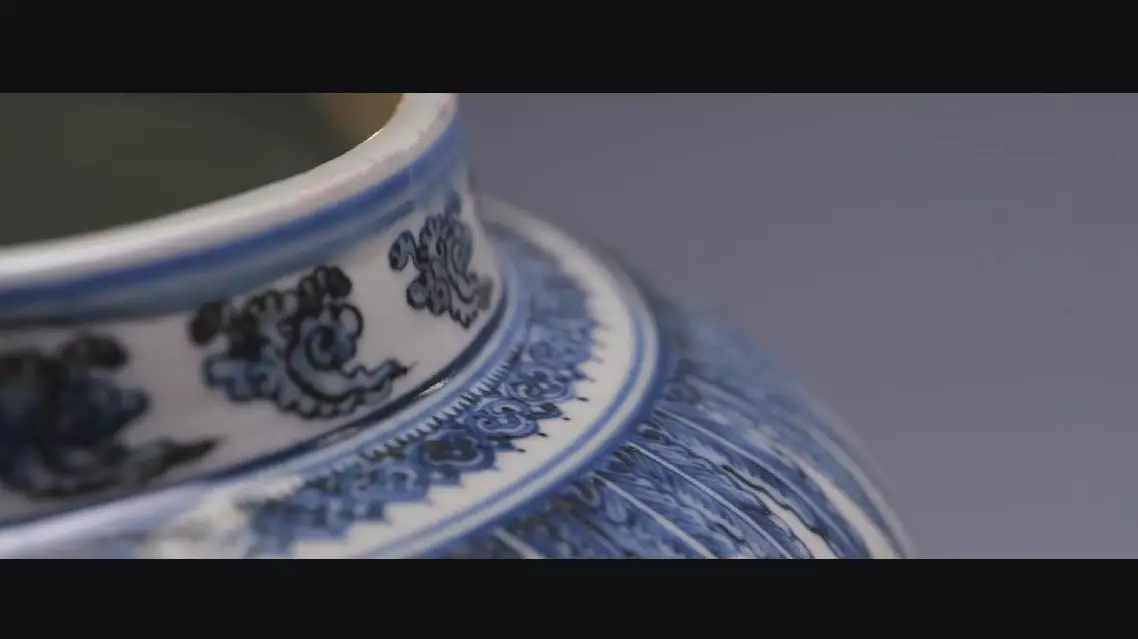
Chinese porcelain sparked worldwide craze in the 16th Century: expert