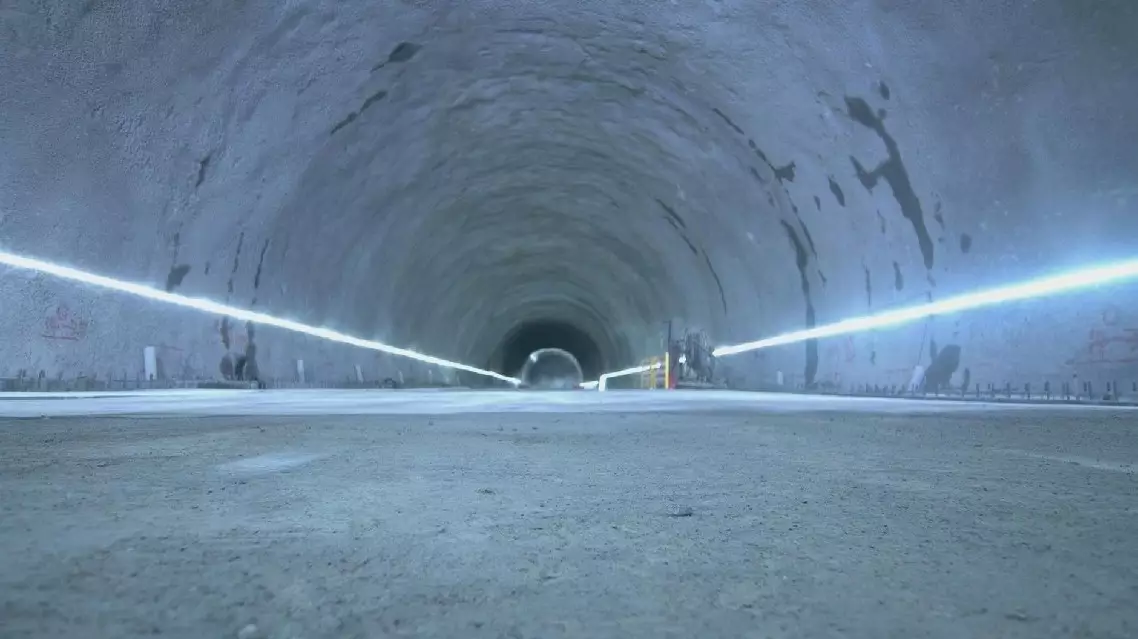
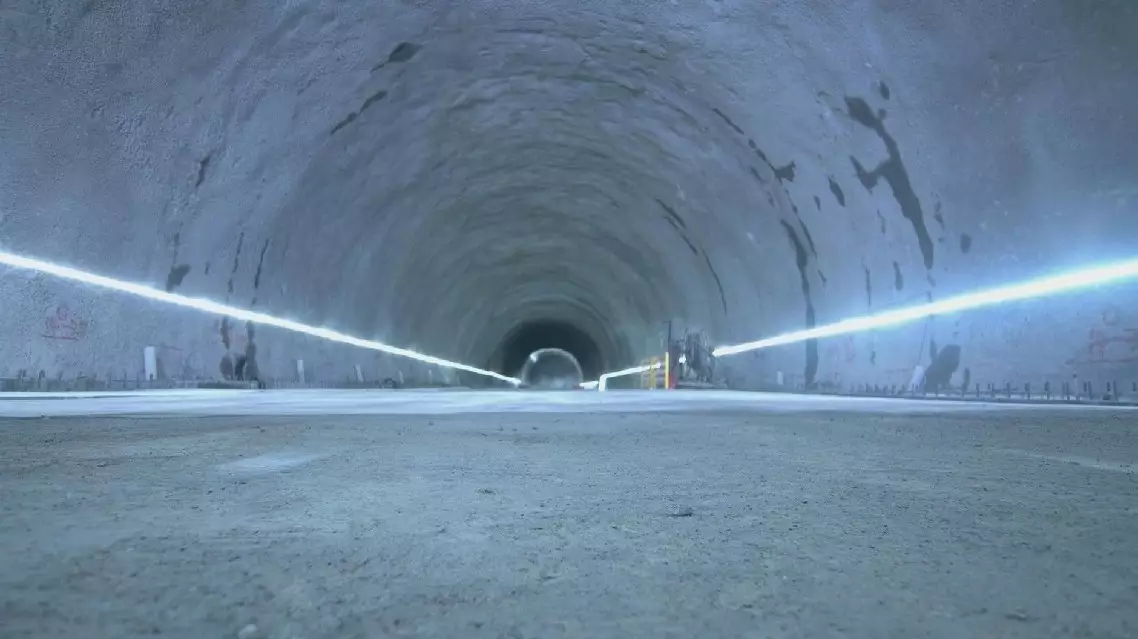
The tunneling of the Tianshan Shengli Tunnel, the world's longest expressway tunnel, was completed Monday morning through the snow-covered mountains of northwest China's Xinjiang Uygur Autonomous Region, marking a significant milestone in China's infrastructure development.
With its construction starting in 2020, the 22.13-kilometer tunnel, a landmark transportation project which is expected to turn China into a country with strong transport network and a key project along Urumqi-Yuli highway in the Tianshan Mountains, passes through a cold and high altitude zone with harsh climate and geological conditions.
Click to Gallery
China's Xinjiang completes world's longest expressway tunnel through challenging mountains
China's Xinjiang completes world's longest expressway tunnel through challenging mountains
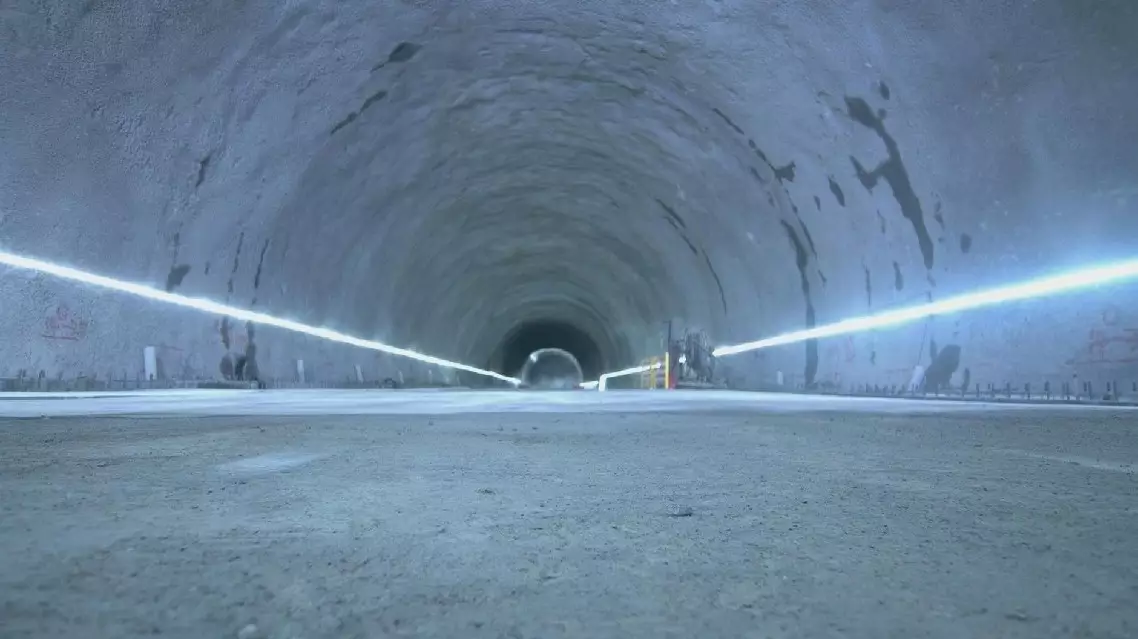
China's Xinjiang completes world's longest expressway tunnel through challenging mountains
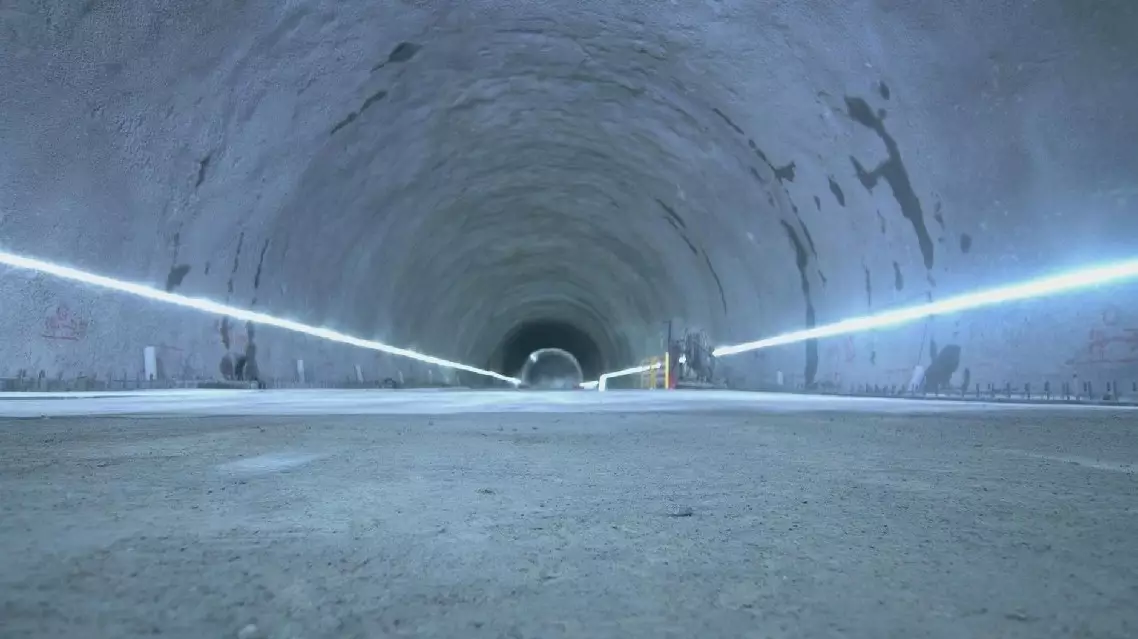
China's Xinjiang completes world's longest expressway tunnel through challenging mountains
Crossing Tianshan Mountains via National Highway 216 usually takes about three hours. With the completion of the Tianshan Shengli Tunnel, the journey time will be reduced to just 20 minutes.
The Tianshan Shengli Tunnel is located in a sparsely populated area of the Tianshan Mountains, with an average construction elevation of over 3,000 meters and crossing 16 fault zones.
Over the past four years, more than 3,000 construction workers have overcome various geological challenges and risks through significant breakthroughs in new technologies, processes, and equipment, setting a new record as the longest expressway tunnel in the world. This project has become another important milestone in global tunnel engineering.
"The Tianshan Shengli Tunnel has achieved significant breakthroughs in new technologies and equipment, setting a new record as the longest expressway tunnel in the world," said Zhou Rongfeng, head of the Highway Bureau at the Ministry of Transport.
As the tunnel has been drilled through, construction will proceed on the Tianshan Shengli Tunnel's pavement, electromechanical systems, landscaping, and other ancillary works, accelerating the overall progress of constructing the Urumqi-Yuli Expressway.
Upon its completion, the Urumqi-Yuli expressway will reduce the travel time between Urumqi and Korla from 7 hours to just 3 hours, cutting transportation costs by 15 percent.
The Urumqi-Yuli Expressway, spanning approximately 319.7 kilometers, is a key segment of the G0711 Urumqi-Ruoqiang Expressway. It traverses the Tianshan Mountains and serves as the most convenient and efficient route from Urumqi to southern Xinjiang. To the east, it connects with Qinghai and southwest China, and even the new western land-sea corridor, significantly enhancing the land link between Xinjiang and coastal regions.
China's Xinjiang completes world's longest expressway tunnel through challenging mountains
China's Xinjiang completes world's longest expressway tunnel through challenging mountains
China's Xinjiang completes world's longest expressway tunnel through challenging mountains
China's Xinjiang completes world's longest expressway tunnel through challenging mountains