South Sudan received 1.1 million doses of cholera vaccines on Monday as the country battles an outbreak of the disease.
The vaccines, donated by the Global Alliance for Vaccines and Immunizations (GAVI), arrived in Juba by flight.
"This is supposed to be a two-dose vaccine, but if you take one, you are supposed to get immunity within two weeks, and it can (protect) you for close to six months. Then, if you take the second dose, it can give you protection for up to three years,” said Gabriel Buom Tap, UNICEF Immunization Officer.
The cholera outbreak was declared in October in a border town between Sudan and South Sudan, but it has since spread to six of the country's 10 states.
The most affected groups are those displaced from their homes by floods and refugees from Sudan.
More than 100 people have died in the cholera outbreak, and over 6,000 are currently infected with the disease, according to South Sudan's government.
The government is urging the health sector and other stakeholders to intensify efforts to help contain the spread of the disease.
"I urge the media and civil society to join hands in disseminating information and raising awareness about the importance of vaccination," said Yolanda Awel Deng, Health Minister of South Sudan.
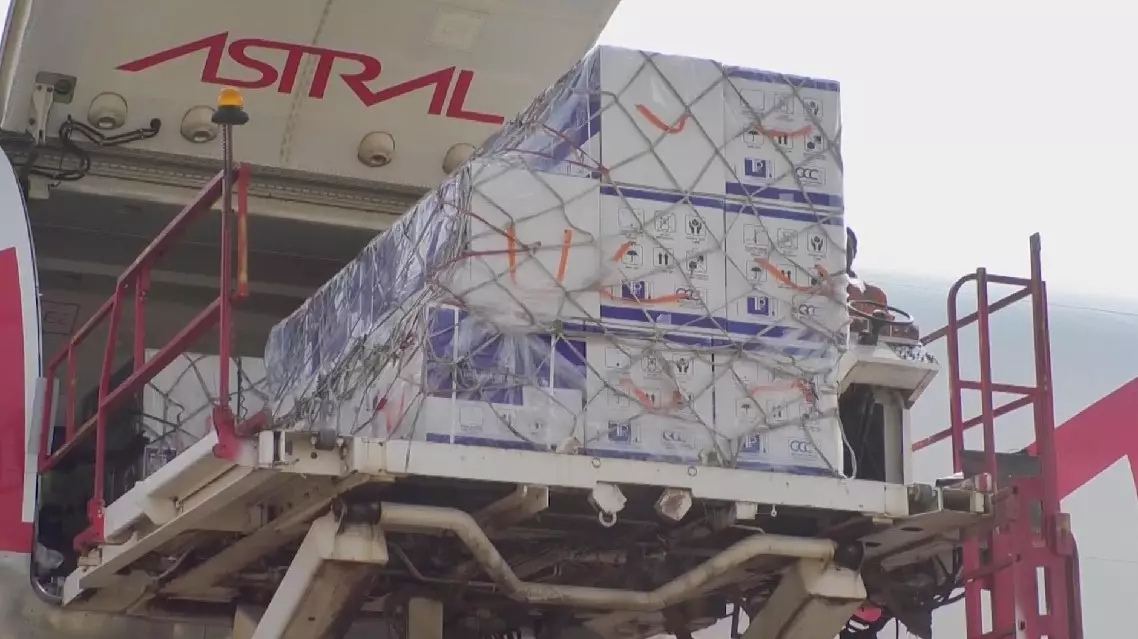
South Sudan receives 1.1 mln vaccines to contain cholera spread
The total number of inter-regional passenger trips across China during the 40-day Spring Festival travel rush, also known as chunyun, reached a record of 9.41 billion, official data showed Saturday.
The figure marked a 4.3 percent increase over the same period in 2025, according to the Ministry of Transport.
Road traffic made up the lion's share of these trips. During the period, about 8.74 billion trips were made by road, increasing by 4.2 percent year on year.
Railway passenger volume reached 540 million, expanding 4.8 percent year on year, according to the ministry.
The country's civil aviation sector recorded 94.39 million passenger trips during the period, up 4.6 percent year on year, while waterway trips surged 15.3 percent from a year ago to 35.97 million.
During the period, China's transportation authorities rolled out various measures to alleviate traffic congestion and enhace the passenger experience.
Instead of simply adding extra trains, many railway stations used ticketing system, big data to dynamically allocate capacity for popular routes. Many railway stations and airports carefully calculated their passenger demands, and then deployed robots to help guide passengers. On expressways, AI-monitoring systems were used to help better manage traffic.
For the first time this year, many train stations rolled out a large luggage delivery service, which means after ordering online, passengers can have their luggages picked up at home and delivered to their departure station or even straight to their destination.
The travel rush, often described as the world's largest annual human migration, highlights China's massive mobility and vibrant economic activity. This year's Spring Festival travel rush started on Feb. 2 and ended on March 13.
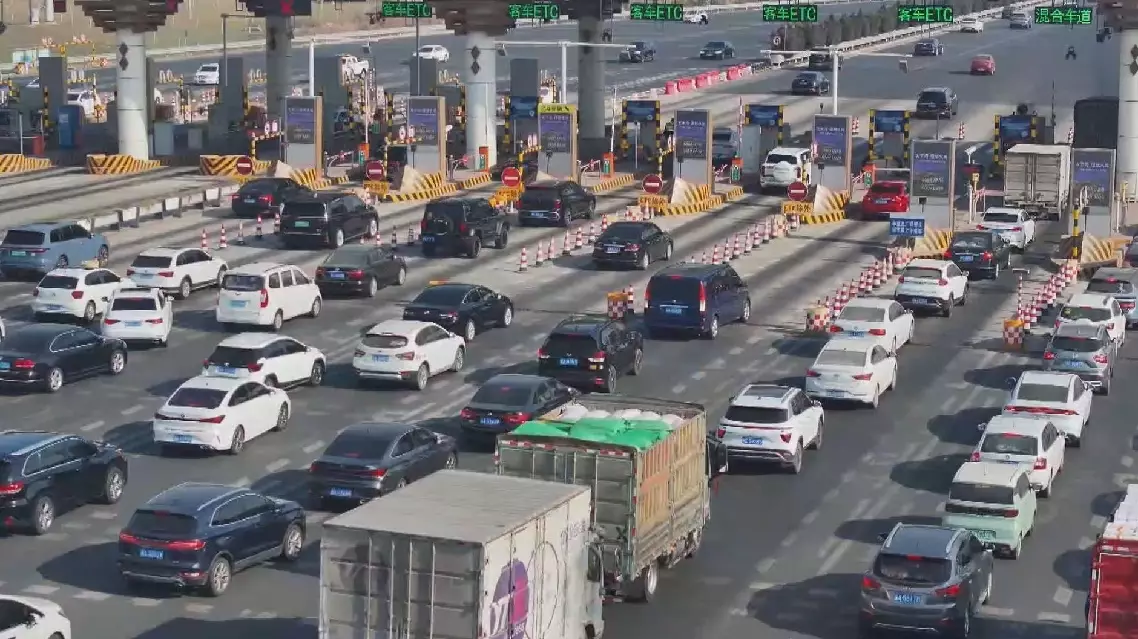
China sees record-high inter-regional trips in Spring Festival travel rush