Skip to Content Facebook Feature Image

Xinjiang Museum presents history with perfect exhibit design and multimedia

China

China

China

Xinjiang Museum presents history with perfect exhibit design and multimedia

2025-01-01 17:45 Last Updated At:18:27

The Xinjiang Uygur Autonomous Region Museum presents Xinjiang's rich legacy of the Silk Road to all with a vast array of exhibits, interactive installations, and digitalized displays.

Established in 1959, the museum covers over 49,600 square meters and boasts an impressive collection featuring the region's history as the hub of the ancient Silk Road and diverse cultures.

The carefully arranged exhibits aim to thread Xinjiang's history with different stories, historical figures, and topic sections to better enlighten common visitors.

"We have presented related historical events, figures, and stories that reflect ancient Chinese values in a way that is more understandable for the public," said Yu Zhiyong, curator of the Xinjiang Uygur Autonomous Region Museum.

The museum also used digital technologies to bring history to life, and interactive installations for both children and adults to learn Chinese history with fun.

"By now, we have digitized over 20,000 artifacts in our collection, transcending time and space to let the public enjoy them in all their splendor. Through a series of interactive digital experiences, we have truly breathed a new life into these cultural relics," said He Jia, vice curator of the museum.

In addition, creative cultural products of the museum also bring relics and stories within the museum to a wider public with lively modern designs.

"We see each creative product as a key to opening the door to Xinjiang Museum's history and culture. By applying various technologies, we recreated the enduring history of the Silk Road's western regions. Static artifacts, texts, and stories become dynamic displays and performances, for our visitors," said Guan Yi, head of the museum's Cultural and Creative Department.
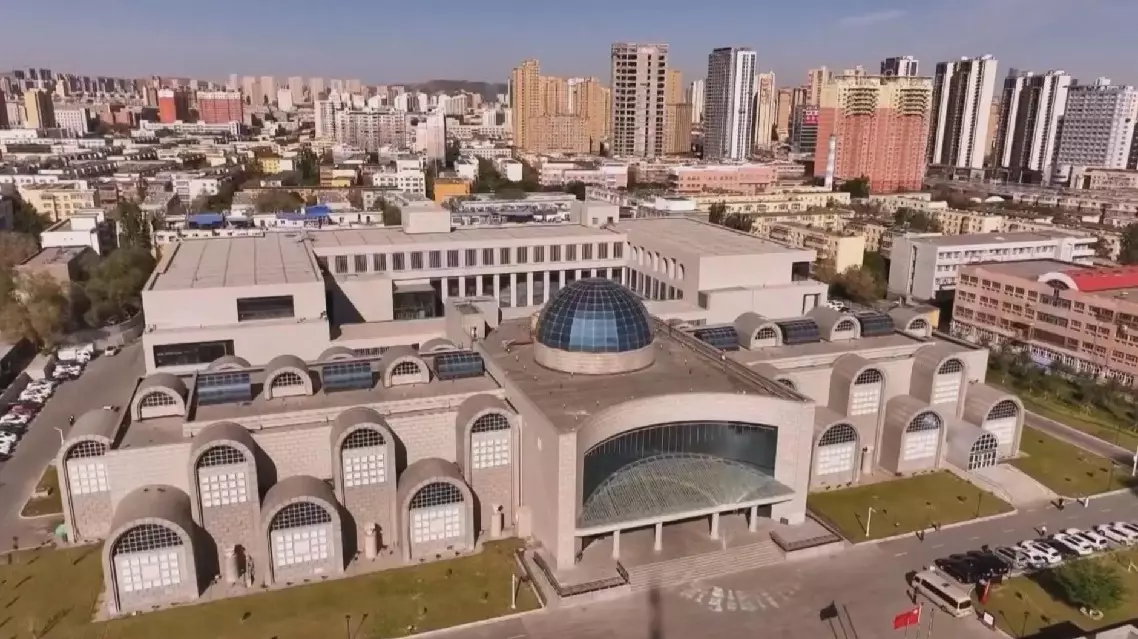
Xinjiang Museum presents history with perfect exhibit design and multimedia

Xinjiang Museum presents history with perfect exhibit design and multimedia
The European Union economy could edge close to a recession if the energy supply shock triggered by the Middle East conflict continues, a senior International Monetary Fund (IMF) official warned on Friday.

Alfred Kammer, director of the IMF's European department, said that under the current tense situation involving Iran, euro area growth is projected to be dragged down by 0.5 percentage point over the next two years. In a more severe scenario, the drag could reach 1.7 percentage points, he added.

Kammer also cautioned that industrial energy prices in the EU are now about twice the level seen before 2022 and significantly higher than in the United States, a direct consequence of the bloc's heavy dependence on imported oil and gas.

Data released by Eurostat on Thursday showed that euro area inflation rose to 2.6 percent year on year in March, up sharply from 1.9 percent in February. Energy prices increased 4.9 percent annually, marking their first annual gain since February 2025.

In its latest World Economic Outlook, the IMF projected that due to the energy supply shock from the Middle East conflict, euro area inflation will reach 2.6 percent this year, up from 2.1 percent in 2025, while growth will slow to just 1.3 percent. In a more severe scenario, inflation could spike to nearly 5 percent, prompting the European Central Bank to raise interest rates and pushing the EU economy toward recession-like conditions, the report said.

IMF warns EU economy could "near recession" if Mideast conflict persists

IMF warns EU economy could "near recession" if Mideast conflict persists

Recommended Articles