Spectacular auroras illuminated night skies on New Year's Day in Mohe, China's northernmost city in Heilongjiang Province, and in Ergun City of the Inner Mongolia Autonomous Region, offering breathtaking beauty to tourists and photography enthusiasts.
Due to geomagnetic storms, breathtaking auroras appeared in Beiji Village, also known as the "North Pole Village" in Mohe, featuring green, red, and purple lights dancing in the night sky.
Compared to previous occurrences, this time the auroras displayed a larger proportion of green lights and had an extended duration, lasting from 17:00 on Wednesday until early Thursday morning.
The appearance of the auroras delighted and amazed a large number of tourists celebrating New Year's Day in Mohe, with many taking the opportunity to make New Year's wishes under the enchanting aurora.
"I'm so excited. It's my first time seeing the aurora, and I feel really lucky. I hope everything can go better with my work," said Li Xia, a tourist from southwest China's Sichuan Province.
"I didn't expect to actually see the aurora because I know that the opportunity to witness aurora is very rare and can only happen by chance, so I feel very lucky," said Huang Hsin-chiao, a tourist from Taiwan.
Auroras were also seen in Ergun City, north China's Inner Mongolia Autonomous Region, on New Year's Day, which lasted from around 19:00 to 22:00, attracting photography enthusiasts to capture the splendid and colorful display.
Over the past two years, the frequent occurrences of auroras in the city have made it into a popular destination for photography enthusiasts seeking inspiration for their works.
Auroras are formed when charged particles from the sun enter the Earth's magnetic field, collide with atoms and molecules in the atmosphere, and produce light.
Typically appearing in the high-altitude regions near the Earth's north and south poles during nighttime, auroras exhibit intense bursts when local magnetic activity is high. They can also be observed in regions of moderate to high latitudes in China.
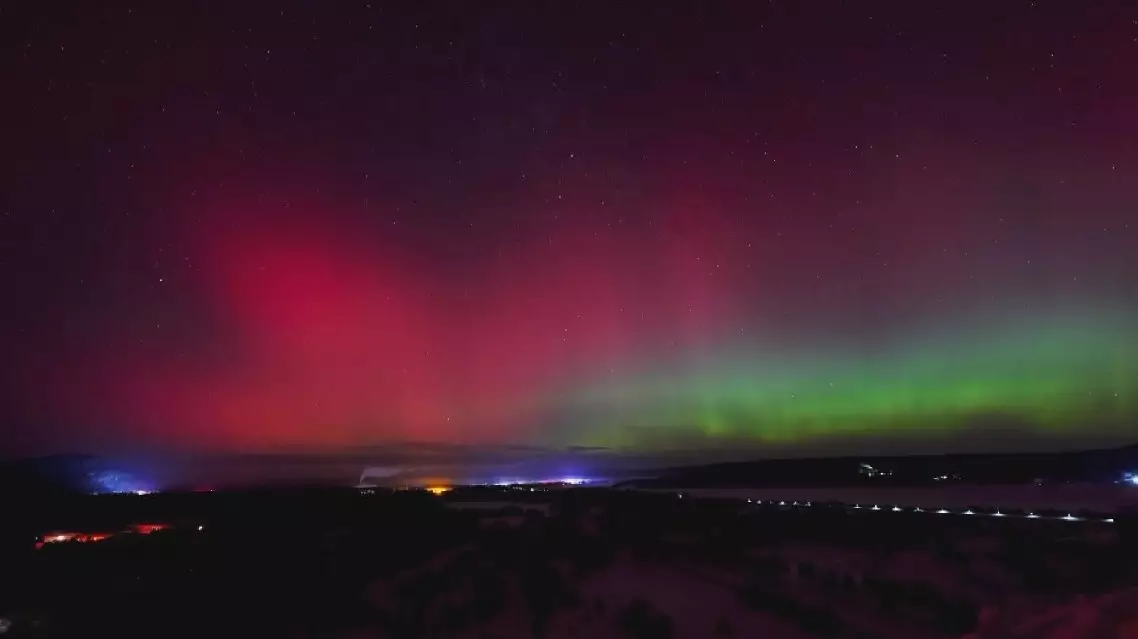
Stunning auroras light up night skies in China's Heilongjiang, Inner Mongolia
Springtime flower-viewing tours are emerging as a major attraction across China ahead of this year's Qingming Festival, with cities and rural destinations rolling out cultural performances, interactive travel services and countryside experiences to lure visitors and boost the tourism economy.
Falling on April 5 this year, the Qingming Festival, or Tomb-Sweeping Day, is a traditional Chinese festival for honoring the deceased and paying tributes to ancestors. The three-day holiday also provides a short break for Chinese citizens to enjoy outdoor activities and sightseeing in pleasant springtime temperatures.
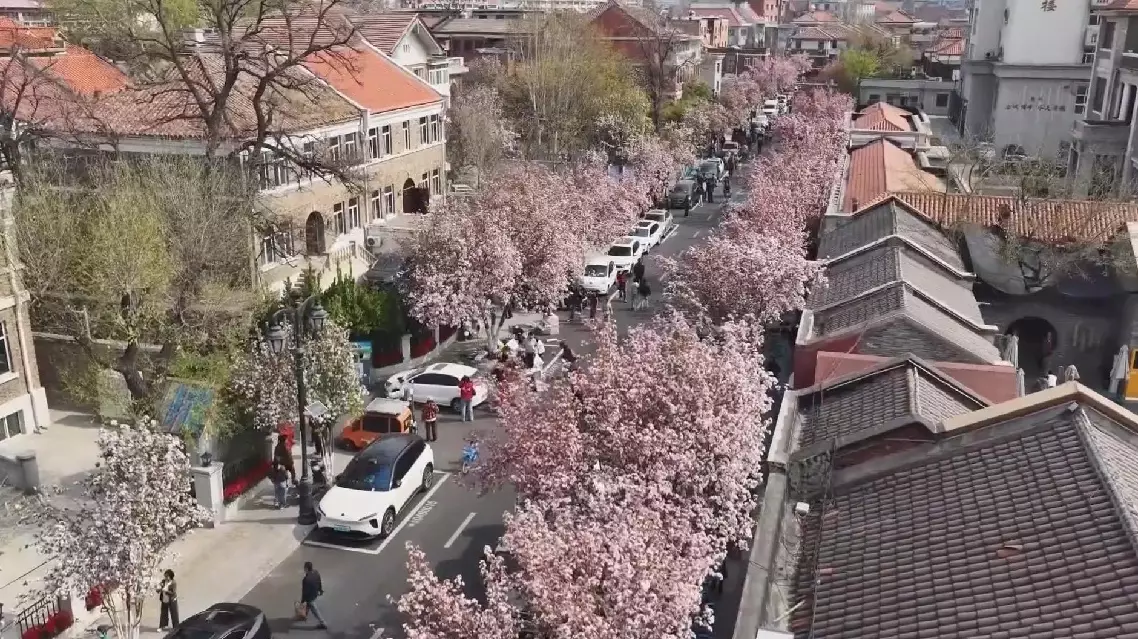
In north China's Tianjin Municipality, both locals and tourists from other parts of the country have gathered for a begonia flower festival, running from Saturday to April 12, which features 123 performances throughout the event.
At the city's well-known Wudadao historical urban area, or the Five Great Avenues, begonia blossoms are now in full bloom, while newly launched sightseeing carriages have added a fresh highlight, bringing in a larger influx of visitors ahead of the holiday.
To enhance the festive atmosphere, nearly 200 local businesses have decorated their storefronts in a festival theme.
Tianjin has also introduced new efforts to integrate culture, tourism and commerce. A locally developed mini-program as well as multiple interactive games combine festival schedules, guided maps, recommended routes and discount coupons, allowing tourists to access services and unlock surprises during their visits.
During last year's three-day Qingming holiday, the festival helped major scenic spots and commercial areas in the city's Heping District receive more than 3 million visits, generating over 800 million yuan (about 116 million U.S. dollars) in combined tourism-related revenue.
This year, local authorities expect both visitor numbers and overall revenue to rise even further.
Similar momentum is also being seen in central China's Hunan Province. In Xiangfeng Village in Changsha City, rapeseed flowers are now in full bloom, drawing crowds of holiday travelers and turning the village into a popular flower-viewing destination on the outskirts of the provincial capital ahead of Qingming.
The village has developed more than 10 featured courtyard-style businesses, including teahouses, eco-farms, yoga courses and rural art centers.
These venues cover a wide range of services such as dining, team-building, wellness, art education and camping, helping build a diversified rural industry that combines agricultural tourism, wellness tourism and commercial tourism.
In the first quarter of this year alone, the village received about 120,000 tourist visits, generating 4.8 million yuan (around 698,000 U.S. dollars) in tourism income.
The growing courtyard economy has helped turn natural scenery into real economic gain, creating jobs for villagers and providing them with a steady increase in income.
In east China's Anhui Province, spring blossoms are also bringing a boost to rural tourism.
On the shores of Jianshan Lake in Chaohu, Hefei City, blooming peach flowers and rapeseed flowers have attracted large numbers of tourists in recent days.
Jianshan Lake, a reservoir covering over 50 hectares, has also become a hub for both professional and recreational water activities.
While trained athletes practice motorboat events on the lake, ordinary visitors can also enjoy boat rides and go-kart-style watercraft experiences.
The area has further enriched its tourism offerings with camping zones, a pet-themed park and fruit-picking gardens, providing a wider range of activities for holiday travelers.
The integrated development of agriculture, culture and tourism has also created new employment opportunities for local residents, enabling more villagers to find jobs closer to home and improve their incomes as the spring tourism season gains pace.
Tourism, culture, commerce blend across China during Qingming Festival holiday