The China retail prosperity index, a barometer of retailers' expectations for the sector, went up this month, signaling retail enterprises' increasing confidence in the consumer market, according to the industry data released by the China General Chamber of Commerce (CGCC) on Monday.
The data show that the index stood at 51.1 percent in January, marking a month-on-month increase of 0.7 percentage points and a 0.2-percentage-point growth compared to one year ago.
The sub-index for commodity business came in at 51.8 percent, up 1.8 percentage points from December.
The profitability and per customer transaction indexes went up by 4.9 and 2.0 percentage points respectively on a monthly basis, both reaching a new high in about a year.
A reading above 50 indicates expansion, while a reading below 50 reflects contraction.
The data also show that the upcoming Spring Festival holiday and the implementation of a new round of trade-in program for home appliances and other goods have driven up consumer demand across county areas, which play a significant role in boosting overall consumption growth.

China's retail prosperity index up in January

China's retail prosperity index up in January

China's retail prosperity index up in January
A spokesperson for the International Maritime Organization (IMO) said on Monday that the situation in waters near the Strait of Hormuz remains volatile, urging vessels in the area to take maximum caution.
"The situation continues to be volatile. Ships should take maximum caution and not take risks without security guarantees," the spokesperson said in a statement.
According to the information released on the IMO website, as of April 19, a total of 24 attacks on ships in the affected waters had been confirmed, resulting in the deaths of 10 seafarers.
The IMO, the United Nations specialized agency responsible for maritime safety and security, as well as the prevention of marine and atmospheric pollution by ships, has called for de-escalation, dialogue, and multilateral cooperation regarding the situation in the Strait of Hormuz.
Meanwhile, Iranian Foreign Ministry spokesperson Esmail Baghaei said on Monday that with the U.S. repeatedly violating ceasefire deals and posing threats to Iran’s ports and vessels, a unilateral return to normal shipping remains out of reach.
Also on Monday, the U.S. Central Command claimed in a social media post that the U.S. forces have directed 27 vessels to turn around or return to Iranian ports since its blockade on navigation through the Strait starting April 13.
However, according to a report released from Lloyd's List on Monday, at least 26 vessels involved in Iranian shipping had managed to break through the U.S. blockade.
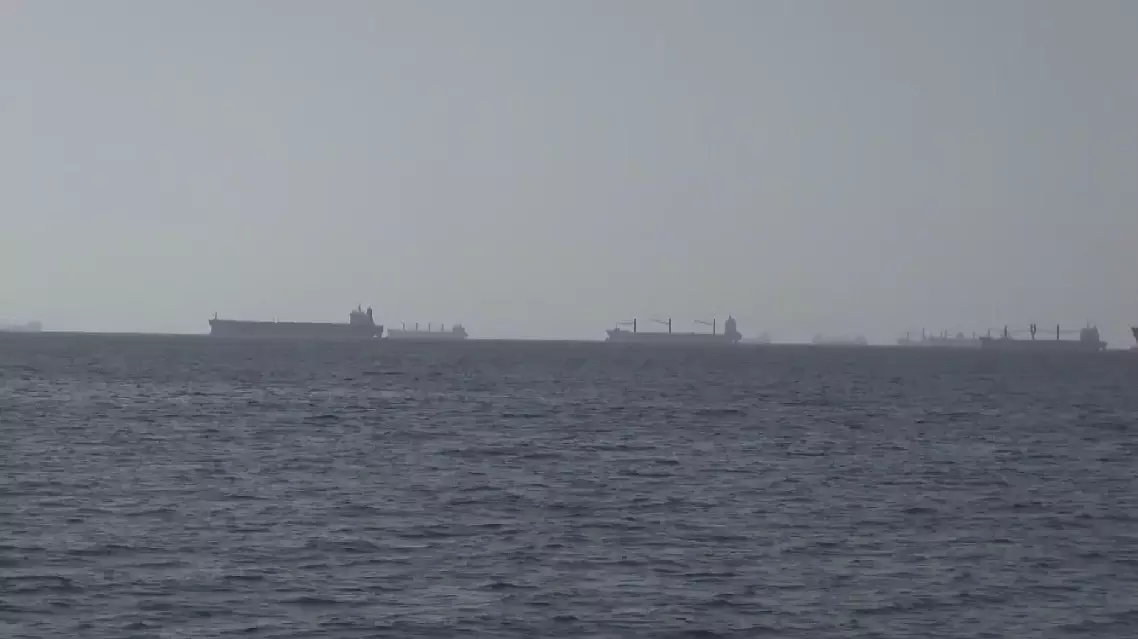
IMO urges ships near Strait of Hormuz to be on maximum alert