The main media center for the upcoming 9th Asian Winter Games, held in northeast China's Harbin City, will start trial operation on Tuesday.
The main media center, with two major sections -- the main press center and the international broadcasting center -- is set to provide supporting services for accredited journalists and broadcasters.
Covering an area of 10,168 square meters, the main press center features nine functional segments including a comprehensive service area and a tea break area.
The international broadcasting center, with a planned area of 10,575 square meters, will be the core technical area for official live broadcast agencies and rights-holders of various countries.
Organizers said that during the main media center's trial operations, full-factor tests will be carried out to check functional operations of all parts.
"[Through the trial operation, we need to check] the condition of the facilities. We need to conduct joint debugging and testing to ensure all sectors can smoothly work together. Additionally, we also need to verify whether all services can coordinate effectively and achieve convergence, forming a complete operational chain when every part is interconnected. Any issues discovered must be resolved promptly to ensure smooth operations and deliver quality services for accredited Chinese and foreign media workers," said Lu Zhuangzhi, operating director of the main media center.
The 9th Asian Winter Games will be held from Feb 7 to 14 in Harbin, reputed as the "Ice City" of China for its extra-low temperatures in winter and the annual tradition of displaying extravagant ice sculptures.
Over the course of the 12 competition days, athletes from various Asian countries and regions will compete in six major events, 11 sub-events, and 64 disciplines.
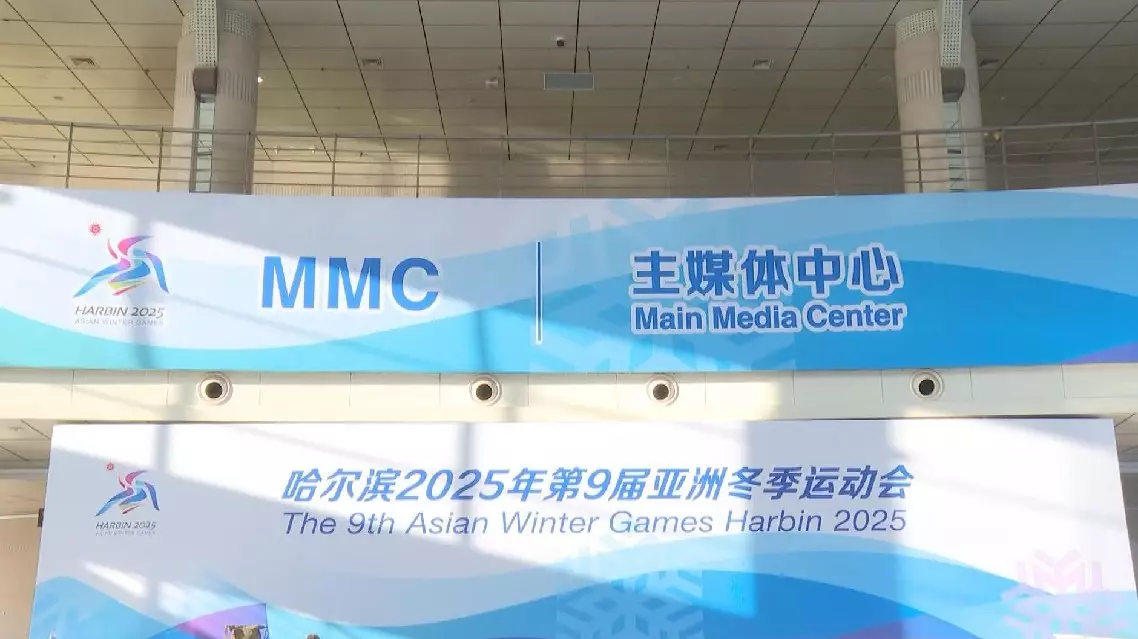
Main media center for 9th Asian Winter Games to start trial operation Tuesday
A historic global energy shock linked to the U.S.-Israel war on Iran is causing significant turbulence in the world's air travel, leaving many unable to fly as planned and placing financial pressure on airlines.
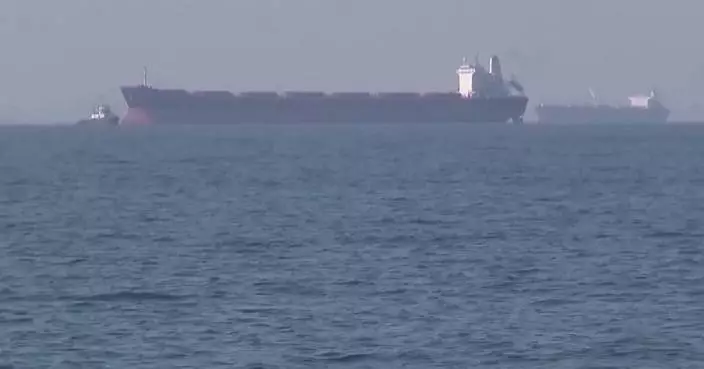
The conflict and disruptions in the Strait of Hormuz -- a crucial waterway for about 20 percent of global oil shipments -- have caused jet fuel prices to roughly double since March, creating supply chain havoc.
"Fuel is, let's say, 30 percent of the cost of travel, but it's the most variable portion. You double the price of jet fuel, that's the entire margin of the airline, and putting it into a loss," said Joseph Foudy, an economics professor at New York University's Stern School of Business.
The impact is already being felt in the aviation industry, particularly in parts of Asia and Europe, which depend heavily on Middle Eastern oil. This comes as a growing chorus of international agencies warns that Europe could start facing jet fuel shortages in the next few weeks.
Across the industry, airlines are cutting routes, trimming capacity, and increasing ticket prices and baggage fees to cope with fuel shortages and rising operating costs.
Germany's Lufthansa Group announced it is cutting 20,000 of its less profitable short-haul flights through October. Air France will increase long-haul ticket prices, while Hong Kong's Cathay Pacific has increased fuel surcharges on most routes by more than 30 percent this month.
Even record passenger demand in the U.S. is not enough to insulate American operators. Distressed U.S. budget carrier Spirit Airlines is seeking a significant bailout from the federal government to remain operational.
Foudy noted that bailouts are not necessarily the best solution and that conditions could worsen for airlines and passengers before improving.
"Financially, large carriers, there's a history, we saw this during COVID, of going to governments for money. And again, that can sort of keep them afloat. That's not much comfort to shareholders. What's unusual in this case, it's not simply a financial hit, it's going to be operationally, if there's a shortage of fuel, which flights from which carriers do you cancel? Ultimately, if there's a shortage, it means, you know, some flights won't take off. Again, in some individual countries, like the U.S. or like China are better off, but if you're Japan or Korea, you're nervous. And for Europe in particular, they're highly dependent on Middle Eastern oil," said the economist.
Further complicating the situation for airline passengers, the U.S. Department of Homeland Security warns that it could run out of funding for security agents at the nation’s airports by May, potentially leading to long security lines and wait times.
Experts advise travelers to book flights early, purchase travel insurance, be prepared for cancellations, and, if possible, consider skipping the flight altogether in favor of a road trip.

Global energy shortage disrupts air travel amid Iran war