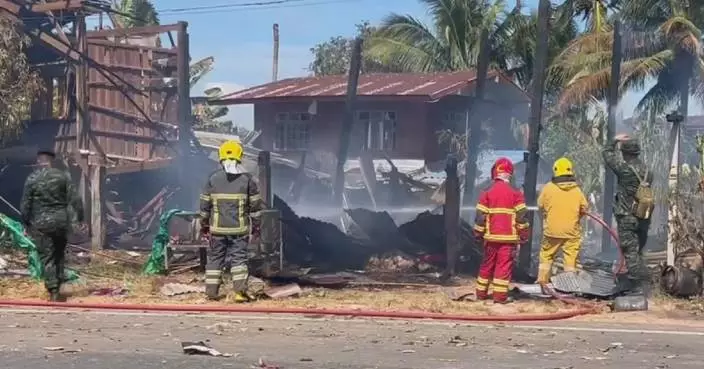
Multiple Chinese ministries have activated emergency response programs and dispatched work teams to support rescue operations after a deadly earthquake struck southwest China's Xizang Autonomous Region on Tuesday morning.
The 6.8-magnitude earthquake hit Dingri County in the city of Xigaze at 09:05 on Tuesday, with at least 126 people confirmed dead and 188 others injured, while rescue efforts are ongoing to locate possible survivors buried beneath the rubble.
Following the quake, China's National Disaster Reduction Commission raised the emergency response to Level II, the second highest in the country's four-tier system.
The Ministry of Housing and Urban-Rural Development has also launched a Level II emergency response and dispatched a special team to offer guidance on the post-quake emergency assessment of buildings and municipal facilities, carry out rush repairs, and oversee the construction of temporary houses.
Meanwhile, the Ministry of Finance and the Ministry of Emergency Management have urgently allocated 100 million yuan (over 13.6 million U.S. dollars) from the central natural disaster relief fund to support Xizang in its search and rescue operations, the relocation of affected residents, and the reconstruction of damaged houses.
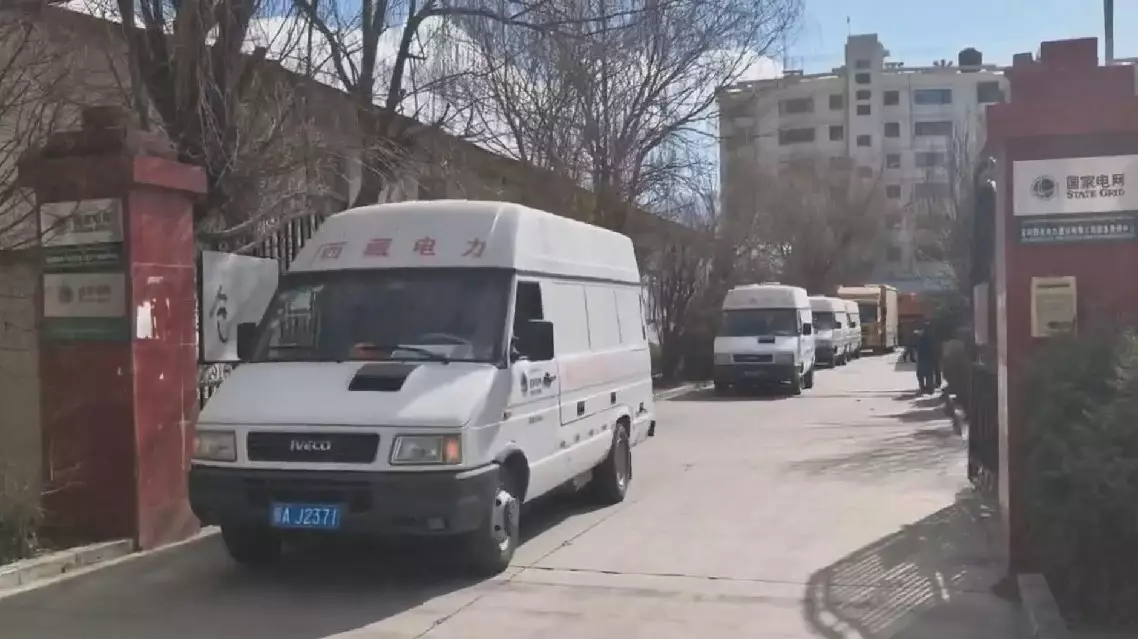
The State Grid Tibet Electric Power Company has sent its first batch of personnel, including six vehicles and disaster relief supplies to the quake-hit zones to conduct power restoration efforts.
Further aid has come from the Red Cross Society of China, which has swiftly allocated 4,600 disaster relief supplies, including tents, quilts, thermal jackets, and folding beds, helping in the smooth relocation and basic living conditions of those impacted.
It also dispatched a work team and rescue personnel to conduct on-site assessments of the disaster zones on Tuesday afternoon and help carry out rescue and relief work.
The National Health Commission has also deployed experts from Peking Union Medical College Hospital and West China Hospital of Sichuan University. The commission has also called on national-level medical emergency response teams from neighboring provinces and regions to make preparations to join the rescue operations as needed.
A total of 19 aftershocks with a magnitude of 3.0 or higher have been recorded as of 17:00 on Tuesday.
The Ministry of Natural Resources had earlier on Tuesday afternoon raised the geological disaster defense response level, and also dispatched a work team to offer guidance on conducting secondary geological disaster assessments and providing emergency technical support in the quake-affected areas.
The China Railway Qinghai-Xizang Group promptly closed specific railway lines and halted some trains following the earthquake.
It also coordinated departments responsible for infrastructure, electrical systems, power supply, and construction to conduct a thorough inspection of facilities, including railway tracks, bridges, tunnels, and electrical systems in the affected areas. This effort is aimed at mitigating the earthquake's impact on railway operations and ensuring the safety of train services.
Furthermore, the Ministry of Natural Resources has released the first remote sensing image of the earthquake in Dingri County. The image shows that the epicenter is only around 2.5 kilometers away from the local government offices in Tsogo Township, with two other townships and several villages in the vicinity, with a relatively dense population.
From the image, it can be seen that most of the Tsogo Lake is still frozen, indicating low temperatures in the region, which may pose further difficulties for the post-disaster relief work and the resettlement of affected people.
The ministry has also released the first three-dimensional topographical video of the earthquake. It shows residential settlements in the earthquake-affected areas of Dingri County being situated in the valleys, with some houses near the epicenter sustaining damage.
Footage from surveillance cameras at a photovoltaic power station situated just over 100 kilometers from the epicenter revealed significant swaying of facilities at the moment the quake struck. However, both indoor and outdoor equipment is said to be functioning normally and remains undamaged.
Personnel at the power station actively coordinated the safe relocation of local farmers and herdsmen in the surrounding areas, with all those located in the vicinity of the station having been been safely relocated with no casualties reported.
In addition, surveillance footage from eight gas stations located within a 100-kilometer radius of the epicenter showed goods falling from shelves, ceilings caving in, and cracks appearing on some walls, while some power outages were also experienced.
Despite these incidents, no casualties have been reported at the gas stations. Equipment and facilities are operating as usual, and there are ample fuel supplies in stock.
Authorities activate emergency response, send support teams to Xizang after deadly quake