Chinese Vice Premier He Lifeng on Friday urged intensifying efforts to boost consumption and focus on expanding domestic demand.
He, also a member of the Political Bureau of the Communist Party of China Central Committee, made the remarks at a meeting on promoting the expansion of consumption.
The vice premier called for increased efforts in expanding the range of the consumer goods trade-in program while accelerating the integrated development of domestic and foreign trade.
High-quality development of service consumption should be further advanced, he said, calling for proactively expanding the opening up of the service sector, improving the quality of service supply and promoting diversified consumption scenarios.
He added that the cultivation and construction of international consumption center cities should be deepened to create an internationalized consumer environment.
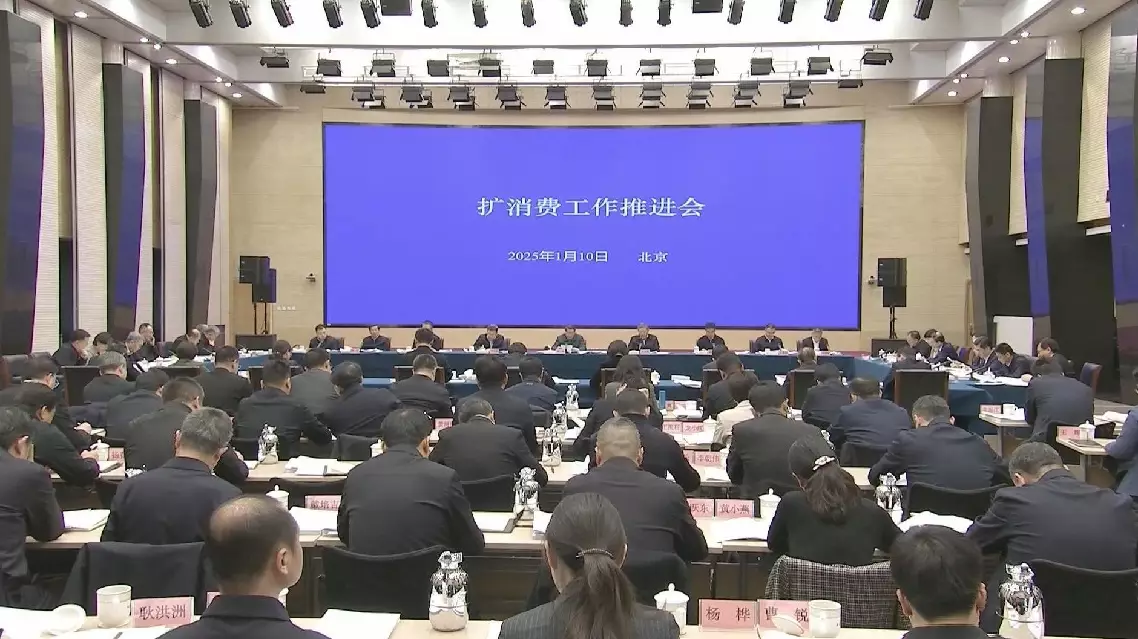
Chinese vice premier stresses efforts in expanding consumption
The spillover effects of the ongoing Middle East conflict have driven up commodity prices in Ethiopia, taking a heavy toll on people's daily life, especially for the low-income population.
With U.S.-Israeli joint military strikes on Iran now exceeding one month and no clear resolution in sight, the economic aftershocks are spreading far beyond the Middle East.
As part of its response to U.S. and Israeli operations, Iran has restricted navigation through the Strait of Hormuz, targeting ships associated with the United States and Israel. The blockade of this vital global energy route has driven up oil and gas prices worldwide.
In Addis Ababa, the Ethiopian capital, long queues of vehicles could be seen at gas stations waiting for fuel. Prices of other goods are also on the rise.
"The prices of goods are going up every day. If the conflict continues, life will become very hard, especially for people with low incomes," said Zeynu Yelma, a shop owner.
Beyond rising living costs, the surge in prices has also hit the local construction industry.
"Over the past two weeks, the prices of building materials have risen sharply, severely affecting our work. The price of cement has nearly doubled. Sand and gravel costs continue to rise. The price of steel has also surged. If this trend continues, I'm afraid our work may have to stop," said Yetbarek Workenhe, manager of a construction site.
Although local authorities have been working to secure supplies, provide subsidies, and prioritize public services, the severe international situation continues to widen the supply gap.
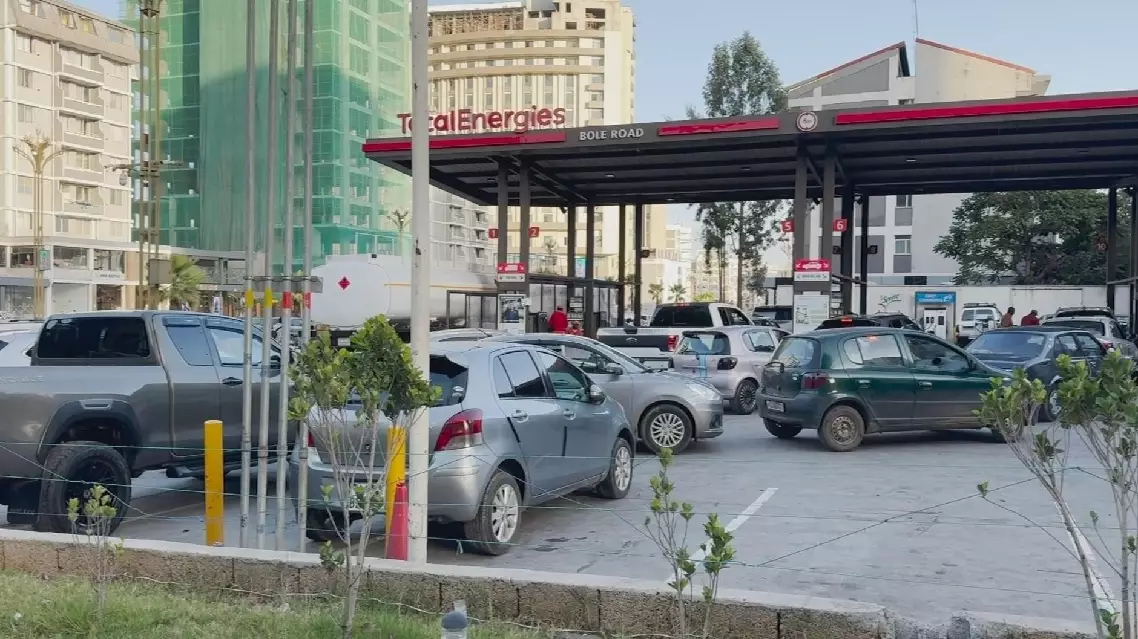
Spillover effects of Middle East conflict push up prices in Ethiopia